


Hearing Technology
Legato calls them the world's first AI-based hearing glasses. That is the company's description, and we have not seen anyone confirm it independently. EssilorLuxottica's Nuance Audio glasses were already on sale as FDA-cleared hearing glasses. Our sister practice, Audiology Associates of Westchester, compares Legato with Nuance Audio Plus and with prescription hearing aids in its hearing glasses comparison guide.
We are an audiology practice with offices in San Mateo and San Carlos. We do not sell Legato Frames. This page sticks to what Legato has said, what independent outlets have reported, and what we would tell a patient who asks whether to try them.
At a glance
- Legato Frames went on sale in the US on October 1, 2026. Legato lists Symphony and Harmony from $999 and Aria from $1,099. Prescription lenses cost extra.
- They are FDA-regulated over-the-counter hearing aids for adults with mild to moderate loss. Legato says no hearing test or prescription is needed.
- Open-ear arms hold the microphones and processors. Legato says the speech processing runs on the glasses and that they have no camera.
- Sudden loss, hearing that is worse in one ear, dizziness, ear pain or drainage, and severe loss all call for an evaluation first, not a pair of glasses.
What Legato launched
Legato Frames are glasses with microphones, processors and speakers in the arms. US sales began on October 1, 2026 through legatohearing.com, and Legato says they are coming soon to select eyecare providers. The company was founded in 2024. Its CEO, Mehul Trivedi, previously led the development and launch of Bose Frames and later served as senior vice president of wearable tech at EssilorLuxottica. Its president, Steve Romine, was chief operating officer at Audicus, a direct-to-consumer hearing care company. Legato came out of stealth on August 26, 2026, with $12 million from Neotribe Ventures, Listen and Village Global. A strong résumé and funding are not proof that the glasses work well, but they explain why the launch got attention from both the eyewear and the hearing trades.
How the glasses work
Legato calls its processing SpeechSense. It is a neural network that runs on processors in the arms, and it tries to separate speech from background noise and boost the speech in real time. Legato says all of that happens on the glasses themselves, and that they have no camera and do not record. The design is open-ear, which means nothing sits in your ear canal. You keep hearing the room naturally while the arms add to the speech. In its coverage, audioXpress noted that the launch materials did not include processing delay, battery runtime or measured speech-in-noise figures. So what we know about how well it works comes from Legato's own description and from the lab score discussed below.
The specs that matter
There are three frame styles. Aria is an acetate-and-metal browline frame, 142 mm wide. Symphony is 134 mm and comes in a narrow fit only. Harmony comes in 140 mm medium and 145 mm wide, the only style offered in two widths. Weight starts at about 34 grams with lenses, and the lightest frame is 27 grams before lenses. Legato rates the battery at 10 to 12 hours of hearing use, with 2 hours from a 30-minute quick charge and more than 30 hours when muted. The glasses stream music and calls over Bluetooth to iPhone and Android. A volume rocker sits on the left arm, and mute and call handling are on the right. They power on when you open the arms. A free app for iOS and Android tunes the sound. Lenses are Pentax prescription lenses from -10.0 to +5.0, progressive readers from +1.0 to +3.0, with an anti-reflective or blue-light coating.
What they cost
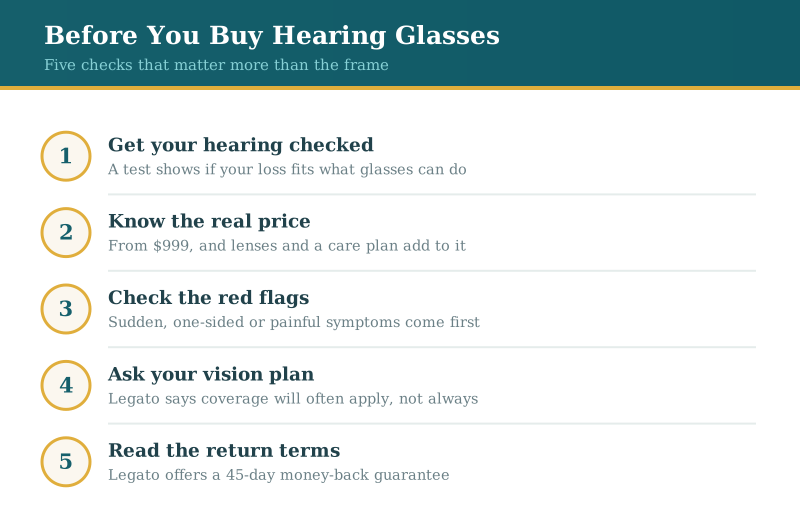
Legato's site lists Symphony and Harmony from $999 and Aria from $1,099. Those prices cover the frames and the hearing technology. Prescription lenses cost extra, so the real out-the-door price will be higher than the headline number. The box holds a wireless charging pad, a carrying case, a cleaning cloth and a USB-C cable. A spare charging pad is $149. Legato Care is $199 and extends the one-year warranty to three years if you add it within 45 days. Legato also offers a 45-day money-back guarantee. Its site sets the price against an average of $3,400 or more for prescription hearing solutions. That is a marketing figure from Legato, not an independent statistic, and we could not check it. A fitted hearing aid costs more partly because the price covers testing, programming, verification and follow-up care. Our guide to OTC and prescription hearing aid costs explains what each piece pays for.
What the HearAdvisor score means
Legato reports that HearAdvisor, an independent audiology lab that tests devices in many sound environments, gave Legato Frames a SoundScore of 4.6 out of 5. Legato says that puts them among the top 10 devices HearAdvisor has tested, including prescription hearing aids that cost thousands more. That is a strong result for a first product, and we do not want to play it down. It still has limits. It is one lab's standard test on one set of devices, and it shows how the device performs on a test bench. It does not promise how the glasses will work on your ears, in your favorite restaurant, with your hearing loss. It also does not replace a fitting that is checked with real-ear measurement. We have not read HearAdvisor's own write-up, so we are relying on Legato's account of the score.
Who the glasses may suit
Adults with mild to moderate loss who do not wear hearing aids today may find them appealing, especially people who already wear glasses every day and would like one device instead of two. Legato says about 50 million US adults have hearing loss and about 80 percent of those who could benefit do not use a device, because of stigma, cost or comfort. Glasses answer the stigma problem by making the device look like ordinary eyewear. They fit best for someone who is comfortable setting up a phone app. They are a weaker match for someone who rarely wears glasses, who wants a style other than the three on offer, or who wants a device set from measured hearing test results.
When hearing glasses are not enough
Open-ear glasses are built for mild to moderate loss. They cannot serve severe to profound loss the way a device that seals the ear canal can. Get evaluated before you buy any hearing device, glasses included, if you have any of the following: sudden hearing loss in one or both ears, hearing that is clearly worse in one ear, dizziness or vertigo, ear pain or drainage, ringing in one ear only or ringing that beats with your pulse, trouble understanding words even when they are loud enough, or a recent head injury. Even without those signs, a hearing test shows the degree and shape of your loss, whether both ears match, and whether wax or a middle ear problem is involved. That is the information you need to judge any product, this one included.
The eyecare and vision insurance question
Legato says purchases through eyecare providers will often be eligible for vision insurance. The word often is Legato's, and it is not a promise of coverage. We have not seen a list of which eyecare providers will carry the glasses, and we have not seen a vision plan say it will pay. Whether a hearing device counts under a frame and lens benefit will depend on your plan and on the provider. Ask your vision plan before you buy. Medicare and Medi-Cal follow separate rules, which we cover in our page on Medicare open enrollment and hearing benefits.
Legato Frames next to a fitted hearing aid
Neither choice is right for everyone. The table below sets Legato Frames next to a hearing aid that a clinic fits. The left column is what Legato says about its own product, and the right column is how a fitting works in our offices. Fitted hearing aids come in many styles from several makers, while Legato offers three frames. If you want to see how Legato compares with the other hearing glasses on the market, start with our sister practice's comparison guide and our own page on Nuance Audio Plus and Meta's hearing glasses feature.
| Legato Frames | Fitted hearing aids | |
|---|---|---|
| Who it suits | Adults with mild to moderate loss, according to Legato | Loss from mild to profound, including one-sided and complicated cases |
| How it is set up | You tune it in Legato's app. No hearing test or prescription is needed | Programmed from a full hearing evaluation |
| Verification | None built in. Nobody measures the sound that reaches your eardrum | Checked with real-ear measurement |
| Follow-up | Free lifetime support from Legato's audiologists and product specialists, according to Legato | Fine-tuning, cleaning and repairs at the clinic |
| Styles | Three frames: Aria, Symphony and Harmony | Many styles from several makers |
| Price | From $999. Lenses and a care plan cost extra | Varies by device and clinic. The price includes testing, fitting and follow-up |
| Trial | 45-day money-back guarantee | Ask for the trial terms in writing. Ours is 45 days with no restocking fee |
What comes next
Legato Frames were four days old when we wrote this. As of October 5, 2026, we found no independent video reviews or hands-on tests. We will not link a review that does not exist, and we will add the credible ones once they appear. We are also watching for Legato's eyecare provider rollout, and for any change to price or FDA status. If you are weighing hearing glasses against other new options, our pages on Meta's hearing feature and Samsung's Galaxy Buds hearing aid feature cover two more of them. ELEHEAR's $799 Beyond 2 Pro, launched September 22, is another over-the-counter option to weigh.
Status and last update
Last updated October 5, 2026. What changed: nothing yet, because this is the first version. Sources: Legato's press release on GlobeNewswire, Legato, Mixed-News, audioXpress, Healio and Hearing Review.
Medical information notice
We wrote this to inform, and it is not medical advice. Prices and specifications come from Legato and from news reports, and they may change. Considering hearing glasses? Get a hearing evaluation first. It takes about an hour and tells you whether an over-the-counter device is enough. Call 650-342-9449 to book at our San Mateo office, 88 N. San Mateo Drive, or our San Carlos office, 1008 Laurel Street.
Get one email when something changes.
We will write once, when independent reviews appear or Legato announces its eyecare provider rollout.
Frequently asked questions
What patients often want to know
What are Legato Frames?
They are eyeglasses with hearing technology in the arms, sold as over-the-counter hearing aids for adults with mild to moderate loss. They went on sale in the US on October 1, 2026 at legatohearing.com, and Legato says they are coming to select eyecare providers. The speakers are open-ear, so nothing sits in your ear canal.
How much do Legato Frames cost?
Legato lists Symphony and Harmony from $999 and Aria from $1,099. Prescription lenses cost extra, Legato Care is $199 and a spare charging pad is $149. Legato offers a 45-day money-back guarantee.
Do I need a hearing test to buy them?
Legato says no hearing test or prescription is needed, which is how the FDA's over-the-counter category works. That does not make a test a bad idea. A test shows whether your loss falls in the range these glasses are built for, and it can find problems that no pair of glasses will fix.
Are they as good as hearing aids?
For some adults with mild loss they may help in conversation. Legato reports a HearAdvisor SoundScore of 4.6 out of 5, but that is one lab's test. A fitted hearing aid is programmed to your measured hearing, verified in your ear and followed up by a clinic, and glasses do not offer that.
Will my insurance cover them?
Legato says purchases through eyecare providers will often be eligible for vision insurance. That is not a promise, and the provider rollout has not been announced. Ask your vision plan before you buy.
Who should not get hearing glasses?
Get evaluated first if you have sudden hearing loss, one ear clearly worse than the other, dizziness, ear pain or drainage, or ringing in one ear only. People with severe to profound loss are also outside what an open-ear design can handle. When in doubt, a hearing evaluation tells you which group you are in.