


Hearing Aids
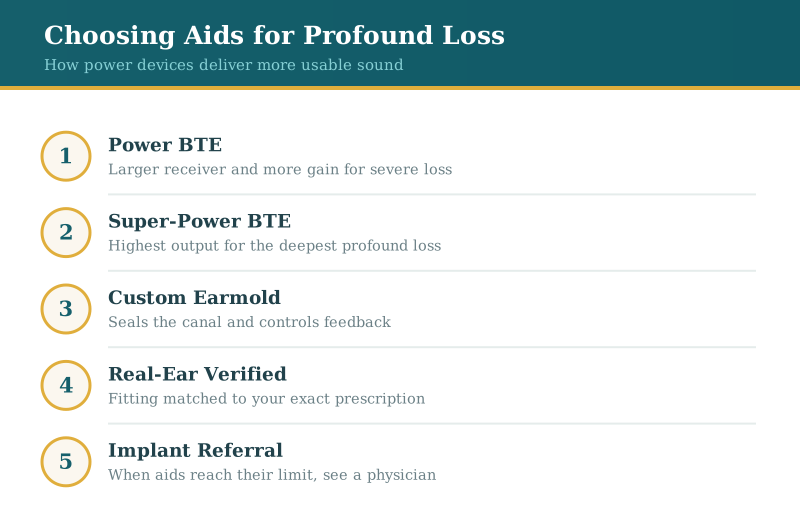
At this level of loss, the work falls to power and super-power behind-the-ear (BTE) styles. They pair a larger amplifier with a sturdier receiver and a bigger battery, and they route sound to the ear through a custom earmold rather than a slim tip. The result is more output, better control of feedback, and a fit that can stand up to the volume without slipping. A current hearing evaluation tells us exactly how much amplification you need across pitches, which is where the real decision starts.
We fit these devices at our San Mateo and San Carlos offices and take the time to match the hearing aid to your ears, your dexterity, and how you actually spend your days. When you are ready, our audiologists can walk you through the options in person.
At a glance
- Severe-to-profound loss usually calls for power or super-power behind-the-ear aids with a larger receiver and a custom earmold.
- The fitting matters as much as the device — verified amplification and follow-up tuning are what turn volume into understandable speech.
- When even the strongest aids stop giving you enough, a cochlear implant evaluation with a physician is the next conversation to have.
Where power aids differ from everyday models
Two things set these devices apart: how much they can amplify, and how they seal to your ear. A power or super-power BTE sends a stronger signal to a custom earmold that fills the ear canal, which both delivers the volume and keeps it from leaking back out and howling. Smaller in-the-ear and receiver-in-canal styles simply cannot reach the output that a profound audiogram asks for, and pushing them to try tends to produce feedback rather than clarity. The trade is size and visibility, which most people at this level find well worth it once speech comes back into range.
Power BTE or super-power BTE
The choice between the two comes down to your thresholds, especially in the lower and middle pitches that carry the body of speech. A standard power BTE covers many severe losses comfortably. A super-power model reaches higher, with the greatest output and the strongest feedback management, and is built for the deepest profound losses or ears that need extra headroom for noisy settings. Bigger is not automatically better here — over-amplifying an ear that does not need it is uncomfortable and unhelpful. This is exactly the sort of call we make from your test results, not from a catalog. Several major manufacturers make both tiers, and you can see the range across brands we fit.
When a hearing aid is not enough: cochlear implants
Even the strongest aids have a ceiling. If the inner ear has lost too many working hair cells, adding volume stops adding understanding — words get louder but no clearer. When that happens, the next step is a cochlear implant, which bypasses the damaged part of the ear and stimulates the hearing nerve directly. Candidacy is a medical decision made with a physician and an implant team, not something we determine on our own. Implants are considered for people who get limited benefit from well-fit hearing aids. If your current devices are turned up and speech still slips away, that is the signal to ask about an evaluation, and we can help you start that referral.
Why the fitting decides the outcome
A powerful device does little good if it is not set correctly, and at this level the margin for error is thin. We verify the fit with real-ear measurement, checking that the amplification actually reaching your eardrum matches your prescription across every pitch, then fine-tune it over follow-up visits as your ears adjust. The earmold is part of that work — a snug, well-made mold controls feedback and keeps the sound where it belongs. A careful hearing aid fitting is the difference between a loud device and one you can understand people through.
Living with a power device day to day
Power aids run harder than smaller models, so batteries and durability matter. Many now offer rechargeable options that comfortably last a full day, and their larger controls are easier to handle if fine finger movements have gotten tricky. They also connect to phones and TVs, streaming audio straight into the aids at a volume that suits your loss. Keeping the earmold clean and the microphones clear protects both sound quality and the device itself, and when something does go wrong, repair is usually straightforward. Small habits like nightly cleaning keep these hardworking devices performing.
Frequently asked questions
What patients often want to know
Can hearing aids help profound hearing loss at all?
For many people, yes. Power and super-power behind-the-ear aids are designed for exactly this range and can restore a great deal of useful hearing when they are fit and verified properly. The benefit varies with how the inner ear is damaged, which is why a thorough evaluation comes first, before we recommend a specific device.
What makes a hearing aid 'super-power'?
It is the output. Super-power models produce the highest amplification a hearing aid can deliver, paired with the strongest feedback control and a receiver built to handle that load. They are meant for the deepest losses. A standard power aid is plenty for many severe cases, so the right tier depends on your audiogram rather than on picking the biggest number.
How do I know if I need an implant instead of an aid?
The telltale sign is that your aids are set high and speech is still hard to follow, especially one-on-one in a quiet room. That suggests you have reached the limit of what amplification can do. A cochlear implant evaluation, handled by a physician and implant team, sorts out candidacy. We are glad to point you toward that assessment when the timing is right.
Will a power hearing aid be bulky or obvious?
It sits behind the ear and is larger than a mini device, that much is true. In exchange you get the volume and stability a profound loss requires, which the tiny styles cannot provide. Most people find the size a fair trade once conversations open back up, and modern housings are slimmer and quieter than the power aids of a decade ago.