


Hearing Aid Technology
This matters because AI is currently the main thing hearing aids are sold on, and because the claims are almost impossible to compare from the outside. A device with a dedicated neural processing chip can measure worse in background noise than one without. A device that never uses the phrase "deep neural network" can outperform one that builds its entire campaign around it. The label is not the result.
Here is what the terms actually describe, who has what, and the four questions we would ask of any AI claim before letting it influence a decision. If you would rather skip to the specific device, we have a full page on Oticon Reveal.
At a glance
- "Dual AI" means two AI systems running at once with opposing goals — one enhancing speech, one preserving surrounding sound — rather than a single network suppressing noise.
- Only some devices marketed as AI contain dedicated neural processing hardware. Others use the word for conventional signal processing or for an app that learns your preferences.
- Having a neural chip does not predict measured performance. Independent lab results for AI-equipped flagships range from best-in-class to below average.
- How the device is verified on your ear affects your day-to-day hearing more than which AI architecture it uses.
What a neural network is actually doing in there
Strip away the marketing and the job is narrow. A microphone picks up a mixture — a voice, a fan, dishes, a car outside — and something has to decide, thousands of times a second, which parts of that mixture are speech and which are not, then treat them differently. Older hearing aids did this with rules written by engineers: if the sound is steady and broadband, treat it as noise; if it fluctuates in a speech-like rhythm, leave it alone. Those rules work reasonably well and fail in predictable ways, which is why restaurants have always been the hard case. A deep neural network replaces the rules with a model trained on enormous quantities of recorded speech mixed into recorded noise, until it can separate the two more reliably than a rule ever did. That is the whole trick. It is genuinely useful, and it is not intelligence in any sense you would recognise from a conversation with a chatbot.
What makes Dual AI different
Almost every AI system in a hearing aid has one objective: get the speech out of the noise. Oticon's argument with Reveal is that this objective, pursued single-mindedly, costs you something. Strip the room away to isolate the voice and you also strip away the footsteps behind you, the acoustics that tell you the space is large, the door that just opened. Your brain uses those cues to build a picture of where you are, and losing them is part of why heavily processed hearing aids can feel isolating even when speech is clear. So Reveal runs two systems concurrently: a Speech AI that identifies and lifts voices, and a Context AI that deliberately preserves the surrounding sound the first one would otherwise remove. Two networks, opposing objectives, both always on. That is what "Dual AI" describes — an architectural choice, not a performance measurement. It says two systems run at once. It does not, by itself, claim better speech understanding than anyone else.
Which devices actually contain neural hardware
There are three real tiers here, and manufacturers are not equally forthcoming. Some devices carry a second, physically separate chip whose only job is running the neural network — Phonak's current flagship is the clearest example, with a dedicated processor alongside the main one and published figures for how many operations per second it performs. ReSound's current flagship also pairs its main chip with a separate neural processor. A second group integrates neural processing into the main system-on-chip rather than adding a separate one, which is Starkey's approach on its current platform, where the network is applied to directionality and spatial awareness rather than to separating speech from noise. A third group does not have neural processing in the sound path at all. Signia is the case where the answer changed mid-year. Its IX platform runs a multi-stream conventional architecture that tracks several talkers at once — sophisticated, but not a neural network. Its MaX platform, released 24 August 2026, runs four neural networks together under the name Acoustic Intelligence. So an IX fitted last year has no DNN in the sound path; a MaX fitted today has four. Widex, to its credit, largely does not claim a DNN for its core sound processing, marketing instead on very low processing latency. Oticon, notably, has not published a chip name, a network size or a training-data figure for Reveal, which is less technical disclosure than two of its competitors offer. Our Signia MaX page has a table of the five AI flagships launched between August 10 and October 1.
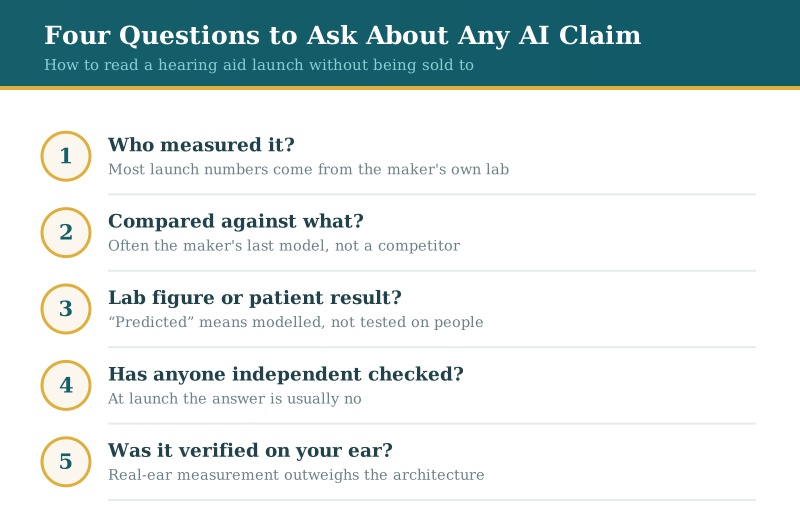
More AI does not reliably mean better hearing
This is the part worth carrying with you. Independent laboratories — HearAdvisor is the one most often cited — measure hearing aids in standardised conditions and publish speech-in-noise scores. Among devices with dedicated neural processing hardware, those scores span nearly the full available range. One 2025 flagship built around a separate DNN chip and marketed heavily on artificial intelligence measured near the bottom of the devices that lab has tested in background noise. Another, also with a dedicated chip, measured near the top. Same category of hardware, opposite results. The lesson is not that AI is marketing nonsense — the top performers are genuinely good, and they are good partly because of that processing. The lesson is that the presence of the technology tells you almost nothing about the outcome, and that a spec sheet cannot substitute for a measurement. It is also worth knowing that Oticon Reveal has not been independently measured by anyone at all yet, because it is only days old. Widex takes a different road with its Allure AI RIC: AI that runs only when you tap for it. See Clarity Boost explained.
Four questions to ask about any AI claim
First: who measured it? Nearly every number in a hearing aid launch comes from the manufacturer's own laboratory or research brief. That is normal and not disqualifying, but it is different from an independent finding, and you are entitled to know which you are being shown. Second: measured against what? A great many claims compare a device against the same manufacturer's previous model rather than against competitors, which makes the number far less impressive than it sounds. Third: is it a laboratory measure or a patient outcome? Bench measurements of gain, feedback headroom or modelled speech access are engineering figures. "Predicted speech access" in particular is a computed estimate, not a test of how well anyone understood anything. Fourth: has anyone independent checked? For most new platforms, at launch, the answer is no — and the honest thing for a clinic to say is that we do not yet know.
What actually changes your result
We fit devices from all of these manufacturers, and the pattern we see is consistent. The variable that most reliably separates a good outcome from a disappointing one is not the architecture inside the device. It is whether the device was verified on the patient's own ear. Manufacturer default settings routinely land ten decibels or more below prescriptive targets in the high frequencies, which is exactly where consonants live, and a premium AI device left at defaults can easily be outperformed by a mid-tier device that was measured and corrected. That is what real-ear measurement is for, and it takes about twenty minutes. If you are choosing between platforms, ask each provider whether they perform it as standard — the answer will tell you more about your likely result than any comparison of neural networks.
Frequently asked questions
Questions patients ask us
Which hearing aids have Dual AI?
As of late August 2026, Oticon Reveal is the only hearing aid marketed under the name Dual AI — two AI engines running simultaneously, one enhancing speech and one preserving contextual sound. Signia MaX, released 24 August 2026, runs four neural networks under a different name. Most other manufacturers run a single AI system aimed at one objective, most commonly separating speech from background noise.
Is AI in hearing aids just marketing?
Not entirely. Neural network processing is real technology and the best implementations measurably outperform older rule-based noise reduction in difficult listening. But the word is applied loosely across the industry, sometimes to conventional signal processing or to an app that learns your preferences, and the presence of AI in a spec sheet does not predict how a device will measure or how it will suit you.
Does a hearing aid with AI work better in restaurants?
Often yes, though not universally and not by a fixed amount. Restaurants are the hardest case because the interfering sound is other speech, which is precisely what a speech-detection network is least able to reject. Independent measurements of AI-equipped flagships in babble vary widely. This is a good thing to trial in a real environment rather than decide from a brochure.
Do AI features drain the battery faster?
Yes, measurably. Running a neural network continuously costs power, and several manufacturers publish battery figures that fall substantially when the AI feature is active — in some cases by more than half. If you are out for long days, ask specifically about battery life with the AI processing running, not the headline number.
Should I wait for a newer AI platform before buying?
There will always be a newer platform. The more useful question is whether your current hearing is being managed well now, because untreated hearing loss carries real costs while you wait. If you are within a couple of years of a well-verified fitting, waiting is reasonable. If you are struggling, the gain from being fitted properly today is almost certainly larger than the gain from next year's chip.