


How Hearing Aids Work
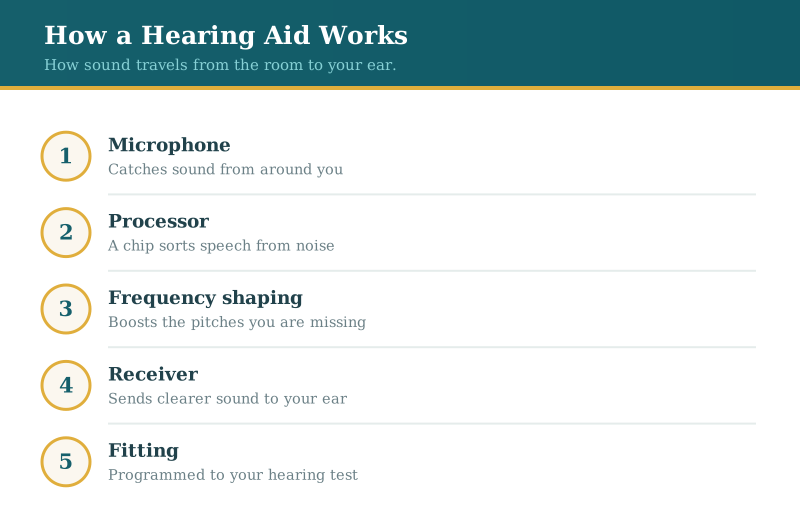
Strip away the styling and every modern hearing aid runs the same short relay: a microphone catches sound from the room, a tiny processor decides what to do with it, and a receiver delivers the reworked sound into your ear canal. All of that repeats continuously, thousands of times a second, while you simply carry on with the conversation.
None of it helps much without one more piece: a fitting matched to your own hearing. That is why a hearing test and a careful hearing aid fitting matter as much as the electronics inside, and why our team in San Mateo and San Carlos spends real time on that step.
At a glance
- A hearing aid is a small computer: a microphone hears, a processor decides, and a receiver sends sound to your ear.
- Modern aids raise some pitches more than others, matched to the specific gaps in your hearing test.
- They make speech far clearer, but they work with the hearing you have rather than rebuilding it.
- A professional fitting is what turns capable hardware into a device that works for your ears.
The microphone: catching the room
The journey starts at one or two tiny microphones on the outside of the aid. They pick up everything around you — the person across the table, the clatter of dishes, traffic through the window — and turn those air-pressure changes into an electrical signal. Having two microphones lets the aid sense direction, which is part of how it can favor the voice in front of you over noise arriving from behind.
The processor: a small computer making choices
The signal then reaches the processor, a chip that is genuinely a small computer. Many times each second it separates speech from background noise, softens sudden loud sounds, and lifts the quiet detail that makes words intelligible. This is where most of the gap between a basic and an advanced aid lives. Two devices can look identical on the outside while their chips handle a noisy restaurant very differently, which is one reason brands and models vary so much in price and performance.
Amplifying by pitch, not just by volume
A common misunderstanding is that a hearing aid simply makes everything louder. It does not. Most hearing loss affects some pitches more than others, often the high frequencies that carry consonants like s, f, and th. The processor raises the exact frequencies your hearing test shows you are missing while leaving the pitches you already hear well closer to untouched. That targeted shaping is why a device programmed to your results sounds so different from an off-the-shelf sound amplifier.
The receiver: delivering sound to your ear
Once the sound has been reshaped, the receiver — essentially a very small speaker — sends it into your ear canal. In many of today's aids the receiver sits down in the ear itself, connected by a thin wire, which keeps the part behind your ear small and discreet. The quality and placement of the receiver shape how natural the result sounds, and it is also one of the parts most exposed to earwax and moisture, which is where repairs and servicing come in over the years.
Power and controls that keep it going
All of this runs on either a small disposable battery or a rechargeable cell. Many modern aids also pair by Bluetooth with your phone or TV, and let you nudge the volume or switch listening programs from an app or a button. Those conveniences matter for daily life, but they sit on top of the core job rather than replacing it. For older adults in particular, simple and reliable controls often count for more than the longest feature list.
Why the fitting matters as much as the hardware
Here is the part a spec sheet cannot show: the same aid can succeed or disappoint depending on how it is set up. During a fitting, your audiologist programs the device to your hearing test, fine-tunes it to your ears and your routine, and adjusts it again as you settle into the sound. The electronics are impressive, but they stay raw material until someone matches them to you. If you would like to see what that involves, our audiologists can walk you through it and let you hear the difference on your own ears.
Frequently asked questions
Your questions, answered
Do hearing aids just make everything louder?
A good hearing aid does much more than turn up the volume. The processor raises the specific pitches your hearing test shows you are missing, usually the higher ones, while leaving sounds you already hear well alone. The aim is clarity, especially for speech, not raw loudness — which is exactly what separates a fitted aid from a bargain amplifier.
Will a hearing aid make my hearing normal again?
It helps a great deal, though it is only honest to set the right expectation. A well-programmed aid makes speech far easier to follow and brings back sounds you have been missing, yet it works with the hearing you have rather than restoring it to new. Most people find the everyday improvement in conversation is what matters most.
How do I know which hearing aid is right for me?
That decision really begins with a hearing test, not a brochure. Once we understand the shape of your hearing loss, how you spend your days, and your budget, we can match you to a device and brand that fits. You are welcome to contact our offices and we will talk it through with no pressure.