


Hearing Aid Technology
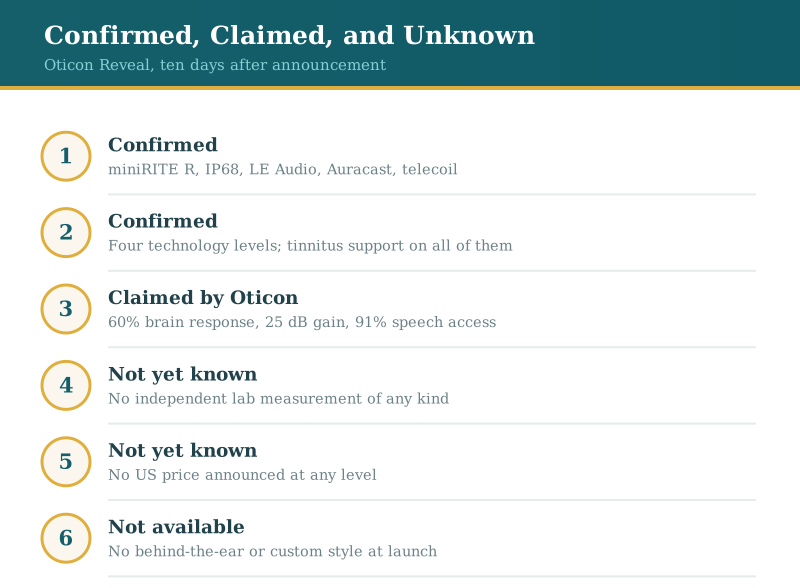
The loudest of those numbers, the 60% stronger brain response, cites a 2026 reference by Zapata-Rodríguez and colleagues. We went looking for it. There is no published title, no journal, no sample size and no peer-review status, and it does not appear on the publication list of Oticon's own research centre. The other figures came from Oticon too, no independent laboratory has measured the device, and no US price has been published at any technology level. That is not a criticism of Oticon. It is what the evidence base looks like ten days after an announcement, and you deserve to know it before you make a decision that costs thousands of dollars. We fit Oticon at both our offices and we have Reveal coming in.
So here is the honest version: what is confirmed, what is claimed and by whom, what remains unknown, and who we think should and should not be interested. The full specification page lives at Oticon Reveal.
At a glance
- Reveal is the first hearing aid to run two AI systems at once: Speech AI lifting voices, Context AI preserving the surrounding sound most systems remove.
- Every published performance figure comes from Oticon's own research briefs and technical papers. No independent lab has tested Reveal, and no US price has been announced.
- It launches in one style only, a rechargeable miniRITE R. If you need a behind-the-ear or custom device, Oticon Intent remains the option.
- Connectivity is genuinely ahead of much of the field: Bluetooth LE Audio and Auracast both work on day one, where several competitors are still promising them.
The idea, in one paragraph
Almost every AI system in a hearing aid is built to do one thing, which is to pull speech out of background noise. Oticon's position with Reveal is that doing only that costs you something worth keeping. Suppress the room aggressively enough to isolate a voice and you also lose the footsteps behind you, the acoustics that tell you a space is large, the door that just opened. Your brain uses those cues, and losing them is part of why heavily processed hearing aids can feel oddly isolating even when speech is clear. So Reveal runs two systems concurrently: Speech AI identifying and lifting voices, Context AI deliberately preserving the ambient sound the first one would strip. It is a real architectural difference, and the first time anyone has shipped it. We explain the broader landscape in what Dual AI actually means.
The claims, and where they come from
Oticon reports that Reveal produces a 60% stronger brain response than Oticon Intent, citing a 2026 reference by Zapata-Rodríguez and colleagues. We went looking for that paper. Its title, journal, sample size and peer-review status have not been published anywhere we can find, and it does not appear on the publication list of Oticon's own research centre. Oticon reports up to 25 decibels more available gain than three top competitors, and up to 91% predicted speech access. Both come from a single internal research brief about the new feedback system, and the word "predicted" is doing real work, because that figure is a modelled estimate rather than a speech test on patients. It reports feedback management reacting 30% faster and four times more precisely than its own previous technology, and that 94% of users prefer Reveal to Intent, from an internal technical paper with the methodology unpublished. None of this means the claims are false. Bench and laboratory measurement is how hearing aids get built, and Oticon has a genuinely serious research record. It does mean nobody outside the company has checked, and that several of the comparisons are against Oticon's own earlier products rather than against anyone else's.
What is actually confirmed
The hardware picture is clear enough. Reveal ships as a rechargeable miniRITE R, a small receiver-in-canal device with a single push-button, with receiver options spanning mild to severe loss and an IP68 rating for dust and moisture. It supports Bluetooth LE Audio with Auracast broadcast audio, is Made for iPhone certified, is optimised for Android with Google Fast Pair, and handles hands-free calls. A telecoil is included. Tinnitus SoundSupport is available on all four technology levels. It works with the Oticon Companion app and with the existing accessory range, and a new CROS transmitter launches alongside it for single-sided deafness. The connectivity is the part we would actually single out: LE Audio and Auracast are both live on day one, where two of the major competing flagships still list Auracast as coming.
What nobody knows yet
No independent laboratory has measured Reveal's speech-in-noise performance. That matters more than it sounds, because independent measurements of AI-equipped flagships vary enormously, and the presence of clever processing does not predict the result. Oticon has not disclosed a chip name, a neural network size or any training-data figures, which is less technical detail than two of its competitors publish. Oticon has not published a level-by-level specification comparison for the US market, so the tables circulating online trace back to a single trade source that nobody has confirmed. And no US price has been announced at any tier. Anyone quoting you a Reveal figure this month is estimating from the previous generation. We have written what we can about what drives the cost without inventing a number.
The limitation most coverage leaves out
Reveal launches in one style. There is no behind-the-ear model and no custom in-the-ear model, where Oticon Intent offers a miniBTE R. If you need a BTE for a powerful fitting or a custom earmold, if dexterity makes a larger device easier to handle, or if you want a disposable-battery option, Reveal cannot do it today and Intent is not a downgrade. It is the correct device for you. Reveal also has no answer to the health and wellness features some competitors build in, such as fall detection and activity tracking, if those matter to you.
Who should be interested, and who should not
If you are wearing hearing aids five years old or more, the jump to a current platform will be substantial, but it would be substantial with Intent too, and the choice between them should come down to style, technology tier and budget rather than the AI architecture. If you bought Intent in the last two years and it is verified and working, we would not move you, and we have set out the reasoning on our Reveal versus Intent page. If you are buying for the first time, want the newest platform with the longest runway ahead of it, and a miniRITE suits your ears, Reveal is a reasonable choice provided you are comfortable being early. And if what you actually want is the best measured performance available today, the honest answer is that we cannot tell you Reveal is it, because nobody has measured it.
What we are doing about it locally
We have Reveal demonstration units at both our San Mateo and San Carlos offices and a one-page patient handout you can take away or download. A demonstration takes about thirty minutes, costs nothing, and is far more informative than any specification comparison. You will hear the difference or you will not. Bring your most recent audiogram if you have one, or we can test first. We will also update this page and our specification page as real information arrives: confirmed tier tables, US pricing, and independent measurements when a laboratory publishes them. Call 650-342-9449 or request an appointment. Reveal was one of five AI flagships launched in about seven weeks, and our Signia MaX page tabulates them.
Frequently asked questions
Questions patients ask us
When is Oticon Reveal available?
Oticon announced Reveal on August 11, 2026 and opened ordering on August 24, 2026, with wider rollout continuing through the rest of the year. Availability at any given practice depends on stock. Call us at 650-342-9449 to check.
Is Oticon Reveal better than Oticon Intent?
It is a genuine platform change rather than a refresh, with a new chip platform, a second AI system and a rebuilt feedback manager. Whether it is better for you is a separate question, and no independent laboratory has measured it. Intent also still offers a behind-the-ear style that Reveal does not.
Has anyone independently tested Oticon Reveal?
Not as of late August 2026. HearAdvisor, the laboratory most often cited for standardised hearing aid measurements, has not published results for Reveal. Every performance figure currently in circulation originates from Oticon's own research briefs and technical papers.
What styles does Oticon Reveal come in?
One at launch: a rechargeable miniRITE R receiver-in-canal device with four receiver powers covering mild through severe loss. A CROS transmitter for single-sided deafness launches alongside it. There is no behind-the-ear or custom in-the-ear model yet.
Does Oticon Reveal support Auracast?
Yes. Bluetooth LE Audio and Auracast broadcast audio are both built in and active at launch, along with Made for iPhone support, Android streaming with Google Fast Pair, hands-free calling, and a telecoil for looped venues.
Should I wait for Oticon Reveal or buy now?
If you are struggling to hear now, the benefit of being fitted and verified properly today almost certainly outweighs waiting for a platform whose real-world performance is still unmeasured. If you are comfortable with your current hearing aids, there is no urgency. We are happy to talk it through without pressure at either office.