


Insurance & Coverage
General rules only take you so far here. Two neighbors on the same street can carry very different hearing benefits depending on which program or policy they hold, so the safest habit is to verify your own plan rather than lean on what a friend was told. Before you price out hearing aids, it pays to know exactly what, if anything, your coverage will contribute.
At California Hearing Center, we deal with these plans every week and are happy to help you read yours before you commit. Whether you begin with a hearing test or a call to your insurer, knowing where you stand turns a stressful guessing game into a straightforward decision at our San Mateo and San Carlos offices.
At a glance
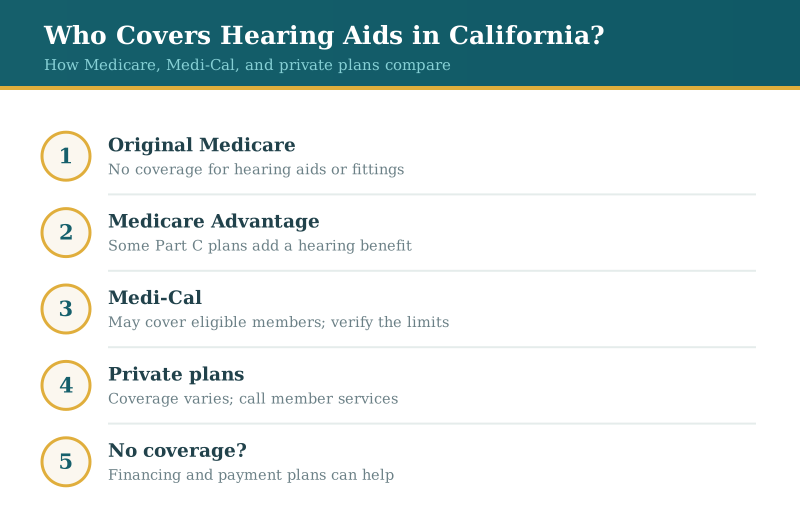
- Original Medicare does not cover hearing aids or the exams to fit them.
- Some Medicare Advantage plans include a hearing benefit, but coverage varies by plan and year.
- Medi-Cal may cover hearing aids for eligible members, though details and limits change — verify your current benefit.
- Private and employer plans differ widely; call member services and confirm before you buy.
Start with Original Medicare's limits
Original Medicare, meaning Part A and Part B, does not pay for hearing aids or the exams to fit them. That surprises many people, since Medicare covers so much else. It will sometimes cover a diagnostic hearing test when a doctor orders one to investigate a medical problem, but that is separate from buying devices. If Original Medicare is your only coverage, plan on the hearing aids themselves being an out-of-pocket cost, and read the next few steps before you decide that settles the matter.
Look closer at Medicare Advantage plans
Medicare Advantage, also called Part C, is sold by private insurers and often bundles in extras that Original Medicare leaves out, hearing aids among them. Whether yours does, and how generous the allowance is, varies a great deal from plan to plan and year to year. Some plans route you to specific networks or brands. Check your plan's summary of benefits, or call the number on your card and ask precisely what the hearing benefit includes.
Medi-Cal coverage for eligible Californians
Medi-Cal, California's Medicaid program, may cover hearing aids for members who qualify, and it has historically included a hearing aid benefit for eligible adults as well as children. Coverage details, limits, and prior-authorization rules do change over time and can depend on your specific Medi-Cal plan, so treat any general rule as a starting point rather than a guarantee. If you are enrolled in Medi-Cal, confirm your current benefit directly with your plan before assuming hearing aids are or are not covered.
Read a private or employer plan carefully
Private policies, whether you buy your own or get one through work, sit all across the map. Some include a set hearing aid allowance every few years; others cover testing but not devices; a few offer discount programs rather than true coverage. The only reliable way to know is to read your benefits document or call member services. Ask whether hearing aids are covered, how often, up to what amount, and whether you must use particular providers. See also: whether AARP offers hearing aid benefits.
Questions worth asking when you call
A short list of questions saves a lot of back-and-forth. Ask whether hearing aids are a covered benefit, what dollar amount or allowance applies, how often you can use it, whether an exam or authorization is required first, and whether you must buy from an in-network provider. Write down the answers along with the date and the representative's name. Bring that information to your hearing aid fitting so we can bill correctly and apply whatever benefit you have.
If your coverage is thin, you still have options
Limited or absent coverage does not put quality hearing care off the table. Many practices, ours included, offer a range of hearing aids at different price points, along with payment plans and financing that spread the cost over time. Older adults weighing their choices may find our guidance on hearing aids for seniors useful. The right path depends on your hearing needs and your budget, and we are glad to lay out the numbers plainly before you commit to anything. Latest: our Medicare open enrollment 2027 hearing checks list five things to check before December 7.
Frequently asked questions
Common questions about Hearing Aids and Insurance in California
Does Medicare cover hearing aids in California?
Original Medicare does not pay for hearing aids or the fitting exams, and that holds true statewide. Some Medicare Advantage plans add a hearing benefit, so if you carry Part C, check your plan's specific coverage. It is worth confirming with the number on your card rather than assuming either way.
Does Medi-Cal pay for hearing aids?
For members who qualify, Medi-Cal may include a hearing aid benefit, though the details, limits, and approval steps can change and vary by plan. If you are enrolled, the surest approach is to confirm your current benefit with your Medi-Cal plan directly before you shop. We can help you understand what that coverage means for your options.
What if my insurance doesn't cover hearing aids?
Plenty of people buy hearing aids without insurance help, and there are practical ways to manage the cost. Many providers offer devices at several price points along with financing or payment plans. Reach out through our contact page and we will walk through what fits your hearing needs and your budget.