


Insurance & Cost
Coverage runs the full range. Some plans carry a solid hearing aid benefit, some offer a discount or a modest allowance, and some cover nothing at all. Because the details live in your specific policy, a general figure here could easily miss what your own plan shows, so reading your insurance benefits closely matters before you shop for hearing aids.
Verifying your coverage is more straightforward than it sounds once you know what to look for, and you don't have to sort it out alone. Our team can read your benefits with you and confirm what applies before you commit to anything.
At a glance
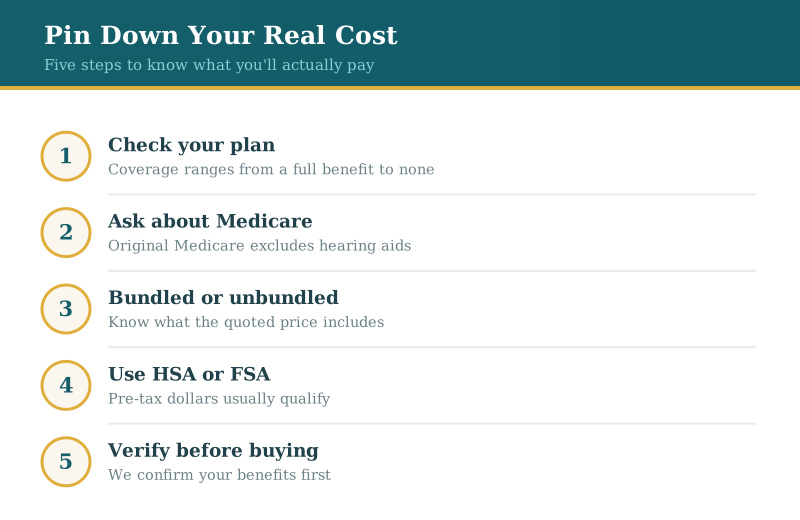
- Insurance coverage for hearing aids ranges from a full benefit to nothing, depending entirely on your plan.
- Original Medicare does not cover hearing aids, though many Medicare Advantage plans include a hearing allowance.
- Ask whether a quoted price is bundled (fitting and follow-up included) or unbundled before you compare.
- HSA and FSA dollars usually apply, and we can verify your specific benefits before you buy.
Why one price tag doesn't exist
The cost of hearing aids with insurance is not a single number waiting to be looked up. It shifts based on your carrier, your specific plan, the level of technology you choose, and whether professional services are folded into the price. Two neighbors with the same devices can pay very different amounts because their insurance benefits are written differently. Any figure you see advertised is a starting point, not a quote you can count on.
Reading your own benefits
Your plan documents hold the real answer. Look for a hearing or hearing aid benefit, then note three things: whether there is a set dollar allowance, how often you can use it, and whether you must buy through a specific network. Some plans pay a fixed amount every few years; others discount the devices or cover a share of the fitting. If the language is dense, the member services number on your card can confirm what applies to hearing aids specifically.
Medicare, and where it stops
This trips up a lot of people. Original Medicare (Parts A and B) does not pay for hearing aids or the exam to fit them, a gap that has held for years. Many Medicare Advantage (Part C) plans do add a hearing benefit, often a periodic allowance toward devices. If you are weighing coverage as you shop, our guide to hearing aids for seniors walks through what to check before you assume you are or aren't covered.
Private and employer plans
Coverage through an employer or a plan you bought yourself varies just as much. A few include a generous hearing aid allowance; others offer a modest discount, and some leave it out entirely. State rules also play a role, since a handful of states require certain plans to cover hearing aids for children and, less often, adults. The only reliable way to know your number is to check your specific policy rather than a general description of the carrier.
Bundled versus unbundled pricing
When you compare quotes, find out what each price includes. A bundled price wraps the devices together with the fitting, programming, and follow-up visits for a stretch of time. An unbundled price separates the hardware from the professional care, so the sticker looks lower but the appointments are billed on their own. Neither is automatically cheaper. Knowing which model a quote uses keeps you from comparing two numbers that count different things.
HSA, FSA, and other ways to stretch the budget
Insurance is not the only lever. Hearing aids are an eligible expense for most health savings and flexible spending accounts, which lets you pay with pre-tax dollars. Manufacturers offer a range of technology levels, so choosing a brand and tier that fits your listening needs, rather than the top of the line by default, can lower the total. Payment plans and, for those who qualify, veterans' benefits are also worth asking about.
Verify before you commit
Before you settle on anything, confirm the details in writing: what your plan pays, how often, and what is left for you. We are glad to check your benefits and explain the numbers in plain terms, so the final cost holds no surprises. If you are ready to start, a hearing evaluation tells us what you actually need, which is the piece that should drive the decision more than any price alone.
Frequently asked questions
Questions patients ask us
Does Medicare pay for hearing aids?
Original Medicare does not cover hearing aids or the fitting exam, and that has been the case for a long time. Medicare Advantage plans are a different story, since many include a hearing benefit with a periodic allowance. Check your plan's summary, or ask us to look, to see which situation applies to you.
How do I find out exactly what my plan covers?
Start with your plan documents or the member services number on your insurance card, and ask specifically about a hearing aid benefit, any dollar allowance, and how often it renews. Written confirmation beats a verbal estimate. You are also welcome to bring your card to us and we will verify the insurance details on your behalf.
Can I use an HSA or FSA to pay?
Yes, hearing aids are an eligible expense for most health savings and flexible spending accounts, which means you can use pre-tax dollars toward them. This can meaningfully lower the real cost even when insurance chips in little. Keep your receipts and any recommendation from your provider in case your account administrator asks.
Why are two quotes for the same device so different?
Often it comes down to what each quote bundles in. One price may include the fitting, programming, and a year or more of follow-up care, while a lower one covers only the hardware and bills visits separately. Compare what you get, not just the number, before deciding which is truly the better value.
What if my insurance covers nothing at all?
That happens, and it does not mean you are out of options. Pre-tax HSA or FSA funds, manufacturer technology tiers, payment plans, and veterans' benefits can each bring the cost down. The right starting point is a hearing test so any spending matches what your hearing genuinely calls for.