


Research & Hearing
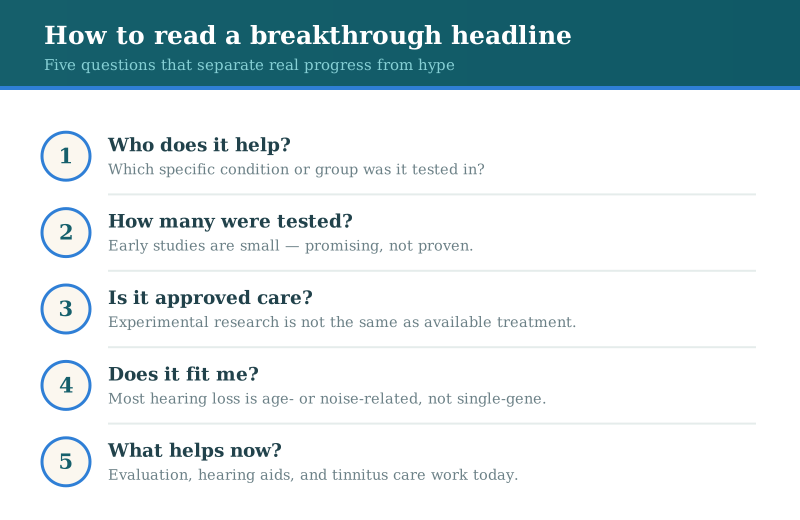
Being precise about what that progress is not matters just as much. These treatments remain experimental, they apply only to a few narrow genetic conditions, and none of them is something you can walk into a clinic and request. For nearly everyone living with hearing loss, the help that actually works is what it has long been: a thorough hearing evaluation and, where they fit, hearing aids and tinnitus care.
A question we hear often is whether it makes sense to postpone treatment and hold out for a breakthrough. Our honest answer is no.
At a glance
- Gene therapy for hearing loss is real research, but it is early and experimental.
- It targets rare, specific inherited conditions, not the age-related or noise-related hearing loss most adults have.
- It is not standard care, and waiting for it is not a reason to delay proven help.
- For almost everyone today, evaluation, hearing aids, and tinnitus care are what work.
What gene therapy for hearing means
Some hearing loss traces back to a change in a single gene that governs how the inner ear works. Gene therapy tries to deliver a working copy of that gene, or otherwise correct its effect, so the sound-detecting cells can do their job. Think of it as a targeted fix for one specific biological cause rather than a broad remedy for hearing loss in general.
Why the early results are promising but narrow
So far, the encouraging progress has centered on rare inherited conditions, often found in young children, where one known gene is responsible. That situation looks very different from the hearing loss most adults develop. Strong early findings in a small group are exactly how sound science starts, yet they have not become a treatment the general population can use. Genetics research is also reaching tinnitus. See what the POU4F3 study means for families.
Who it does not apply to right now
The most common forms of hearing loss come from aging and from years of noise exposure, and they usually involve many contributing factors rather than one faulty gene. The gene therapies now under study do not address that kind of loss. If your hearing has slipped gradually across the years, the right next step is a hearing test, not an experimental gene treatment.
What genuinely helps your hearing today
Modern hearing aids are well researched, genuinely effective, and getting better every year, and a careful hearing aid fitting changes daily life in ways people notice quickly. Treating hearing loss pays off beyond the ears, too. Staying connected and engaged supports overall well-being, one of the reasons we encourage patients not to put care off.
Tinnitus and sound sensitivity while research advances
Plenty of people find the ringing in their ears harder to live with than the hearing loss behind it. Relief does not depend on some future discovery. Well-established, evidence-based methods can quiet how much that ringing intrudes, and our tinnitus resources lay out the options in plain terms.
How to read hearing-loss headlines wisely
News coverage can make an early study sound like a finished cure. A few questions cut through the noise: who does this apply to, how many people has it been tested in, and is it actually available as approved care? Ask your audiologist where a given headline sits on that path before it changes your plans. A squid study from this month is a good example of early science worth reading with those questions in mind.
Why we stay current and treat you today
We track hearing science closely so we can answer your questions honestly at both our San Mateo and San Carlos offices, and put proven advances to work as soon as they are ready. You can read more about our audiology team and how we practice. Keeping up with research and delivering today's reliable care are two halves of the same job, not competing goals. This month's research includes a Vanderbilt study showing that hearing test results can point researchers to genes linked with hearing loss.
Frequently asked questions
Your questions, answered
Can gene therapy cure my hearing loss now?
Not today. Gene therapy for hearing is still experimental and has been studied only in rare, specific inherited conditions. It is not an approved treatment for the age-related or noise-related hearing loss that most adults have.
Should I wait for gene therapy instead of getting hearing aids?
No. There is no proven gene-based treatment available for common hearing loss, and untreated hearing loss affects communication and quality of life. Proven options like a good evaluation and well-fit hearing aids help you now.
Does gene therapy apply to age-related or noise-related hearing loss?
Not in the research so far. Those forms usually involve many factors rather than a single gene, and the early studies have focused on rare inherited conditions. A hearing evaluation is the right step for gradual, lifelong hearing changes.
How will I know when a new treatment is genuinely ready?
It will move from small experimental studies to approved, widely available care, and your audiologist can help you interpret the news. We follow the research and will put proven advances to use for our patients when they arrive.