


Hearing & Ear Health
An audiologist is a licensed hearing and balance specialist trained to test, identify, and manage disorders of the auditory and vestibular systems. That covers a lot of ground: the type and degree of hearing loss, tinnitus, sound sensitivity, certain dizziness problems, and the effects of earwax or noise on how you hear. At our San Mateo and San Carlos offices, that work starts with listening to what you have noticed and then measuring it precisely.
There is a clear boundary, too. Some conditions call for a physician, and a capable audiologist knows exactly where that line sits and refers you without delay. Pairing careful testing with the right services means you spend less time moving between offices and more time getting an answer.
At a glance
- Audiologists diagnose hearing loss, tinnitus, sound sensitivity, and many balance and dizziness disorders.
- They recognize problems that need a physician, such as infection, sudden hearing loss, or a growth, and refer promptly.
- A hearing evaluation is a low-cost first step that sorts most ear concerns into the right care path.
The conditions an audiologist evaluates
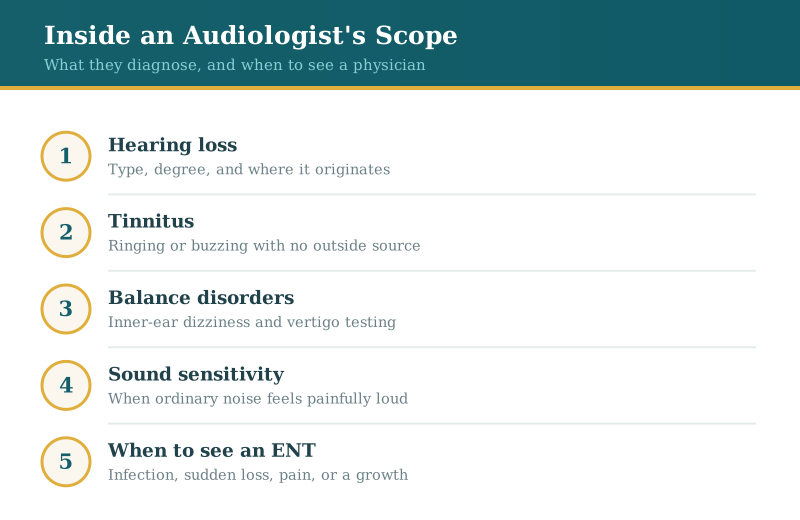
Most of what brings people in falls squarely inside an audiologist's scope. Using painless tests, an audiologist can pin down the type and degree of hearing loss, whether it comes from the inner ear, the middle ear, or the nerve pathway to the brain. They diagnose and manage tinnitus, the ringing or buzzing that has no outside source, and they assess sound sensitivity when ordinary noise feels painfully loud. Many also test the balance system, since the inner ear governs equilibrium as well as hearing. ASHA's plain-language guide to what audiologists do describes them as the professionals who identify and treat hearing and balance disorders.
When you need an ENT or physician instead
Audiologists are experts in measuring and managing how you hear and balance, not in prescribing medication or performing surgery. Certain findings point toward a medical doctor, usually an ear, nose, and throat specialist. Sudden hearing loss in one ear, drainage or pain that suggests infection, dizziness with new neurological symptoms, or a suspected growth all belong with a physician. An audiologist is trained to spot these signs during an evaluation and make the referral, which is why testing is a safe place to start even when the cause turns out to be medical.
Inside a hearing and balance evaluation
An appointment usually begins with your history: what you have noticed, when it started, and how it affects daily life. From there, an audiologist checks your ear canals and eardrums, then runs a series of tests that map how softly you can hear across pitches and how well you follow speech. If earwax is blocking sound, that can often be handled on the spot. When balance is the concern, additional tests look at how your inner ear and eyes work together. The result is a clear picture of what is happening and what to do next.
Getting to the right specialist the first time
Starting with an audiologist rarely means starting over. Because the evaluation separates hearing, tinnitus, and balance concerns from problems that need medical treatment, you either leave with a plan, such as a hearing aid fitting, or with a focused referral and your test results in hand. If you are unsure whether your symptom is one for us or for a doctor, our audiologists are glad to talk it through before you book. You can contact our San Mateo or San Carlos office to describe what you are experiencing.
Frequently asked questions
Your questions, answered
Can an audiologist diagnose an ear infection?
An audiologist can recognize the signs of an infection during an exam, but treating one is a job for a physician. Because infections often involve pain, drainage, or fever, they usually call for medication that a medical doctor prescribes. If an audiologist sees those signs, they will point you toward the right care quickly.
Do I need a referral from my doctor to see an audiologist?
In most cases you can book directly, without a physician's referral, though your insurance plan may have its own rules. It is worth a quick check with your insurance before the visit. Our front desk can help you confirm what your plan requires.
Can an audiologist help with dizziness or vertigo?
Many audiologists test the balance system, since the inner ear controls equilibrium alongside hearing. Certain kinds of dizziness trace back to the vestibular system and show up clearly on these tests. Others stem from causes outside the ear, and in those cases an audiologist will guide you toward the appropriate physician.
Is a hearing test the same as being diagnosed?
A hearing test is the measurement; the diagnosis is the interpretation an audiologist builds from it. Together they tell you the type and degree of any hearing loss and where it originates. From that, you and your audiologist can weigh options such as hearing aids or, when warranted, a medical referral.
What ear problems are outside an audiologist's scope?
Anything requiring medication or surgery falls to a physician: active infections, a perforated eardrum that needs repair, sudden hearing loss, or a suspected tumor. An audiologist's role is to identify these, not to treat them. Spotting them early is one reason a thorough evaluation matters.
Should I see an audiologist or an ENT first for ringing in my ears?
For tinnitus without pain, drainage, or sudden change, an audiologist is a sensible starting point and can begin managing it right away. If the ringing came on suddenly, sits in only one ear, or arrives with other symptoms, a physician should weigh in first. When you are unsure, a phone call to describe it can save you a step.