


Hearing & Aging
The change is usually slow and fairly even between the two ears, which is part of why it slips by. Higher-pitched sounds and crisp consonants tend to go first, so speech can seem present but muddy, especially in a noisy room. A straightforward hearing evaluation is the cleanest way to see where your hearing stands rather than guessing from how conversations feel.
None of this means giving anything up. Many older adults hear well in the settings that matter most to them with the right support, and the options run from hearing aids designed for seniors to small habits that lighten the daily strain.
At a glance
- Presbycusis is gradual, affects both ears, and usually takes the high pitches first.
- It is common and manageable — care ranges from hearing aids to simple communication habits.
- A hearing test shows where you stand; OTC and professionally fitted devices suit different situations.
Presbycusis, in plain terms
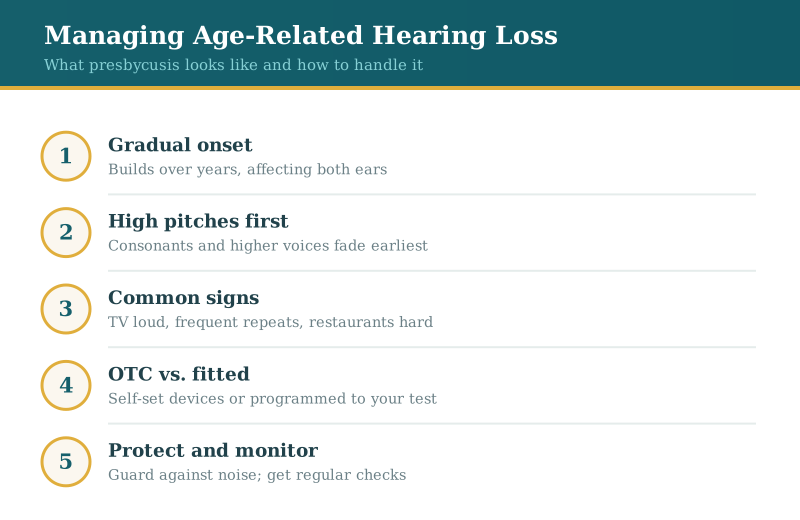
Presbycusis is the name for the hearing loss that tends to arrive with age, usually from wear in the tiny sensory cells of the inner ear. It typically affects both ears to a similar degree and builds up over years rather than appearing overnight. High-frequency sounds fade first, which is why women's and children's voices, birdsong, and consonants like s, f, and th often become the hardest to catch. It is one of the most common conditions among older adults, and the federal NIDCD's overview of hearing loss that comes with age treats it as an expected part of getting older rather than a sign that something has gone seriously wrong. Researchers are also studying how genes shape hearing loss, as in a new study of audiogram data.
Signs worth paying attention to
The early signs are easy to explain away. You might turn the television up while others in the room find it loud, ask people to repeat themselves more often, or feel that conversations in restaurants and gatherings take real effort to follow. Phone calls can get harder, and you may catch yourself watching faces closely to fill in the gaps. If two or three of these sound familiar, a hearing test will confirm whether age-related change is behind them and how far it has gone.
What managing it usually involves
Once presbycusis is confirmed, management is rarely dramatic. For most people it centers on hearing aids matched to the specific pattern of their loss, paired with small communication habits — facing the person you are talking with, cutting background noise where you can, asking for a rephrase rather than a plain repeat. Modern hearing aids are discreet and adjustable, and the models built with older users in mind put a premium on easy handling and clear speech in the situations that wear people down.
Over-the-counter or professionally fitted?
This is the choice most people weigh first, and the honest answer is that it depends on your loss. Over-the-counter hearing aids, sold without an exam, can be a reasonable entry point for mild, roughly even loss when cost or convenience is the priority; you set them up yourself and adjust them through an app. Professionally fitted devices cost more but are programmed to your specific audiogram and fine-tuned in person, which matters more as loss deepens or becomes uneven. A professional fitting also brings follow-up adjustments and someone to call when something is not working. If you are unsure which camp you fall into, a hearing test settles it quickly.
Protecting the hearing you have
You cannot reverse presbycusis, but you can slow further loss and get more from the hearing you keep. Guarding against loud noise is the biggest lever: reach for custom hearing protection around power tools, concerts, and machinery. Managing blood pressure, blood sugar, and heart health helps the inner ear too, since its cells depend on steady circulation. Regular checks let you catch change early, and our audiologists can set a sensible schedule based on your history rather than a one-size interval.
Frequently asked questions
A few questions worth asking
Is age-related hearing loss reversible?
Age-related hearing loss cannot be reversed, since it stems from wear in inner-ear cells that do not regenerate. What it can be is managed well: hearing aids and better listening habits make conversation far easier, and addressing it early usually makes the adjustment smoother.
At what age does it usually start?
Changes often begin in the 50s and 60s, though the timing varies widely with genetics, noise exposure, and general health. Some people notice it earlier, especially after years around loud work or hobbies. Because it creeps up slowly, many have had it for a while before it registers.
Do I really need two hearing aids?
In most cases of presbycusis the answer is yes, because the loss affects both ears and your brain uses input from each to locate sound and pull speech out of noise. Wearing just one can leave conversations feeling lopsided. A fitting appointment confirms what your particular pattern calls for.
How do I get started?
A hearing evaluation is the practical first step, and it is painless and usually takes under an hour. If the results point to age-related loss, we will lay out your options plainly, from OTC devices to fitted ones, with no pressure to decide on the spot. You can reach our San Mateo and San Carlos offices to schedule a visit whenever you are ready.