


Hearing Protection
This guide explains the number, why your real protection is lower, and how to match protection to a concert, a day of hunting or a long flight. Accurate as of November 24, 2026.
At a glance
- NRR stands for noise reduction rating. It comes from lab testing.
- Real-world protection is usually lower than the label, mostly because of fit.
- NIOSH advises choosing protection that brings noise to a safe level without cutting it so much that you cannot hear what you need to.
- A correct fit matters more than the biggest number.
What NRR means
NRR is a lab rating in decibels. Trained testers fit the plug in ideal conditions. Daily users rarely match that. Poor insertion, a loose seal and short use time all lower protection. Treat the label as a best case.
Why a correct fit matters
A plug that does not seal does little. Roll-down foam plugs must be rolled thin, inserted deep and held until they expand. Flanged plugs need the right size. If you are unsure, ask us to check your fit. Our custom earplugs are made from an impression of your ears.
Concerts and music
At loud shows, the goal is to lower the volume and keep the music clear. Plain foam plugs muffle high pitches. Music earplugs lower sound more evenly. Read our guide on hearing at holiday dinners and busy restaurants for crowd tips, and ask us about custom music plugs.
Shooting and hunting
Gunfire is a sudden, very loud sound. Use hearing protection every time, and ask about options that let you hear speech between shots. A hearing test gives you a baseline, so changes show early. See hearing testing.
Flights and travel
Plane cabins are steady and loud for hours. Earplugs can make long trips calmer. Ear pressure on take-off is a separate issue, and some earplugs are made for it. Ask us what suits you.
| Situation | What matters most | What to ask |
|---|---|---|
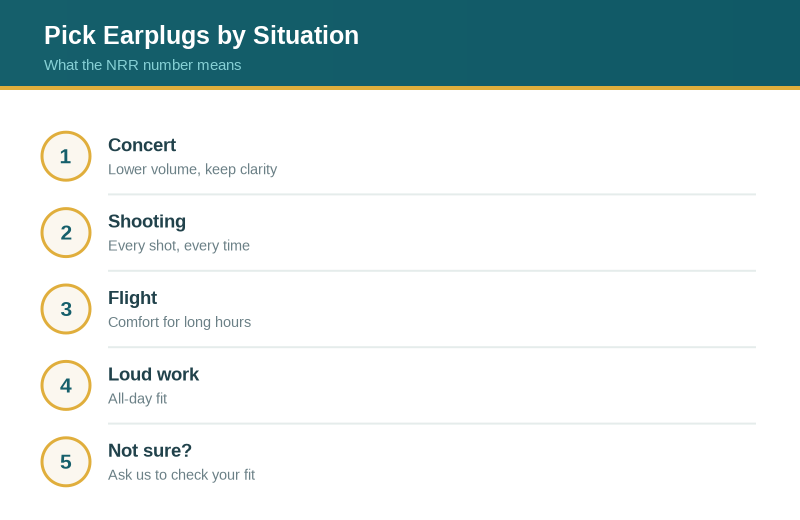
| Concert | Lower volume, keep clarity | Music earplugs, custom fit |
| Shooting or hunting | Every shot, every time | Protection that still lets you hear speech |
| Flight | Calm for long hours | Comfort, and pressure-ease designs if needed |
| Loud work or hobby | All-day comfort | A fit you can wear for hours |
Next step
Book a hearing test to learn your baseline, or ask about custom earplugs. Related: hearing loss and your health and hearing loss and falls. Visit our San Mateo or San Carlos office.
Status and last update
Last updated November 24, 2026. What changed: this is the first version. We will update this page when new evidence or rules change the picture. Sources: NIOSH, CDC: Hearing Protection Devices.
Medical information notice
This page offers general information. It is not a diagnosis or treatment plan. Want to know where your hearing stands? A full hearing evaluation usually takes about an hour. Call 650-342-9449 to book at our San Mateo office, 88 N. San Mateo Drive, or our San Carlos office, 1008 Laurel Street.
Frequently asked questions
Your questions, answered
What does NRR mean?
Noise reduction rating. It is a lab-tested number in decibels printed on hearing protection.
Is a higher NRR always better?
Not always. Fit decides your real protection, and too much blocking can leave you unable to hear what you need.
Why is my real protection lower than the label?
Lab tests use ideal fit. Daily use often has poor insertion or a loose seal.
Do I need custom earplugs?
Not always. They help when you wear plugs often, want comfort and clarity, or struggle to get a seal.
Should I get a hearing test?
Yes, if you are often around loud sound. A baseline shows changes early.