


Hearing Protection
This page helps you choose by activity. Our main page on custom hearing protection covers how molds are made, noise ratings, and who benefits. Musicians, hunters and law enforcement have their own pages, linked below.
At a glance
- We make custom earplugs at both offices, from an impression of your ear canal and outer ear.
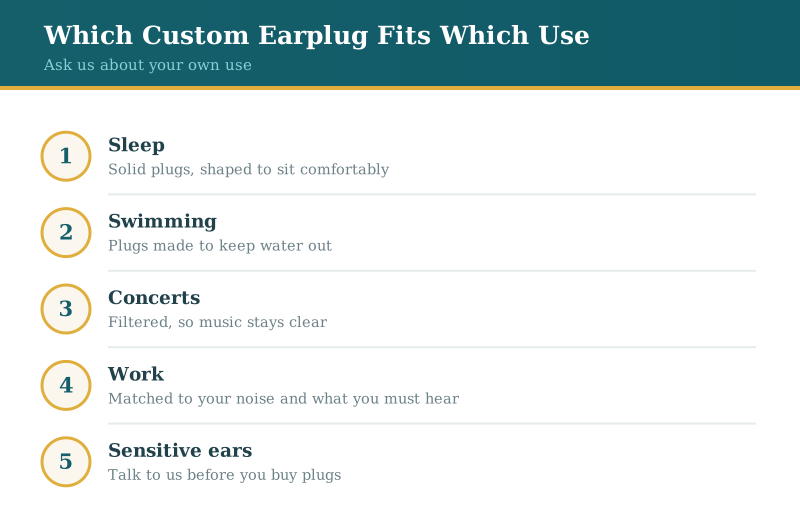
- Pick by activity: solid for sleep or very loud machines, water-blocking for swimming, filtered for concerts and for work where you need to hear speech.
- Sounds at 85 dBA or louder, heard for long enough, can damage hearing. Hearing cells do not regrow.
- Ask us for details on your use. We do not list prices on this page.
What makes an earplug custom
A custom earplug is built from a soft impression of your ear canal and outer ear. A lab then makes a plug shaped to that exact ear. Because the shape is personal, the plug seals better, stays in place when you move, and stays comfortable for longer than a one-size foam plug. A plug you can stand to wear is a plug you will actually wear, and that is what protects your hearing. If you wear hearing aids, the process is close to how we make earpieces for them.
Why protection matters
The National Institute on Deafness and Other Communication Disorders (NIDCD) says long or repeated exposure to sounds at or above 85 dBA can cause hearing loss, and that the louder the sound, the less time it takes. Its examples include concerts and sporting events at about 94 to 110 dBA, motorcycles at about 80 to 110 dBA, and lawn and woodworking tools around the home. NIDCD says most noise-related hearing loss comes from the death of inner ear hair cells, and human hair cells do not regrow. Ringing after a loud night is a warning sign. The advice is to wear earplugs or other protectors during loud activities.
Custom earplugs for sleep
People sleep with earplugs to block a partner's snoring, traffic, or a noisy building. Solid plugs, which block as much sound as possible, suit this use. A custom plug matters here because a plug that presses on your ear when you lie on your side will not last the night. Tell us which side you sleep on. One caution: ear devices worn for many hours can trap wax, and wax can plug the ear. If your ears feel blocked, see our page on earwax removal. Do not push anything into the ear canal to clear it.
Custom earplugs for swimming
Swim plugs are made to keep water out of the ear canal. Some people need this because water in the ear brings on discomfort or infection, and some simply find water in the ear annoying. If you have ear tubes, a hole in the eardrum, or a history of ear infections, tell us at the visit. Ask your own physician what water protection you need. We can discuss how the plug is built for water use at your appointment, and we do not promise results for deep diving or competition without checking your use first.
Custom earplugs for concerts and music
At a concert you want the sound lower, not gone. Foam plugs often dull the sound so much that people pull them out. A filtered custom plug lowers the volume more evenly, so speech and music stay clear at a safer level. This is the plug most concertgoers want. If you play or work in music, see our page on musician's earplugs and in-ear monitors, which is built for players. Never turn the volume up to make up for a plug, and give your ears a quiet break after a loud night.
Custom earplugs for work
People who work around power tools, machinery, dental drills, kitchens, airports or loud crowds often need protection for years. A plug that is too tight on the sound can keep you from hearing a coworker or a warning. A filtered plug can lower the level and still let speech through. A solid plug is better for the loudest machinery. The U.S. National Institute for Occupational Safety and Health (NIOSH) says noise at 85 dBA or higher is considered hazardous, and that occupational hearing loss is permanent but nearly always preventable. We help match the plug to your noise and to what you need to hear. For shooting and hunting, see electronic hearing protection for hunting. For police and security work, see hearing protection for law enforcement.
If you are sensitive to sound
Plugs are for loud places, not for everyday life. Cleveland Clinic warns that using earplugs or headphones to block out sound can make hyperacusis worse, because sounds may feel more intense when you take them out. If everyday sounds already feel too loud or painful, talk to us before you buy plugs. Our page on coping with hyperacusis explains how to use protection without adding to the problem.
What to expect at your visit
We take a soft impression of each ear. The impression goes to a lab, and the lab builds the plugs. Ask us what happens when the plugs come back from the lab. If your weight or your ear shape changes, the fit can change over time, and we can check the seal and remake the plugs if needed. Ask us how long the process takes and what options fit your use. We make custom earplugs at both our San Mateo office, 88 N. San Mateo Drive, and our San Carlos office, 1008 Laurel Street. We also see patients who need a hearing test before they choose protection. See our hearing testing page.
Sources and last update
Last updated October 7, 2026. Sources: NIDCD: Noise-Induced Hearing Loss, CDC/NIOSH: Noise and Hearing Loss Prevention and Cleveland Clinic: Hyperacusis. The description of how our custom plugs are made and used comes from our own practice.
Frequently asked questions
Your questions, answered
Do you make custom earplugs?
Yes. We make custom earplugs at our San Mateo and San Carlos offices. Call 650-342-9449 to ask about your use.
How much do custom earplugs cost?
Call us and we will go over the options for your use. We do not list prices on this page.
Are custom earplugs better than foam?
Custom plugs are shaped to your ear, so they seal and stay comfortable more reliably. They can also use filters that keep speech and music clearer. Foam plugs are fine for short, occasional use if they fit you.
Can I sleep in custom earplugs?
Many people do. Solid plugs suit sleep. If you wear them every night, watch for ear blockage from wax and for any pain or discharge, and have the ear checked if you notice either.
Do custom earplugs work for swimming?
Swim plugs are made to keep water out of the ear canal. Tell us if you have ear tubes, a hole in the eardrum or frequent ear infections, and ask your physician what protection you need.
Where can I get custom earplugs near me?
You can get them at California Hearing Center in San Mateo at 88 N. San Mateo Drive or in San Carlos at 1008 Laurel Street.