


When to See an Audiologist
The range of services an audiologist provides is wider than most people expect. We look into ringing and buzzing, clear out earwax that has hardened past the point of home remedies, sort out dizziness that traces back to the inner ear, and set up custom protection for musicians and hunters. Some visits end with a device fitting; many do not.
You do not need a crisis to make the appointment worthwhile. Whether you have noticed a clear change or simply want a starting point on record, our team in San Mateo and San Carlos can tell you where your hearing stands and what, if anything, is worth doing about it.
At a glance
- Audiologists manage hearing and balance care broadly, not just hearing aid sales.
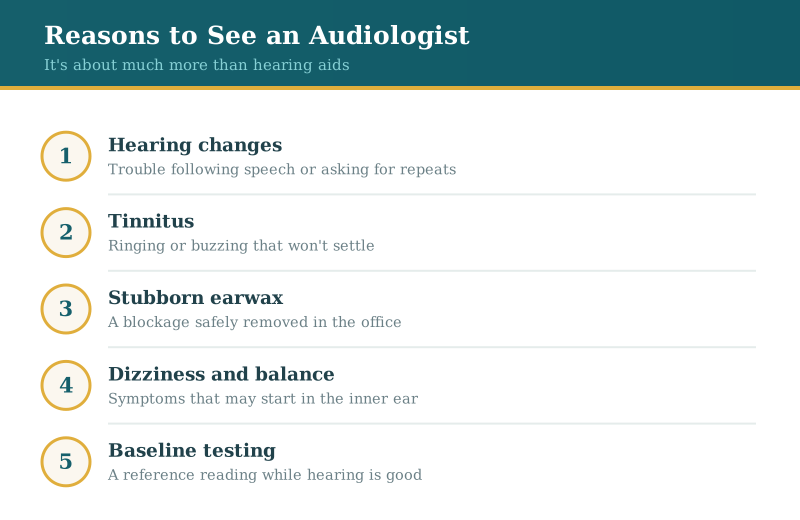
- Common reasons to visit include tinnitus, blocked earwax, dizziness, and baseline testing.
- A hearing evaluation is a low-risk way to find out where you stand and what your options are.
More than fitting hearing aids
It helps to know what an audiologist actually does before you decide whether you need one. We test how well you hear across pitches and in background noise, trace where a change is coming from, and explain the results in plain terms. When a device makes sense, we fit and program hearing aids to your specific loss. When it doesn't, we say so. The goal of the visit is an accurate picture of your hearing, not a sale.
Ringing or buzzing that won't quit
Tinnitus sends a lot of people to us, and it is a valid reason on its own. That ringing, hissing, or buzzing with no outside source can fray your focus and your sleep, and it sometimes points to an underlying issue worth checking. An audiologist can measure your hearing, look for a treatable cause, and walk you through ways to make the sound less intrusive. Our tinnitus care starts with understanding what you are hearing and why.
Earwax you shouldn't dig at yourself
Wax is normal and usually clears on its own, but sometimes it hardens and blocks the canal, muffling sound or causing pressure. Cotton swabs and home tools tend to push it deeper or scratch the canal. An audiologist can look inside with proper lighting and remove a blockage safely. If your hearing dropped suddenly and one ear feels full, earwax removal is a quick thing to rule out first.
Dizziness that starts in the ear
Your inner ear does more than hear; it helps you keep your balance. When it misfires, the world can spin, tilt, or feel unsteady. Audiologists are trained to assess balance and dizziness that originate in the ear and to coordinate with your physician when another cause is likely, a scope ASHA lists among the core duties of an audiologist. If unexplained dizziness has become a pattern, it is worth mentioning at your visit.
A baseline reading while your hearing is good
You don't have to wait for a problem. A baseline test captures where your hearing sits now, which gives you and your audiologist a real reference point if anything shifts later. It is especially useful if your work or hobbies expose you to loud sound, or if hearing loss runs in your family. Booking a hearing test when nothing feels wrong is one of the more level-headed things you can do for your ears.
Frequently asked questions
What patients often want to know
Do I need a referral to see an audiologist?
In most cases you can book directly without a doctor's referral, though some insurance plans ask for one before they cover the visit. It is worth a quick call to your plan if you are unsure. Either way, our audiologists can help you sort out the details before you come in.
What's the difference between an audiologist and a hearing aid store?
A retail hearing aid counter focuses on selling and fitting devices. An audiologist is a licensed clinician who diagnoses the cause of a hearing or balance problem first, then recommends treatment, which may or may not involve a device. That diagnostic step is the part that gets skipped when a device is the only product on offer.
When should I actually make the appointment?
Ringing that lingers, a plugged feeling that won't clear, asking people to repeat themselves, sudden changes in one ear, or new dizziness are all good reasons to schedule a hearing evaluation. You don't need every symptom on the list. One that has stuck around for a couple of weeks is enough to warrant a look.