


Understanding Audiology
Those two letters represent years of graduate training built specifically around hearing and balance. An audiologist is the person who runs a full hearing evaluation, reads the results, explains them in plain language, and maps out what to do next. When that plan involves hearing aids, the same person handles the hearing aid fitting and the fine-tuning that follows in the months after.
Knowing who is on the other side of the desk, and why their training matters, tends to make the whole thing feel less clinical. You can read about our own clinicians on the meet the team page, and if any of this sounds like something you have been putting off, a hearing check is a low-key first step.
At a glance
- An audiologist holds a Doctor of Audiology (AuD), a doctoral degree focused entirely on hearing and balance.
- Their scope covers testing, diagnosis, hearing aids, tinnitus care, and knowing when to refer to a physician.
- For most hearing concerns an audiologist is a sensible first stop, and finding one you trust matters as much as the credentials.
Behind the AuD
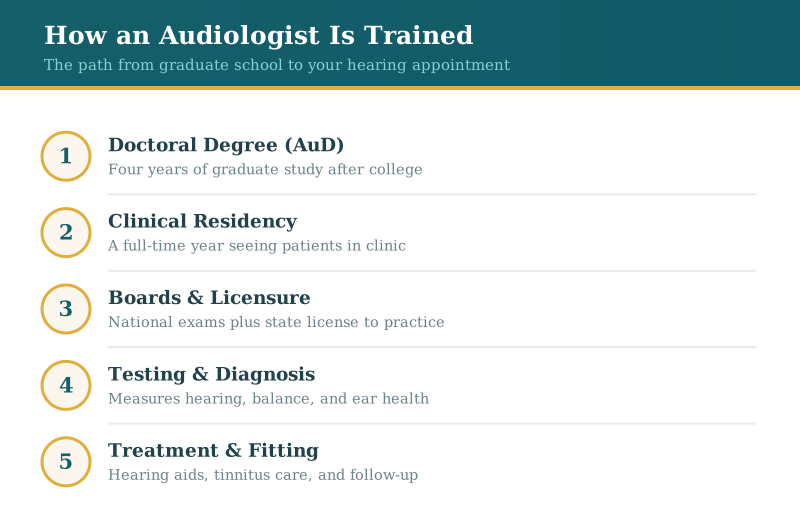
The AuD is a doctoral degree, which means an audiologist has finished college and then spent roughly four more years in graduate school studying hearing and balance science, anatomy, and patient care. The last stretch is a supervised clinical residency, a full year of seeing patients under an experienced audiologist's eye. After that come national board exams and state licensing. ASHA sets out the coursework, clinical hours, and licensing behind that credential in detail. The point is that hearing is not one item on a long menu of services for an audiologist. It is the entire training.
The day-to-day work
On a typical day, an audiologist tests hearing across the pitches and volumes that matter most for understanding speech, checks the health of the ear canal and eardrum, and screens for balance issues that begin in the inner ear. When something is off, they explain the findings and lay out the options, which might mean hearing aids, tinnitus and sound therapy through our tinnitus program, or a referral to a physician when a medical cause needs ruling out. They also handle the quieter but important parts, like safe earwax removal and keeping devices working well over the years.
Audiologist, hearing aid dispenser, or ENT?
These titles get mixed up, and the differences are worth knowing. A hearing instrument specialist, sometimes called a dispenser, is trained and licensed to test hearing and fit hearing aids, but without the doctoral degree or the broader diagnostic scope. An ENT, or otolaryngologist, is a physician and surgeon who treats ear, nose, and throat conditions medically, including surgery when it is called for. An audiologist sits between those roles: doctoral training centered on hearing and balance, deep experience with testing and non-surgical treatment, and a clear sense of when to send you on to a physician. For most people wondering about their hearing, an audiologist is the right first stop.
Choosing someone you trust
Credentials tell you someone is qualified; the fit tells you whether you will follow through. A good audiologist takes time, skips the jargon, and treats a hearing visit as the start of a relationship rather than a one-off transaction, since hearing needs tend to shift over the years. It helps to ask how they handle follow-up care, whether they work with your insurance, and which brands and technologies they fit. If you would like to see who you would be working with, our team page introduces the clinicians here, and you are welcome to contact our offices with questions before you book anything.
Frequently asked questions
Questions patients ask us
Is an audiologist a doctor?
In the academic sense, yes. An audiologist earns a Doctor of Audiology (AuD), which is a doctoral degree, though that differs from a physician who holds an MD. Think of them as the hearing and balance specialist on your care team, one who will point you toward a doctor if a medical or surgical issue turns up.
What is the difference between an audiologist and a hearing aid specialist?
Both can test hearing and fit devices, but the depth of training sets them apart. A hearing instrument specialist concentrates on fitting hearing aids, while an audiologist has doctoral-level training that spans diagnosis, balance, and a wider range of ear conditions. For a complex or unexplained problem, that broader scope can make the difference.
Do I need a referral to see an audiologist?
In most cases you can book directly, with no physician's referral needed. Some insurance plans do ask for one before they cover the visit, so a quick call to check is worthwhile. Our staff can help you sort out the insurance details before you come in.
What happens at a first audiology appointment?
Expect a relaxed conversation about your history and concerns, followed by a painless hearing test in a quiet booth. Afterward the audiologist walks you through the results and, if anything needs attention, lays out your choices. Nothing gets decided for you on the spot.
Can an audiologist help with tinnitus?
Yes, and it is a core part of the work. Audiologists evaluate the ringing or buzzing, look for any treatable cause, and offer approaches like sound therapy and counseling through our tinnitus care. Progress usually comes from steady management and support rather than a single quick fix.
How do I know if it is time to see one?
Trouble following conversation in a noisy room, turning the television up higher than others prefer, ringing in the ears, or asking people to repeat themselves are all reasons to get checked. Waiting until it feels severe rarely helps. A baseline hearing evaluation gives you a clear starting point.