


Your Care Team
The distinction between the two is real but not complicated. An audiologist tests and manages hearing, balance, tinnitus, and hearing aids; an ear, nose, and throat physician (an otolaryngologist) diagnoses and treats medical or surgical problems of the ear. Some situations call for one, some for the other, and a good audiologist will send you to a physician the moment your history or test results point that way.
A handful of symptoms change that answer entirely and should be seen by a physician quickly rather than booked as a routine test. If you are unsure where your situation falls, you are welcome to call our San Mateo or San Carlos office and describe what you are noticing, and we will steer you toward the right kind of appointment.
The reflex to book an ENT
The instinct to start with a physician is understandable, since an ENT is a medical doctor and that feels like the thorough choice. For gradual, painless hearing loss, though, the first thing anyone needs is measurement: a full hearing test that shows the type and degree of loss in each ear. Audiologists specialize in exactly that, and the results are what a physician would ask for anyway. Starting there rarely costs you time and usually saves some.
Two different jobs
It is easy to assume the two professions overlap so much that either will do. They cover different ground. An audiologist evaluates how well you hear, fits and services hearing aids, and manages tinnitus and related concerns. An ENT provides medical and surgical treatment, from clearing stubborn infections to addressing structural problems or operating when that is warranted. The right first stop depends less on who has more letters after their name and more on whether your problem is one of hearing or one of medicine.
Do you need a referral first?
Many people believe a doctor's referral is required before any hearing test. As a medical matter, it usually is not, and you can book an evaluation directly. Where referrals come up is insurance: some plans ask for one before they will cover a visit or a device. That is a paperwork question, not a clinical one, and our staff can help you check your insurance coverage before you come in so there are no surprises.
When it truly is an emergency
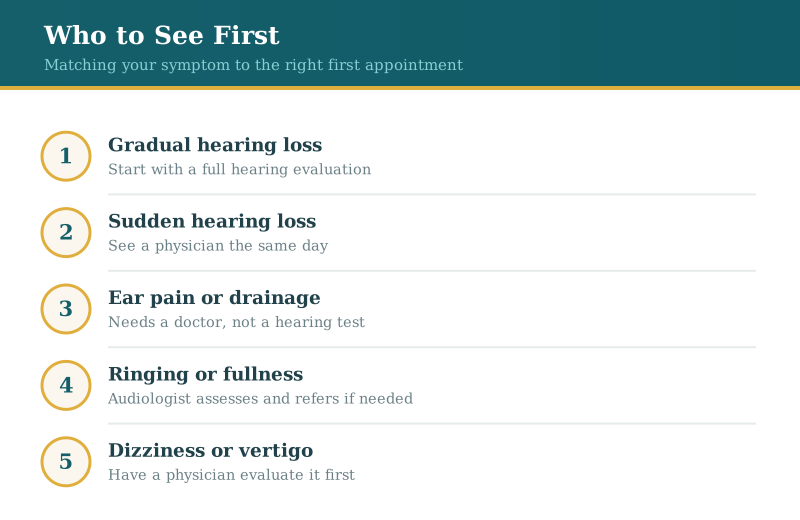
Some symptoms should skip the routine track and be seen by a physician right away. Hearing that drops suddenly, especially in one ear, is treated as a medical urgency, and the window for effective treatment can be short, so sudden hearing loss warrants same-day medical care. The same goes for ear pain, drainage or bleeding, hearing loss following a head injury, or dizziness and vertigo that arrive with it. Ringing or fullness in only one ear also deserves a physician's look. None of these are do-it-yourself situations.
How the two roles connect
A worry we hear is that starting with an audiologist means backtracking if it turns out you need a doctor. In practice the two work as a team. Part of an audiologist's training is recognizing the signs that belong in a physician's hands, and a referral to an ENT is a normal, quick handoff when the findings call for one. You are not choosing one professional forever; you are choosing a sensible place to begin. Our audiologists refer out whenever the situation warrants it.
Earwax, infections, and who handles them
Two of the most common ear complaints land in different places. Impacted earwax is often something an audiologist can evaluate and remove safely, and it is worth ruling out because it mimics hearing loss and muffles sound; our earwax removal visits handle exactly that. An active infection, with pain, fever, or drainage, is a medical problem for a physician rather than a hearing test. If ringing is your main concern instead of pain, that usually points toward an audiologic evaluation and, when needed, tinnitus care, though a new one-sided ring still deserves a medical opinion first.
Frequently asked questions
Your questions, answered
Should I see an audiologist or an ENT for gradual hearing loss?
For hearing that has faded slowly and without pain, an audiologist is the sensible first stop. A full evaluation shows the type and degree of loss and tells you whether a medical referral is needed. If the results or your history raise a medical flag, the audiologist sends you on to an ENT from there.
What symptoms mean I should see a physician first?
Go to a physician quickly for sudden hearing loss, especially in one ear, and for ear pain, drainage, bleeding, hearing loss after an injury, or dizziness and vertigo. New ringing or fullness on one side also belongs with a doctor first. These are not situations to wait out or self-treat.
Do I need a referral to get a hearing test?
Medically, you can usually book a hearing evaluation on your own without a referral. The catch is insurance, since some plans require a referral before they cover the visit or a device. Checking your plan ahead of time is the easiest way to avoid an unexpected bill, and our staff can help with that.
Can an audiologist remove earwax or treat an infection?
Earwax is often within an audiologist's scope, and clearing it can restore muffled hearing on its own. An active infection is different, because pain, fever, or drainage points to a physician who can treat it medically. When earwax is the only issue, an audiologist visit is usually all you need.