


Audiology and ENT Care
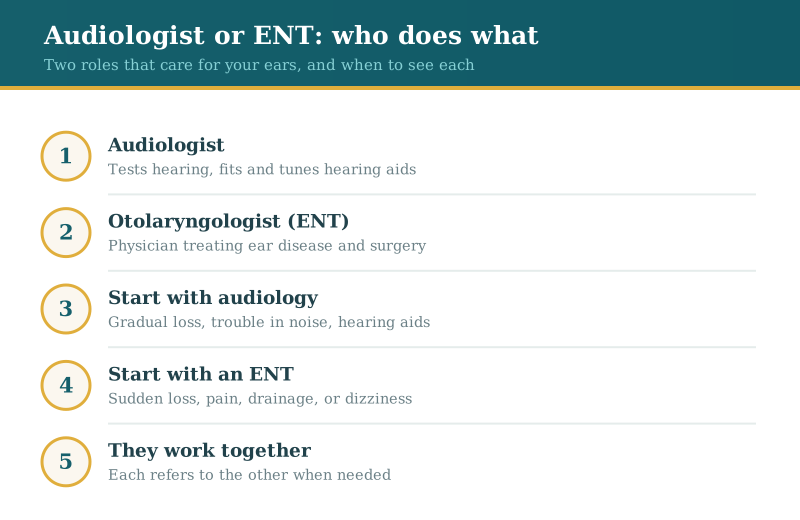
The short version is that both care for your ears, but they do different jobs. An audiologist evaluates and manages hearing and balance — the professional who runs a hearing test and fits hearing aids. An otolaryngologist, usually shortened to ENT, is a physician and surgeon who diagnoses and treats disease of the ear, nose, and throat.
Which one you need depends on what is going on. For most everyday hearing concerns, an audiologist is the natural starting point, while a few specific medical signs point toward a physician first. Our audiologists see both kinds of situations and can help you land in the right place.
At a glance
- An audiologist holds a doctorate in audiology and specializes in testing, hearing aids, and balance care.
- An otolaryngologist (ENT) is a medical doctor who diagnoses and treats ear disease and can perform surgery.
- Gradual hearing trouble usually starts with an audiologist; medical red flags start with a physician.
- The two roles refer to each other, so you rarely have to guess the right door alone.
Different training, different focus
An audiologist and an otolaryngologist both work on the ear, but they come from separate fields. An audiologist earns a clinical doctorate in audiology (the Au.D.) and specializes in measuring hearing and balance, identifying the type and degree of hearing loss, and managing it with devices and rehabilitation. An otolaryngologist is a medical doctor who completed surgical residency in ear, nose, and throat medicine. ASHA's summary of the audiologist's scope describes the field as assessing and treating hearing and balance disorders, while an ENT diagnoses and treats the underlying disease, including anything that calls for medication or an operation.
Where an audiologist fits
Day-to-day hearing care is an audiologist's home turf. That covers a full hearing evaluation, fitting and programming hearing aids, fine-tuning them over time through a proper hearing aid fitting, managing tinnitus, and clearing a plugged ear with safe earwax removal. If your main complaint is that sounds are dull or speech is hard to follow in a crowd, an audiologist is the right first call.
Where an ENT physician fits
An otolaryngologist steps in when the ear needs medical or surgical treatment. Think of ongoing infections, chronic drainage, a perforated eardrum, growths or structural problems, or symptoms that need a prescription or a procedure. Because an ENT is a physician, they can order imaging, prescribe medication, and operate — tools that fall outside an audiologist's scope. When a disease is driving the hearing change, that is the person who treats the cause.
When hearing is the main concern
Most hearing loss comes on gradually and has no medical emergency behind it. If you are turning up the television, missing parts of phone calls, or asking people to repeat themselves, an audiologist can measure exactly what you are missing and lay out your options. This is also the usual path for older adults whose hearing has slipped over the years. There is no medical crisis here, just a treatable change worth acting on.
Signs to start with a physician
Some symptoms deserve a doctor first, and a few deserve one urgently. Sudden hearing loss in one ear should be treated as time-sensitive, because prompt medical care can matter. Ear pain, drainage or bleeding, hearing loss in only one ear, a recent head or ear injury, or dizziness and vertigo also point toward an ENT rather than a routine hearing check. When any of these show up, do not wait for a screening appointment; reach out to a physician.
How the two roles work together
In practice, audiologists and ENTs pass patients back and forth. If an audiologist spots a red flag during testing, the standard step is a referral to a physician for a medical look. Going the other way, an ENT who has ruled out or treated disease will often send you to an audiologist for detailed testing and, when appropriate, hearing aids. Good ear care usually involves both perspectives rather than one alone.
Choosing where to begin
If you are unsure, starting with a hearing evaluation is a low-risk way to get clarity. We can measure your hearing, tell you plainly whether what we see is medical or not, and connect you with an ENT when a physician's care is the right move. You can read about our clinicians on the about page or simply reach out to schedule a visit, and we will point you toward the appointment that actually fits your situation.
Frequently asked questions
What patients often want to know
Is an audiologist a medical doctor?
Not in the physician sense. Many audiologists hold a clinical doctorate, the Au.D., which is the standard entry-level degree for the field, but that is a doctorate in audiology rather than a medical degree. Audiologists diagnose and manage hearing and balance disorders; they do not perform surgery or prescribe medication for ear disease.
Do I need a referral to see an audiologist?
In many cases you can book a hearing evaluation directly without one. Some insurance plans do ask for a physician's referral before they cover the visit, so it is worth checking your coverage ahead of time. If you are not sure, our front desk can help you sort out what your plan requires.
Who handles hearing aids, the audiologist or the ENT?
Hearing aids are an audiologist's specialty. They select the right devices, program them to your specific hearing profile, and adjust them over the follow-up visits that make the difference between tolerable and genuinely helpful. An ENT may recommend hearing aids, but the fitting and long-term care sit with the audiologist.
I have sudden hearing loss in one ear. Who should I see?
Please treat that as urgent and contact a physician or ENT right away, ideally within a day or two. Sudden one-sided hearing loss can respond to prompt medical treatment, and waiting can narrow the options. Once any medical issue has been addressed, an audiologist can handle the follow-up testing.
Can California Hearing Center refer me to an ENT if I need one?
Yes, and we do it regularly. If your evaluation turns up something that needs a physician's care, we will explain what we found and help you get to the right specialist. Our audiologists are comfortable working alongside ENT physicians so your hearing and any medical concern are both covered.