


Medicare & Hearing Care
People often ask whether an audiologist can opt out of Medicare, the way some physicians do. The honest answer is that the rules governing how audiologists enroll, accept assignment, and bill Medicare are specific, federal, and revised from time to time. What matters for your appointment is simpler: what a given office bills, and what your plan will actually pay.
At our San Mateo and San Carlos offices, we are glad to walk through this before you come in, so the cost side holds no surprises. A hearing evaluation is the usual starting point, and we can tell you in plain terms how it is likely to be covered.
At a glance
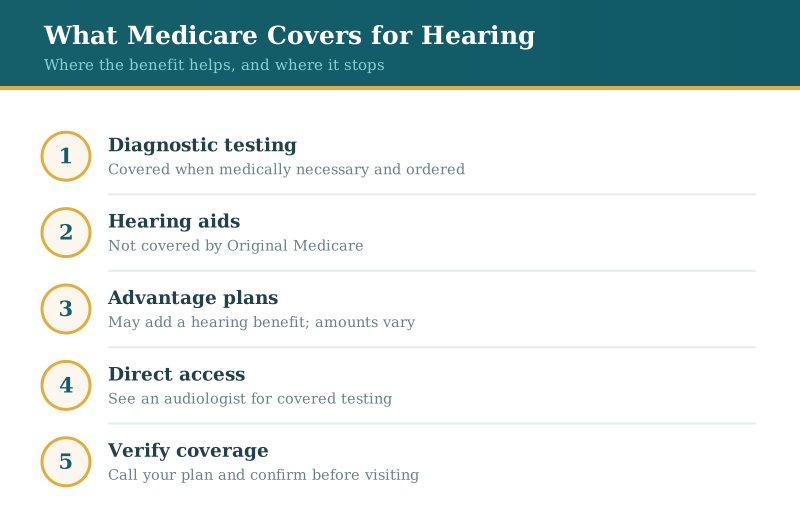
- Part B covers diagnostic hearing and balance exams when a provider orders them. You pay 20 percent of the Medicare-approved amount after the deductible.
- An audiologist can see you without an order once every 12 months, for non-acute hearing conditions only.
- Original Medicare generally does not pay for hearing aids or routine fitting exams.
- Coverage rules and plans change, so verify your current benefits before your visit.
What Medicare Part B typically covers
Medicare.gov says Part B covers diagnostic hearing and balance (fall risk) exams when a doctor or other health care provider orders them to find out whether you need medical treatment. That could be a check for dizziness, a sudden change in hearing, or a suspected medical cause. After you meet the Part B deductible, you pay 20 percent of the Medicare-approved amount. In a hospital outpatient setting you also pay the hospital a copayment. Your actual cost depends on other insurance you have, what the provider charges, whether the provider accepts assignment, and where you get the service. Medicare.gov also says a provider may recommend services Medicare does not cover, so ask why and what Medicare will pay.
Where hearing aids fall outside the benefit
This is the part that catches people off guard. Original Medicare does not pay for hearing aids, and it usually will not cover the routine exam done to fit them. That gap is written into the program, not decided office by office. Some Medicare Advantage (Part C) plans add a hearing benefit that helps toward hearing aids or a fitting, though the dollar amount and the approved devices vary widely from plan to plan. If a hearing benefit matters to you, read the specific plan documents rather than assume.
Seeing an audiologist without a doctor's order
Medicare.gov says an audiologist can perform these exams without an order once every 12 months, but only for non-acute hearing conditions, such as gradual hearing loss over many years, or for diagnostic services related to hearing loss treated with surgically implanted hearing devices. The Centers for Medicare & Medicaid Services (CMS) explains the rule in a 2023 change request, effective July 1, 2023. CMS says it excludes balance (disequilibrium) services and hearing aid services, including exams to prescribe, fit or change hearing aids, and that the patient must come directly to the audiologist. CMS limits it to one direct-access visit per patient every 12 months. If you need a balance exam, a hearing aid fitting, or help with a sudden change, expect to need an order from a doctor or other provider.
The participation and opt-out question
Audiologists enroll with Medicare and decide whether to accept assignment, which affects how claims are billed and what you may owe. The formal opt-out-and-privately-contract pathway that some physicians use is governed by federal rules that do not apply the same way to every provider type, and those rules can shift. Rather than lean on a blanket statement, the reliable move is to ask any office directly how they bill Medicare, then check that against your own plan.
Finding a Medicare audiologist near you
Medicare.gov has a find-a-provider tool that searches by ZIP code for providers who accept Medicare. Not every office bills Medicare the same way, so ask any office how it bills and what you would owe before you book. At California Hearing Center in San Mateo and San Carlos, call 650-342-9449. Our biller can check any plan's benefits for you. This page does not say we accept any particular plan.
How to confirm your own coverage
A few minutes of checking beats a billing surprise. Call the number on your Medicare or Advantage card and ask specifically about diagnostic hearing testing, any physician-order requirement, and hearing-aid benefits. Then ask the audiology office the same questions so the two answers line up. Our staff is happy to help you sort this out, and you can review the basics on our insurance page or reach us through the contact page. For older patients weighing devices, our overview of hearing aids for seniors covers what Medicare typically leaves to you.
Sources and last update
Last updated October 7, 2026. Medicare rules and costs change, so confirm with Medicare or your plan. Sources: Medicare.gov: Hearing and balance exams, Medicare.gov: Hearing aids and CMS: Audiologists may provide certain diagnostic tests without a physician order (MM13055).
Frequently asked questions
Questions patients ask us
Does Medicare cover audiology?
Partly. Part B covers diagnostic hearing and balance exams when a provider orders them. An audiologist can also see you without an order once every 12 months for non-acute hearing conditions. Hearing aids and the exams to fit them are not covered by Original Medicare, according to Medicare.gov. Some Medicare Advantage plans add hearing benefits, so ask your plan.
Does Medicare cover hearing tests?
Original Medicare covers diagnostic hearing and balance tests when a provider orders them to guide medical care. You pay 20 percent of the Medicare-approved amount after the Part B deductible. A routine test tied to buying a hearing aid is not covered. Confirm the details for your coverage before you schedule.
Do I need a referral to see an audiologist on Medicare?
Not always. Medicare.gov says an audiologist can perform diagnostic exams without an order once every 12 months for non-acute hearing conditions. For balance exams, hearing aid exams, or anything acute, expect to need an order.
Will Medicare pay for my hearing aids?
Original Medicare does not pay for hearing aids or the routine exam to fit them. Some Medicare Advantage plans include a hearing benefit that helps toward the cost, but the amount and the eligible devices depend on the plan. Reading your plan's hearing benefit closely is the surest way to know what you have.
How do I find out what my plan covers?
Start with the phone number on your insurance card and ask about diagnostic testing and hearing-aid benefits in plain terms. Then bring those answers to the audiology office so everyone is working from the same information. Our audiologists are glad to help you check before your visit rather than after.