

Insurance & Coverage
This page covers Medi-Cal only. For Medicare, private plans and the whole California picture, read our page on hearing aids and insurance in California.
At a glance
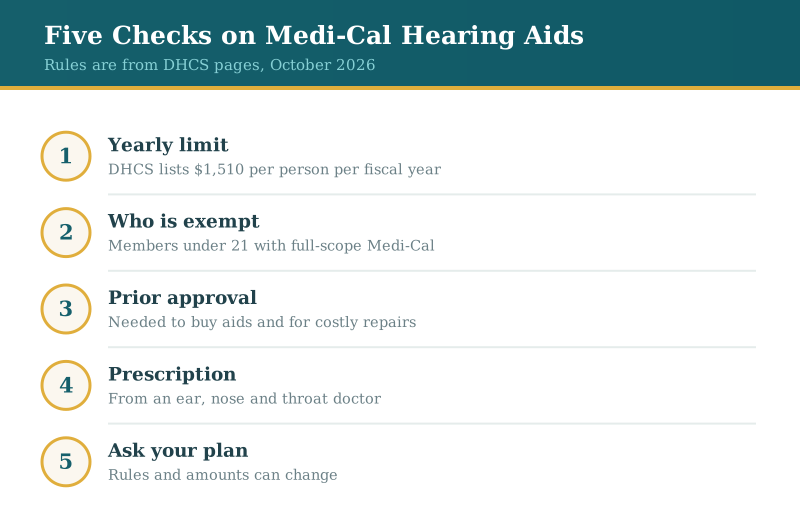
- DHCS pages list a Medi-Cal hearing aid limit of $1,510 per person per fiscal year (July 1 to June 30). Confirm the current figure with your plan.
- The limit does not apply to members under 21 with full-scope Medi-Cal, to pregnancy-related care, to bone-anchored devices, or to some replacements.
- Hearing aids need prior authorization, a prescription from an ear, nose and throat doctor (or your doctor), and an audiology report.
- Call us to ask about your plan. Our biller can check any plan's benefits for you.
Does Medi-Cal pay for hearing aids?
Yes, for members who qualify. The DHCS hearing aid benefit cap page says Medi-Cal pays up to $1,510 per person each fiscal year for hearing aid benefits. A new $1,510 is available each July 1. The same page says the cap can cover two analog hearing aids in one year, and that digital aids cost more, so two may not fit under the cap. DHCS says the cap can be exceeded for medical necessity with prior approval. A DHCS fact sheet for providers dated July 2024 says the same, and describes the approval as coming through your Medi-Cal managed care plan.
What counts toward the yearly limit
DHCS says these count toward the $1,510: the hearing aids themselves; ear molds, supplies and inserts; repairs and replacement parts; the first set of batteries; up to six visits with the same vendor for training, adjustments and fitting after you get the aids; and rental. Because the limit is yearly, timing matters. A repair or a replacement part in the same fiscal year as your purchase uses up the same amount. The fiscal year starts on July 1, so a purchase in June and a repair in July fall in different years.
Who is exempt from the limit
DHCS lists these exemptions: members under 21 who have full-scope Medi-Cal; pregnant members, when the service is part of pregnancy-related care or treats a condition that may cause pregnancy problems; people who use bone-anchored hearing aids (BAHA), which are treated as a prosthetic device; and replacements for aids that were lost, stolen or damaged beyond repair through events beyond the member's control. For damage, DHCS says you need a detailed description signed by your physician, an audiometric report if your old aids were more than three months old, and a police report if they were stolen. DHCS's own words for children's coverage: there is no annual limit for children under 21.
| What DHCS says | |
|---|---|
| Most adult members | Up to $1,510 per person per fiscal year (July 1 to June 30) |
| Members under 21 with full-scope Medi-Cal | Not subject to the limit. No annual limit for children under 21 |
| Pregnancy-related care | Exempt when the service is part of pregnancy-related care or treats a condition that may cause pregnancy problems |
| Bone-anchored hearing aids (BAHA) | Treated as a prosthetic device, so not subject to the limit |
| Lost, stolen or irreparably damaged aids | Replacement is not subject to the limit, with documents required |
| Costs above the limit | Possible for medical necessity with prior approval |
Batteries and repairs
DHCS says everyone gets one standard initial battery packet with new hearing aids. It says replacement batteries are paid only for members younger than 21. Repairs are paid when they fall within the yearly limit, but DHCS says Medi-Cal does not pay to check whether a hearing aid is working. The Medi-Cal audiology manual says repairs that cost more than $25 per service need prior authorization. A DHCS fact sheet from July 2024 says batteries are not covered, which differs from the benefit cap page. The pages do not agree, so ask your plan what applies to you.
How to start: the steps Medi-Cal asks for
The Medi-Cal audiology manual (page updated February 2025) says new hearing aids need a signed prescription, a signed medical history and physical exam by an otolaryngologist (an ear, nose and throat doctor), and a signed audiologic report and hearing aid evaluation. Hearing aids are covered when a hearing aid dispenser supplies them on the prescription of an otolaryngologist, or of the attending physician if no otolaryngologist is available in the community. The manual says purchases and trial rentals need prior authorization. If you are in a Medi-Cal managed care plan, DHCS says the plan handles that approval and the hearing aids come through the plan. Start with your plan's member line and ask who to see.
Children and young adults under 21
DHCS says members under 21 should be referred to California Children's Services (CCS) for hearing services, and that the Early and Periodic Screening, Diagnostic and Treatment (EPSDT) benefit covers all medically necessary services for Medi-Cal members under 21. For children who are not Medi-Cal eligible, DHCS runs the Hearing Aid Coverage for Children Program (HACCP). DHCS describes HACCP as covering ages 0 to 20, with household income above Medi-Cal limits but below 600 percent of the Federal Poverty Level, and with other health insurance that limits hearing aid coverage to $1,500 or less per year. Ask DHCS or your pediatrician for the current rules.
Who can bill Medi-Cal for your hearing aids
DHCS says providers must enroll with DHCS to bill Medi-Cal. If they serve managed care members, they must also contract with each plan in their area. The benefit cap page says a vendor that accepts Medi-Cal payment for a service may not bill you the difference. Whether a particular office is enrolled is a question for that office. We do not state on this page that California Hearing Center accepts Medi-Cal. Call us at 650-342-9449 and our biller will check your plan's benefits and tell you what applies. We offer patient financing for costs a plan does not cover.
If you have Medicare too
If you have both Medicare and Medi-Cal, DHCS says Medicare is the primary payer, and Medi-Cal may pay Medicare cost-sharing. Original Medicare does not cover hearing aids or the exams to fit them, according to Medicare.gov. Some Medicare Advantage plans add hearing benefits, so ask your plan. Our pages on Medicare and audiologists and on Medicare open enrollment and hearing benefits explain the Medicare side.
Sources and last update
Last updated October 7, 2026. We read the DHCS pages in October 2026 and could not confirm the figures for the current fiscal year. Benefit amounts and rules can change. Sources: DHCS: Hearing Aid Benefit Cap and Benefits FAQ, DHCS: Medi-Cal Hearing Aid Benefits and Dyadic Services (November 2024), DHCS: Hearing Benefits Provider Fact Sheet (July 2024), Medi-Cal Hearing Aid Audiology manual and Medicare.gov: Hearing aids.
Questions about your plan
Call 650-342-9449 to talk with our team at our San Mateo office, 88 N. San Mateo Drive, or our San Carlos office, 1008 Laurel Street. This page is general information and not legal or insurance advice.
Frequently asked questions
Your questions, answered
Does Medi-Cal cover hearing aids?
Yes, for members who qualify. DHCS says Medi-Cal pays up to $1,510 per person per fiscal year for hearing aid benefits, with exempt groups. Check your plan for current rules.
Does Medi-Cal pay for hearing aids for adults?
Yes, within the yearly limit, and with prior authorization. DHCS says the limit can be exceeded for medical necessity with approval.
Does Medi-Cal pay for hearing aid batteries?
DHCS's benefit cap page says you get one initial set of batteries, and replacement batteries are paid only for members under 21. A DHCS provider fact sheet says batteries are not covered. Ask your plan.
Does Medi-Cal cover hearing aid repairs?
DHCS says repairs are paid when they fall within the yearly limit. The audiology manual says repairs costing more than $25 per service need prior authorization.
Do you accept Medi-Cal?
Call us at 650-342-9449. Our biller can check any plan's benefits for you, including Medi-Cal, and tell you what applies.
Does Medi-Cal cover hearing aids for children?
DHCS says members under 21 with full-scope Medi-Cal have no annual limit, and that they should be referred to California Children's Services. Children who are not Medi-Cal eligible may qualify for HACCP.