


Balance & Dizziness
This page helps you sort out what you feel. It covers the common inner-ear causes, what an eyelid twitch usually means, and the signs that say get help now. It cannot tell you what is wrong with you. Only an exam can do that.
At a glance
- Call 911 if dizziness comes on suddenly with trouble seeing, speaking or walking, weakness or numbness, or a severe headache with no known cause.
- An eyelid twitch alone is common and usually goes away on its own. Stress, poor sleep, caffeine and eye strain are common triggers.
- Eyes that move on their own (nystagmus) with dizziness can be a sign of an inner-ear or brain problem and need a medical check.
- Inner-ear problems such as BPPV are a common cause of dizziness. A hearing evaluation can show whether the ear is involved.
Get emergency help first: the signs that mean call 911
The Centers for Disease Control and Prevention (CDC) lists stroke warning signs that include abrupt dizziness, loss of balance or trouble walking, abrupt trouble seeing, sudden numbness or weakness in the face, arm or leg, confusion or trouble speaking, and a severe headache with no known cause. The CDC says to call 9-1-1 right away if you or someone else has any of these. It also says not to drive yourself. The Mayo Clinic adds that dizziness or vertigo with a new or severe headache, fever, double vision, hearing loss, trouble talking, weakness in an arm or leg, passing out, falling, or numbness or tingling needs a health professional right away. If you are unsure, treat it as urgent. Do not wait to see if it passes.
Two symptoms or one? Eyelid twitch versus eyes that move
People use "eye twitching" for two different things. The first is a small flutter in the eyelid, called myokymia. The second is nystagmus, which is rapid, repeated, uncontrolled movement of the eyeball itself. Cleveland Clinic says nystagmus can come from the brain, the inner ear balance system, or the eyes. If the movement is in the lid and the room is not moving, it is probably the first kind. If the world seems to shake or jump, or your vision blurs when you move your head, it may be the second. Say which one you have when you talk to a clinician. It changes what they look for.
What causes an eyelid twitch
Cleveland Clinic lists the most common causes of eyelid twitching as stress or anxiety, poor sleep, caffeine or nicotine, medication side effects, sudden bright light, eye strain, and fatigue. A mix of triggers is common. Most kinds are harmless and go away on their own. Less often, a twitch comes from a nerve or brain condition. Cleveland Clinic says to see a provider if the twitching is constant or repeated, if it affects your vision, if it worries you, or if it started after a new medicine. It says to see someone right away for any change in vision. Notice that stress, bad sleep and caffeine can also make you feel off balance. That is one reason the two symptoms can show up together without a shared disease.
Inner-ear causes of dizziness
The inner ear holds your balance organs. Benign paroxysmal positional vertigo (BPPV) is a common cause. The National Institute on Deafness and Other Communication Disorders (NIDCD) describes it as a brief, intense spell of vertigo set off by a head position change, such as bending down, tilting the head back or rolling over in bed. It happens when tiny calcium grains move into one of the inner ear canals. The Mayo Clinic says the spells usually last less than a minute. Other inner-ear causes include vestibular neuritis and labyrinthitis, which are often linked to viral infections, and Meniere's disease. Vestibular migraine can also cause dizziness, with or without a headache. Our pages on what vertigo is and on vertigo, balance disorders and dizziness explain each one.
When the eyes move because of the ear
The inner ear and the eyes are linked by a reflex that keeps your vision steady when your head moves. When the inner ear sends a wrong signal, the eyes can move when you do not want them to. The Mayo Clinic says nystagmus is atypical rhythmic eye movement that most often occurs with BPPV. Cleveland Clinic also lists nystagmus as a symptom of vestibular neuritis and labyrinthitis, and it lists dizziness, shaky or blurry vision and a feeling that surroundings are moving as nystagmus symptoms. This is why a clinician may watch your eyes while you change head position. It is a clue, not a diagnosis. If your eyes move on their own and you also feel dizzy, get checked soon.
Other things that can cause both
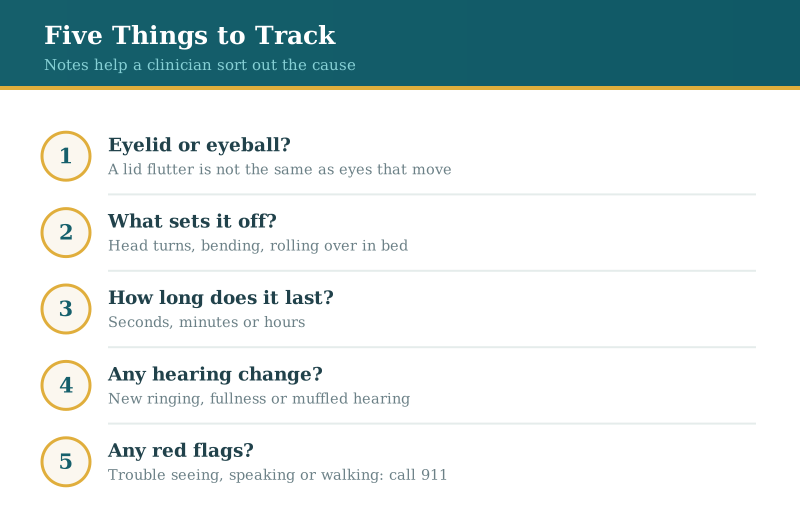
Several everyday things can play a part in both symptoms. Cleveland Clinic names stress, anxiety, poor sleep, caffeine, fatigue and medicine side effects as causes of eyelid twitching. NIDCD names medicines, low blood pressure when you stand up quickly, and anxiety or panic as things that can go with dizziness. Cleveland Clinic lists some seizure medicines as a cause of nystagmus. If your symptoms began after you started or changed a medicine, tell the prescriber. Do not stop a medicine on your own. Keep a short log of when each symptom happens, how long it lasts, and what you were doing. Clinicians use that information.
When to book a visit
Book a visit if dizziness keeps coming back, lasts longer than a few minutes at a time, or limits what you do. Book one if your eyelid twitch is constant, lasts for weeks, or spreads to other parts of your face. Book one if you notice new ringing, a feeling of fullness in the ear, or any change in hearing along with the dizziness. NIDCD advises talking to a doctor if the room seems to spin, even briefly, if you feel unsteady, if you have lost your balance or fallen, or if you have blurred vision. Sudden hearing loss in one ear is a medical emergency, according to NIDCD, so do not wait.
How we can help
At our San Mateo and San Carlos offices we start with your story and a hearing evaluation. Hearing and balance share one inner ear, so hearing results can show whether the ear is part of the problem. We also look in the ear canal. If your symptoms point away from the ear, or if any warning sign is present, we tell you to see a physician. Our post on balance and hearing health explains the link, and our page on audiologists and balance problems explains what to expect. If your dizziness also brings tiredness, chills or sleepiness, read our page on vertigo and sleepiness, chills and tiredness.
Sources and last update
Last updated October 7, 2026. This page has not been reviewed by a clinician yet. Sources: CDC: Signs and Symptoms of Stroke, Mayo Clinic: Vertigo, NIDCD: Balance Disorders, NIDCD: Sudden Deafness, Cleveland Clinic: Eyelid Twitching, Cleveland Clinic: Nystagmus and Cleveland Clinic: Vestibular Neuritis.
Medical information notice
This page is for general information and is not medical advice. It does not replace an exam. For hearing and dizziness checks, call 650-342-9449 to book at our San Mateo office, 88 N. San Mateo Drive, or our San Carlos office, 1008 Laurel Street.
Frequently asked questions
Your questions, answered
Can vertigo cause eye twitching?
Vertigo can come with eye movements you do not control, called nystagmus. The Mayo Clinic says nystagmus most often occurs with BPPV. A small flutter in the eyelid is a different thing, and it is usually linked to stress, sleep, caffeine or eye strain.
Why do I have dizzy spells and eye twitching at the same time?
They can be two separate common problems, or they can share a trigger such as stress, poor sleep, caffeine or a medicine. Sometimes the eye movement is part of an inner-ear problem. A clinician can sort out which it is.
Is eye twitching with dizziness a sign of a stroke?
It can be, if it comes on suddenly with trouble seeing, speaking or walking, weakness or numbness, or a severe headache. The CDC says to call 9-1-1 right away for any of these. Most eyelid twitching is not a stroke sign, but do not guess if the other signs are present.
How long should an eyelid twitch last before I worry?
Cleveland Clinic says to see a provider if the twitching is constant or repeated, if it affects your vision, if it worries you, or if it began after a new medicine. A twitch that comes and goes over a day or two is common.
Which doctor should I see for dizziness and eye twitching?
For sudden or severe signs, go to emergency care. For dizziness that returns or comes with hearing changes or ringing, a hearing evaluation is a sensible start, and your physician can check the rest. An eye doctor can check twitching that affects your vision.