


Balance & the Inner Ear
Vertigo is a symptom, not a diagnosis. It signals that something has thrown off your balance system, and the causes run from harmless and self-correcting to conditions worth treating. Because the inner ear sits at the center of both hearing and balance, dizziness and hearing changes often show up together, which is one reason an audiology practice is a sensible place to start sorting it out.
Some spells settle on their own within days. Others respond well to a simple in-office maneuver or a clear treatment plan. If the room has been spinning on you, our team at our San Mateo & San Carlos offices can help you figure out what is going on.
At a glance
- Vertigo is a false sense of spinning, most often coming from the inner ear.
- BPPV, Meniere's disease, and inner-ear infections are among the common causes.
- Some cases clear on their own; others respond to a quick repositioning maneuver.
- Sudden vertigo with weakness, slurred speech, or a severe headache needs emergency care.
Vertigo versus plain dizziness
People use the word 'dizzy' for a lot of different feelings, so it helps to be specific. Lightheadedness is the sense that you might faint. Unsteadiness is feeling wobbly on your feet. Vertigo is different: it is the distinct illusion that you or the room is spinning or tilting, even when everything is still. Naming the sensation accurately gives a clinician a real head start, because true spinning usually points toward the balance organs of the inner ear rather than, say, a dip in blood pressure.
The inner ear's role in balance
Tucked beside the cochlea, the part that handles hearing, sits the vestibular system: a set of fluid-filled canals and sensors that track the movement and position of your head. When you turn, tilt, or stand, they send steady signals to your brain about which way is up. Damage or disruption in that system, or a mismatch between what your ears report and what your eyes see, is what registers as vertigo. Since hearing and balance are neighbors sharing the same inner-ear real estate, a problem in one can involve the other, which is why episodes of vertigo sometimes arrive alongside ringing or muffled hearing.
The usual suspects
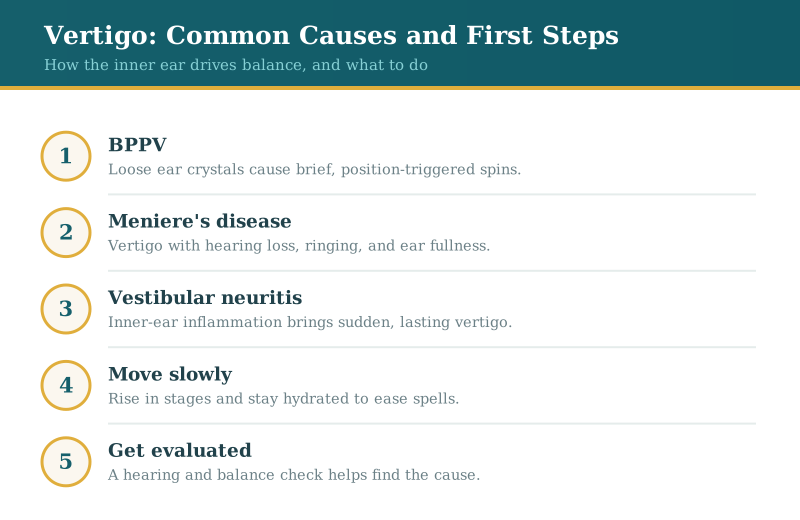
The single most common cause is benign paroxysmal positional vertigo, or BPPV. Tiny calcium crystals that normally sit in one part of the inner ear come loose and drift into the balance canals, so certain head movements set off short, intense spins. Meniere's disease is another inner-ear disorder, one that tends to pair vertigo with fluctuating hearing loss, tinnitus, and a feeling of fullness in the ear. Vestibular neuritis and labyrinthitis, often the aftermath of a viral infection, can bring on sudden, longer-lasting vertigo. The National Institute on Deafness and Other Communication Disorders catalogs these and other balance disorders in plain language if you want to read further.
What you can try at home
For mild, familiar spells, a few simple habits help. Move deliberately instead of snapping your head around, and sit or lie down at the first sign of spinning so you do not fall. Get up in stages: swing your legs off the bed, pause, then rise. Staying hydrated and easing off caffeine, alcohol, and very salty foods can reduce how often some people flare, particularly with Meniere's. For BPPV, a repositioning technique called the Epley maneuver often resolves it fast, but it works best when a trained professional confirms the diagnosis and guides the movements, so treat online videos as background rather than a substitute for care.
When to get checked, and when to call for help
Book an evaluation if vertigo keeps returning, lingers, or comes with new hearing loss or ringing. Some symptoms, though, are red flags for something more urgent than an inner-ear problem. Seek emergency care right away if vertigo hits alongside a sudden severe headache, weakness or numbness, trouble speaking or seeing, double vision, chest pain, or fainting, since those can signal a stroke or another serious event. When symptoms like these appear, do not try to wait them out at home.
Why an audiology practice is a good first stop
Because so much vertigo begins in the inner ear, a hearing and balance evaluation is a practical way to start narrowing down the cause. We can test your hearing, look for patterns that point toward specific conditions, and coordinate further balance testing or referrals when they are warranted. If you are on the Peninsula or in the greater Bay Area, you can contact our offices to set up a visit, and we will walk you through what the findings mean and what comes next.
Frequently asked questions
What patients often want to know
Is vertigo the same as being dizzy?
Not exactly. 'Dizzy' can mean lightheaded or unsteady, while vertigo is the specific feeling that you or the room is spinning. The distinction matters because true spinning usually points to the inner ear, and describing it accurately helps a clinician find the cause faster.
What is the most common cause of vertigo?
Benign paroxysmal positional vertigo, or BPPV, leads the list. Loose calcium crystals in the inner ear trigger brief, intense spins with certain head movements. It is generally treatable, often with a repositioning maneuver a trained provider performs, so it is worth getting checked rather than guessing.
Can hearing problems and vertigo be connected?
Yes. Hearing and balance share the same inner-ear structures, so a single problem can affect both. Conditions like Meniere's disease pair vertigo with hearing changes and ringing. That overlap is one reason our audiologists often start with a hearing evaluation when dizziness is in the picture.
When should I see someone about vertigo?
Get evaluated if spells keep coming back, last a long time, or arrive with new hearing loss or tinnitus. Seek emergency care immediately if vertigo comes with a severe headache, weakness, slurred speech, vision changes, or chest pain, since those can point to a stroke rather than an inner-ear issue.