


Balance & the Inner Ear
Your inner ear holds two systems, not one. Alongside the parts that let you hear sits a set of fluid-filled canals and sensors that tell your brain which way your head is moving and where 'down' is. When those signals arrive muddled, the result can feel like spinning, floating, or a plain wobble. An audiologist is trained to measure how well that balance apparatus is working, often in the same visit as a hearing evaluation.
Balance is a joint effort among your ears, eyes, joints, and brain, so not every unsteady spell traces back to the inner ear. That is why an audiologist works alongside your physician rather than in place of one. If dizziness has been creeping into your days, our audiologists in San Mateo and San Carlos can help sort out how much of it belongs to your ears and what to do next.
At a glance
- The inner ear governs balance as well as hearing, so ear-based dizziness is common.
- Audiologists perform vestibular testing to measure how the balance organs and their reflexes are working.
- Not every balance problem comes from the ear; some need a physician, and a few are urgent.
- A balance workup often pairs naturally with a hearing test, since both trace to the same organ.
The ear's second job
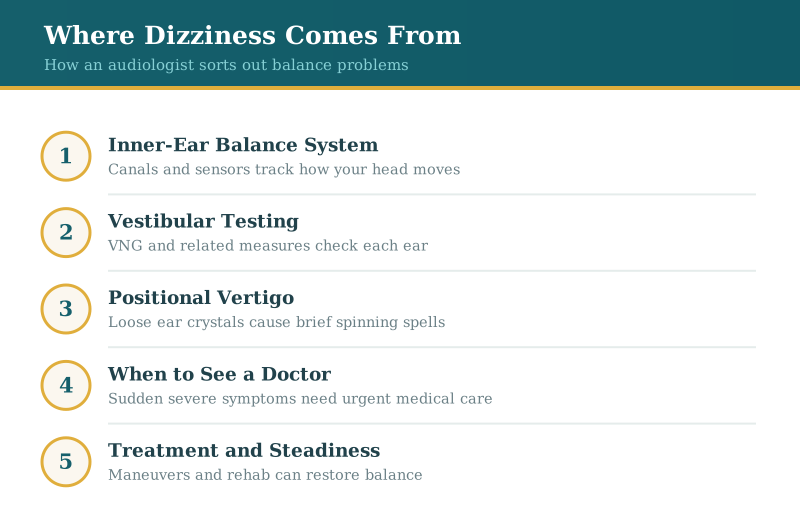
Tucked beside the cochlea, the coiled part that handles hearing, sits the vestibular system: three loop-shaped canals and two small sacs, all filled with fluid. As your head turns, tips, or speeds up, that fluid shifts and fires signals about motion and position. Your brain blends those signals with what your eyes see and what your feet feel to keep you upright. When the inner-ear part of that trio falters, the mismatch can register as spinning, tilting, or a floating unsteadiness. The NIDCD's overview of balance disorders and what goes wrong in the inner ear walks through the same machinery.
What vestibular testing can show
An audiologist has tools that reach past asking how you feel. Videonystagmography, usually shortened to VNG, records your eye movements while you track targets and while your head rests in different positions, because the eyes and the balance organs are wired together through a reflex. Other measures gently stir the canals with warm and cool air, or read tiny muscle responses to sound that reveal how specific parts of the inner ear behave. Nothing here is painful. Together the results help show whether one ear is underperforming, which canal may be involved, and how your two sides compare.
Common inner-ear reasons for dizziness
A few inner-ear conditions turn up often. In one, loose crystals drift into a balance canal and set off brief, intense spinning when you roll over in bed or tip your head back to look up; it ranks among the most common causes and is frequently very treatable. In another, inflammation of the balance nerve brings days of strong vertigo that gradually eases. A third pairs bouts of vertigo with fullness, ringing, and shifting hearing in one ear. Testing helps tell these apart, which matters because each one calls for a different response.
When it is not your ears
A good share of unsteadiness has nothing to do with the inner ear. Low blood pressure, dehydration, certain medications, blood-sugar swings, vision changes, and trouble in the nerves or joints of the legs can all leave you feeling off. Because the causes spread so wide, an audiologist's findings form one piece of a larger picture. If testing points away from the ears, the results still earn their keep: they narrow the search and hand your physician a clearer direction to follow.
Signs that call for a doctor first
Some symptoms should send you to a physician or emergency care before anything else. Dizziness that shows up with a sudden severe headache, slurred speech, weakness or numbness on one side, double vision, trouble walking, or chest pain can point to something that needs immediate attention. The same goes for a first-ever episode of violent vertigo or a sudden loss of hearing in one ear. When you are unsure, get medical help promptly. Vestibular testing can wait until anything urgent has been ruled out.
Balance, falls, and steadier years
Balance draws more attention with age, and for fair reason: a single fall can undo a lot of independence in a moment. Inner-ear function, muscle strength, vision, and reaction time all play a part, and tending to the pieces you can change makes a genuine difference. Resolving an ear-based balance problem, keeping hearing well supported, and staying active all help you feel surer on your feet. If you or an older parent has had a near-fall or two, that alone is reason enough to have both hearing and balance looked at.
What a balance visit looks like
A first appointment usually opens with questions: when the dizziness happens, how long it lasts, what seems to trigger it. From there an audiologist may run a hearing test and a set of balance measures, then walk you through what the pattern suggests. Sometimes the next step is a simple repositioning maneuver done right there in the office; other times it is a referral for vestibular rehabilitation or a note back to your physician. Our audiology team explains each finding in plain terms and helps you plan the move that fits. People often tell us the clarity alone is a relief, and you can read some of their experiences. If dizziness has been wearing on you, reach out to schedule an evaluation.
Frequently asked questions
What patients often want to know
Can an audiologist diagnose the cause of my dizziness?
An audiologist can test how well your inner-ear balance system is working and identify many ear-related causes of dizziness. For causes that sit outside the ear, the testing still helps by pointing your physician in the right direction. Think of it as one detailed piece of the diagnosis rather than the whole answer.
Is vestibular testing uncomfortable?
Most people find it manageable. You will follow moving targets with your eyes, hold a few head positions, and sit through some gentle measures. A couple of steps can bring on brief dizziness by design, but it fades quickly and nothing is painful. Tell your audiologist if you feel unwell and they will pause.
Do I need a hearing test too?
Often it makes sense. Since hearing and balance share the same organ, a hearing evaluation can surface patterns that explain your symptoms, especially when dizziness comes with ringing or a change in one ear. Many people have both checked in a single appointment.
When should I skip the audiologist and go straight to a doctor?
Sudden, severe symptoms come first. Dizziness paired with slurred speech, one-sided weakness, a crushing headache, double vision, or a sudden loss of hearing needs urgent medical care without delay. Once anything serious has been ruled out, balance testing becomes a reasonable next step.
Can treating my ears actually improve my balance?
In many ear-related cases it can. A repositioning maneuver can clear certain kinds of positional vertigo quickly, and vestibular rehabilitation can retrain your balance over weeks. The right approach depends on what the testing finds, which is why the workup comes before any plan.