


Hearing Aids & Technology
Following speech in a crowd is the single hardest job any listener faces, and it is the difficulty patients bring to us more than any other. Directional microphones and noise-management software were built for exactly this problem. They can turn a wall of clatter into something you can work with. What they cannot do is switch the room off. Understanding where that line sits is the difference between loving your hearing aids and feeling let down by them.
So it helps to separate what these devices really do from what people assume they do. A careful hearing evaluation and a well-matched fitting matter far more here than any single feature on a spec sheet.
The hope that a hearing aid will silence the room
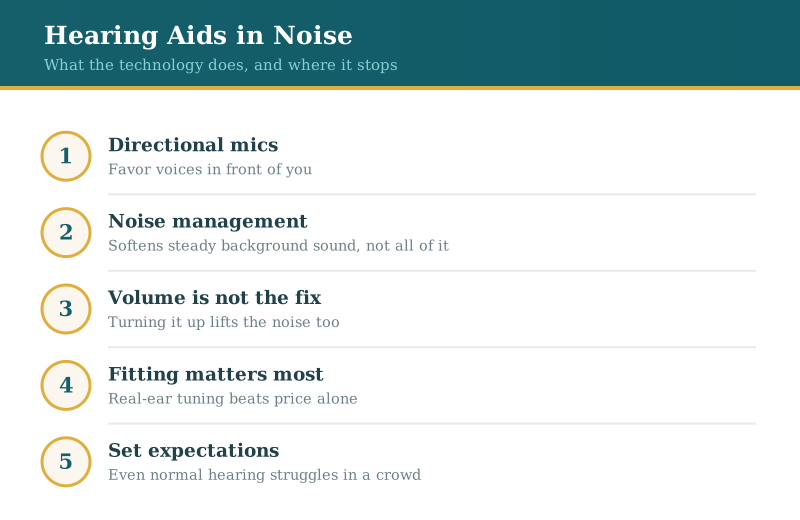
The wish is that a hearing aid mutes the diners at the next table and hands you only the person across from you. That is not how they work. Hearing aids amplify and shape sound; they do not erase it. Noise-management processing can soften a steady hum, the drone of a fan, or the rumble of traffic, and it does this well. Sudden, speech-like sounds are much harder to separate from the voice you want, because to the microphone they look almost the same. Expect a room that is easier to manage, not a room that has gone silent.
Why 'just aim me at the speaker' only goes so far
Directional microphones favor sound arriving from in front of you and pull back on what comes from the sides and behind. When you sit across from one person and the noise is behind them, this can be a real advantage. The catch is that noisy rooms rarely cooperate. Voices come from every direction, the person you care about may be beside you, and background chatter sits in the same range as speech. Directionality sharpens the odds in your favor; it does not guarantee a win in every seat.
Turning the volume up tends to backfire
A natural instinct in a loud room is to reach for more volume. In steady quiet that helps, but in a crowd it usually makes things worse, because you lift the background noise by the same amount as the voice. Modern hearing aids try to be smarter than a single volume knob, applying more gain to speech frequencies and less to constant noise. Many also offer a dedicated restaurant or noise program that shifts this balance the moment you tap a button or open an app.
The assumption that every hearing aid handles noise alike
Two hearing aids can look identical and perform very differently in a crowd. More advanced models process sound faster, split it into more channels, and make finer decisions about what to lift and what to hold back. That is much of what separates the technology tiers you will see across the major brands. It does not mean the priciest device is automatically right for you. The gap between a good result and a frustrating one usually comes down to matching the technology to your hearing and your daily life.
Struggling in a crowd does not mean the aids have failed
Here is a fact worth sitting with: people with completely normal hearing also lose the thread in a loud restaurant. Background noise is a challenge for every human ear, so some effort in a crowd is normal, not a sign your devices are broken. If a noisy room feels impossible rather than merely tiring, that is different, and it is often fixable. A follow-up hearing aid fitting with real-ear measurement lets us fine-tune the settings to your actual ears and your toughest listening spots.
Getting the most from your hearing aids in noise
Technology carries part of the load; how you use it carries the rest. Choose a seat with your back to the noise and your companions in front of you. Face the person you are speaking with so the microphones and your own lipreading work together. Ask about a noise or restaurant program, and use it. And keep the follow-up appointments, because the tuning we do after those first weeks is where much of the real-world benefit lives. At our San Mateo and San Carlos offices we treat that fine-tuning as part of the fitting, not an extra.
Frequently asked questions
Questions patients ask us
Will hearing aids let me hear one voice in a loud restaurant?
They will make it noticeably easier, and for many people that is the difference between joining a meal and dreading it. What they will not do is deliver a single voice in perfect isolation while the rest of the room goes quiet. Pairing good directional technology with smart seating and a noise program gets you close to the best any listener can manage in that setting.
What do directional microphones actually do?
Each hearing aid carries more than one microphone, and comparing what they pick up lets the device favor sound from in front of you while easing off sound from behind. In practice, that means the voice across the table stands out a little more against the chatter around you. The effect is strongest when you are facing the person you want to hear.
Are premium hearing aids worth it for noisy places?
For someone who spends a lot of time in restaurants, meetings, or crowds, higher-tier processing often earns its keep in exactly those moments. For a quieter lifestyle, a mid-level device fitted well may serve you just as happily. The honest answer depends on where you listen, which is something a hearing test and a conversation about your routine can sort out.
What can I do besides adjusting my hearing aids?
Small habits add up. Sit with your back to the loudest part of the room, keep the person you are talking with in view, and choose booths or corners over open centers when you can. Reducing the noise you invite in the first place lets the hearing aids spend their effort on the voices that matter. Our audiologists are glad to walk through strategies that fit your usual outings.