


Awareness & Prevention
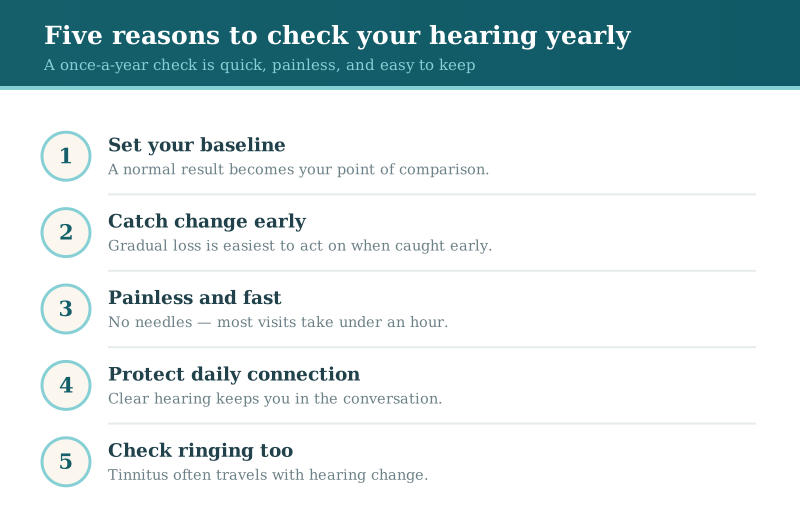
A yearly hearing test closes that blind spot. It is quick, painless, and shows how you actually hear rather than how you assume you hear. You already track your vision and your blood pressure on a schedule, and your ears deserve the same kind of regular baseline you can follow over time.
If you have been meaning to book and keep pushing it down the list, Better Hearing Month is the excuse to stop putting it off.
At a glance
- Hearing loss usually creeps in gradually, so you adapt without realizing what you're missing.
- An annual hearing check gives you a baseline and catches change early.
- A hearing evaluation is quick, comfortable, and completely non-invasive.
- Acting early keeps more options open and protects communication and connection.
How gradual loss slips past you
The most common types of hearing loss develop over years, not weeks. There is rarely a single moment you can point to and say the sound changed, because the fade is that slow. What you notice instead are the side effects: conversations start to feel like work, crowded rooms leave you drained, and you catch yourself watching faces to follow what people say. A yearly check turns that vague sense that something is off into clear information you can act on.
What an annual check turns up
A hearing evaluation measures the softest sounds you can pick up across the range of pitches that carry speech. It shows whether your two ears are working evenly, whether any loss is mild or more significant, and whether earwax or another treatable issue is part of the picture. A perfectly normal result still earns its keep, since it becomes the baseline every future test is compared against.
Who should get their hearing tested
Anyone over sixty has good reason to test yearly, and so does anyone who works or worked around loud noise or lives with diabetes, heart concerns, or a family history of hearing loss. Age is not the only trigger. Book a check at any age if people say you talk loudly, you keep missing the doorbell or the phone, or you push the volume higher than everyone else in the room. Hearing usually shifts as the years pass, which is why we often walk patients through options like hearing aids for seniors once a test shows the time has come.
What the appointment is really like
This is the part people dread for no real reason. A hearing test involves no needles and nothing uncomfortable. You settle into a chair, listen for a series of soft tones and words, and respond as you hear them. Most evaluations wrap up in under an hour, and you walk out the same day knowing exactly where your hearing stands and what, if anything, to do next.
Why acting early pays off
Untreated hearing loss does more than muffle sound. It strains conversation, wears you down, and can quietly pull you back from the people and activities you love. Researchers also count hearing among the factors that help keep the mind sharp with age. Catching a change early tends to mean simpler solutions and, when they help, well-fit hearing aids that keep you fully present in your own life.
When ringing comes along with it
Plenty of people who notice a hearing change also notice ringing or buzzing in the ears. That is tinnitus, and it frequently travels alongside hearing loss. It rarely points to anything dangerous, though it is worth raising at your check, since treating the hearing loss often makes the ringing fade into the background.
Make this the year you go in
Better Hearing Month works best as a prompt rather than a slogan. Pick a month you will actually remember, maybe tied to a birthday or the arrival of spring, and let the hearing check settle into an annual habit. Whenever you feel ready, you can contact our offices to book a straightforward evaluation at either our San Mateo or San Carlos office.
Frequently asked questions
A few questions worth asking
How often should I get my hearing checked?
Once a year is a sensible habit for most adults, especially past sixty or if you've had noise exposure. A yearly check builds a baseline so any change is caught early rather than years later.
Does a hearing test hurt?
Not at all. There are no needles and nothing invasive. You listen to soft tones and words in a quiet room and respond when you hear them. Most people are surprised by how easy and relaxed it is.
How long does a hearing evaluation take?
Most evaluations take under an hour, and you get your results the same visit. You'll leave understanding where your hearing stands and what steps, if any, make sense for you.
I hear fine — is a check still worth it?
Yes. A normal result is valuable because it becomes your baseline for future comparison. Hearing changes slowly, and a yearly check is the surest way to notice a shift before it affects daily life.