


Living With Hearing Aids
The packing problem is real, though. A charger left on the nightstand turns a rechargeable pair into two silent lumps of plastic by dinnertime on day one, and a wax guard that fails in a hotel room in another country is a different kind of problem from one that fails ten minutes from our office. Most of this page is about the small things that prevent that.
If a trip is coming up and you are unsure about your particular devices, bring them in beforehand. A clean-and-check and a spare-parts top-up before you fly is far easier than troubleshooting by email from abroad, and it is the kind of visit we would rather do early. Our repair and service team handles it at either office.
At a glance
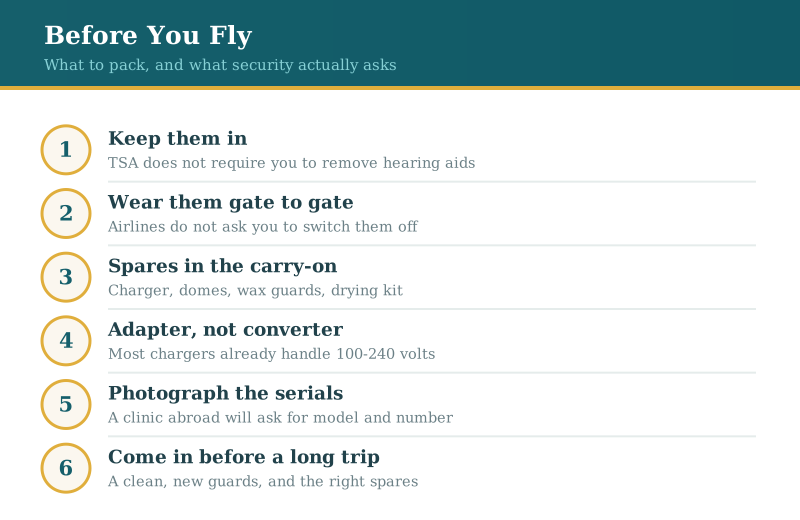
- TSA does not require you to remove hearing aids or cochlear implant processors at screening.
- Hearing aids are not the kind of electronic device airlines ask you to switch off, so you can wear them gate to gate.
- Pack the charger, a backup power source, spare domes and wax guards, and a drying container — in your carry-on, never the hold.
- Modern chargers handle overseas voltage; what you need abroad is usually a plug adapter, not a voltage converter.
Getting through airport security
You keep them in. The Transportation Security Administration states plainly that you are not required to remove any hearing aids or cochlear implants for screening. Hearing aids are far too small to trigger a walk-through metal detector, and the body scanners used at most checkpoints do not react to them either. If a device does alarm, TSA notes that additional screening such as a pat-down or an inspection of the device may follow — which is a normal outcome, not a problem. Tell the officer you are deaf or hard of hearing and need help with instructions, because the one genuine difficulty at a checkpoint is missing a spoken direction with your back turned and a noisy hall behind you.
On the plane
Wear them. The switch-off instruction for takeoff and landing applies to devices that transmit on their own, and hearing aids do not fall into that group in any airline's rules. The Bluetooth connection between your two aids, or between your aids and your phone, is very low power and stays within a couple of feet of your head. If you want to stream from the seatback entertainment system, the practical obstacle is the armrest jack, not permission: a small transmitter that plugs into the headphone socket and sends audio to your aids solves it, and it is worth testing at home before you rely on it at 35,000 feet. Cabin pressure does not damage hearing aids. If your ears feel blocked on descent, that is your middle ear rather than your devices.
What to pack, and where
Everything for your ears goes in the carry-on. Hold luggage gets cold, gets lost, and gets delayed, and none of those are things you want between you and hearing. Pack the charger and its cable, a plug adapter for the country you are going to, spare domes and wax guards, a cleaning brush, a drying container or dry-aid kit, and — if you wear disposables — more batteries than the trip should need. A power bank earns its place on long travel days. Take a photo of your devices' make, model and serial numbers before you leave and keep it on your phone, because that information is what a clinic in another city will ask for first.
Charging abroad
Check the charger, not the aids. Nearly every current hearing aid charger is rated for 100 to 240 volts, which covers both North American and European supply, so what you need is a plug adapter that changes the shape of the pins rather than a voltage converter that changes the electricity. The rating is printed in small type on the charger itself or its power brick — read it before you buy anything. Two habits save trips: charge overnight every night rather than topping up when you notice the battery falling, and carry a power bank so a long flight or a hotel room with two accessible sockets behind the bed does not become the reason you cannot hear at dinner.
If a hearing aid fails while you are away
Work through the cheap causes first, because they account for most failures: change the wax guard, change the dome, dry the device overnight in your drying container, and make sure the charger contacts are clean. That sequence fixes the majority of sudden losses of sound, and it is why the spares belong in the carry-on. If it is genuinely broken, most manufacturers have service networks worldwide and most independent clinics will help a visitor with a clean, a re-tube or a loaner, though what they can program depends on the brand. Call us at 650-342-9449 either way — knowing your model and settings, we can often tell you over the phone whether this is a five-minute fix or something that waits until you are home.
Before a long trip, come in
The visit that prevents the problem takes about twenty minutes. We clean the devices properly, replace wax guards and domes, check the receivers, confirm the charger is behaving, and send you off with the spares you will need rather than the ones you happen to have. If you are traveling somewhere genuinely remote or for a long stretch, say so and we will pack you more thoroughly. Call 650-342-9449 for either office — 88 N. San Mateo Drive in San Mateo, or 1008 Laurel Street in San Carlos — and if you are not yet a patient here, a pre-travel check is a reasonable first visit and costs you nothing to ask about.
Frequently asked questions
What patients often want to know
Do I have to take my hearing aids out for airport security?
No. TSA states that you are not required to remove hearing aids or cochlear implants at screening, and hearing aids are too small to set off a walk-through metal detector in any case. Keep them in, and tell the officer if you need spoken instructions repeated or facing you.
Do hearing aids set off airport scanners?
Almost never. The metal in a hearing aid is a fraction of what a detector is calibrated to find, and body scanners do not typically react to them either. If a device does alarm, the officer may ask to inspect it or perform a pat-down, which is routine and does not mean anything is wrong with your devices.
Can I wear hearing aids during takeoff and landing?
Yes. The instruction to switch off electronics is aimed at devices that transmit, and hearing aids are not treated that way by airlines. Leave them in for the whole flight — you will want them for the safety briefing and the announcements, which are exactly the moments that are hardest to catch.
How do I charge my hearing aids in another country?
Read the small print on the charger. Most are rated 100 to 240 volts, which means a simple plug adapter is enough and no voltage converter is needed. Carry a power bank as well, because hotel sockets have a way of being in the wrong place.
What should I pack for my hearing aids?
Charger and cable, plug adapter, spare domes, spare wax guards, a cleaning brush, a drying container, and batteries if yours are disposable. All of it in the carry-on. Add a photo of your model and serial numbers on your phone.
What if I lose or break a hearing aid on holiday?
Try a new wax guard, a new dome and an overnight dry first, since those account for most sudden failures. If it is truly dead, call us at 650-342-9449 — we can usually tell from the model and the symptom whether a local clinic can help you now, and we will have a repair or a loss-and-damage claim ready to start when you land.