


Living With Hearing Aids
The answers are more reassuring than the anxiety around them suggests, with one genuine caveat about streaming. This page covers the whole cycle — a day, a year, and the life of the device — and what to do when something is not behaving.
If you are still deciding between rechargeable and disposable, that comparison sits on its own page: rechargeable against battery-powered. This page assumes you already wear rechargeables, or are about to.
At a glance
- A full charge covers a normal day; heavy Bluetooth streaming is the one thing that shortens it noticeably.
- Leaving hearing aids on the charger overnight is how they are designed to be used.
- The built-in cell typically holds a full day for around three to four years before it needs replacing.
- A charging case with its own internal battery keeps working through a power cut, which is the case worth having.
How long a charge actually lasts
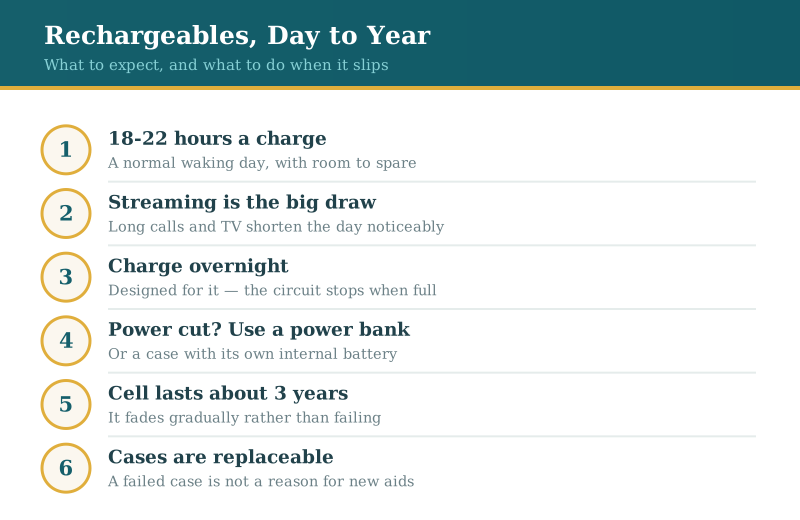
Manufacturers quote figures in the region of a full waking day, and real-world use lands a little lower. A university hearing centre puts the practical range at 18 to 22 hours depending on streaming use, which is the honest way to state it, because streaming is the variable that matters. A day of ordinary listening is comfortably within range. A day with three hours of phone calls and a film streamed straight to your ears is a different demand, and that is the day people notice the battery falling before bedtime.
Does Bluetooth streaming drain the battery faster?
Yes, and it is the single largest draw on the device. Amplifying sound is cheap; receiving a wireless signal and driving it into your ear is not. Expect a meaningful reduction on heavy streaming days — enough that a long flight of continuous audio, or an afternoon of video calls, can be the difference between arriving at the evening with plenty left and arriving nearly flat. This is not a fault and it is not specific to your brand. If your days genuinely involve that much streaming, say so at the fitting, because it changes which models make sense for you.
How the charging case works
You drop the aids into their contacts and the case does the rest — there is no switch, and putting them in turns them off. Most cases charge a fully flat pair in about three hours, with a shorter top-up giving you several hours of use, and the indicator lights tell you the state of each side. Two things matter in practice. The contacts must be clean and dry, because a smear of wax or a film of moisture is enough to stop the charge without any obvious sign. And the aids have to be seated properly; a device balanced in the well rather than clicked into place will sit there all night doing nothing.
Is it OK to leave them on the charger overnight?
Yes. This is how the devices are designed to be used, and it is the routine we recommend. Modern lithium-ion charging circuits stop drawing current once the cell is full, so an aid sitting in the dock at breakfast has not been overcharging since midnight. Overnight charging is also the habit that prevents the most common failure mode, which is not a worn-out battery but a forgotten one. Put them in when you go to bed, every night, and the question of whether you will make it to the evening stops arising.
What to do when the power goes out
A charging case with its own internal battery is the answer, and it is worth knowing whether yours has one before you need it. Those cases hold several full charges independently of the wall, which covers a typical outage without you doing anything. If your case has no internal battery, a USB power bank will run it — the same power bank you would use for a phone. Keep one charged in the drawer. This is also the argument for charging every night rather than topping up when you notice: a pair that went into the dock at eleven is already full when the power fails at dawn.
Charging from a power bank, and travelling
Most charging cases take USB-C, so an ordinary power bank charges them exactly as it would a phone. That covers outages, long flights, camping and anywhere the socket situation is uncertain. Check the case's rating before you rely on it — nearly all are 100 to 240 volts, which means international travel needs a plug adapter rather than a voltage converter. Our page on travelling with hearing aids goes through the rest of the packing list.
My rechargeable dies before the end of the day
Work through it in order rather than assuming the battery has failed. First, how much are you streaming? A change in phone or television habits is the most common explanation and the easiest to miss. Second, are the contacts clean and are the aids seating properly — a partial charge overnight looks exactly like a failing cell. Third, how old are the devices? A cell that was giving you sixteen hours in year one and gives you eight in year four is behaving normally, not breaking. Bring them in and we can check what the charge cycle is actually doing before anyone spends money.
How many years before the cell needs replacing
Lithium-ion cells in hearing aids last about three years on average before replacement becomes worthwhile, and many go longer. The decline is gradual: capacity falls a little each year, so what you notice is not a failure but a day that no longer stretches to bedtime. The cell is sealed inside the casing and is not user-replaceable. Replacement is done through the manufacturer, and we arrange and quote it — the cost is modest against a new pair, and it is often the right call on a device that is otherwise performing well.
How long the charging case lasts
The case usually outlives the hearing aids, but it is not immortal. Its own internal battery ages the same way, so an older case holds fewer offline charges than it did new, and the contacts can corrode. Replacement cases are available from the manufacturer for every current platform and can be ordered individually — you do not need new hearing aids because a case has failed. If your case has stopped charging reliably, bring it in with the aids so we can work out which of the two is actually at fault before ordering anything. Call 650-342-9449 for either office.
Frequently asked questions
What patients often want to know
How long do rechargeable hearing aids last on a single charge?
Typically 18 to 22 hours depending on how much you stream, which covers a normal waking day with room to spare. Heavy Bluetooth use — long calls, television straight to the aids — is what shortens it, and is the usual explanation when a pair that used to last all day suddenly does not.
Does streaming drain the battery faster?
Yes, noticeably. Receiving a wireless signal is the most power-hungry thing a hearing aid does, far more than amplification. A day of heavy streaming can cut runtime substantially. If your routine involves hours of calls or television through the aids, mention it at the fitting, because it affects which models suit you.
Is it safe to leave my hearing aids on the charger overnight?
Yes, and it is what we recommend. The charging circuit stops once the cell is full, so they are not overcharging while you sleep. Charging every night also prevents the most common problem, which is simply forgetting and starting the day half-empty.
What happens if the power goes out?
If your charging case has its own internal battery, it keeps charging your aids for several cycles without the wall, which covers most outages. If it does not, a USB power bank will run it. Either way, the habit that saves you is charging overnight, so a morning outage finds you already full.
Can I charge my hearing aids from a power bank?
Yes. Most charging cases use USB-C and take power from an ordinary phone power bank. This is the simplest answer for outages, long flights and travel. Check the case's voltage rating if you are going abroad — nearly all handle 100 to 240 volts, so you need a plug adapter rather than a converter.
How many years will the rechargeable battery last?
Around three years on average before replacement is worth doing, and often longer. It declines gradually rather than failing, so the sign is a day that no longer reaches bedtime rather than a device that stops. The cell is sealed in and is not user-replaceable.
Can the built-in battery be replaced, and what does it cost?
Yes, through the manufacturer rather than at home — the cell is sealed inside the casing. We arrange it and quote the cost before anything is sent, and it is modest compared with replacing the hearing aids. On a device that is otherwise working well, a new cell is usually the sensible choice.
My rechargeable dies before the end of the day. Is the battery failing?
Not necessarily. Check streaming habits first, then whether the contacts are clean and the aids are seating fully in the charger, since a partial overnight charge mimics a dying cell exactly. Age matters too — a gradual decline over three or four years is normal behaviour. Bring them in and we can see what the charge cycle is really doing.
Will I need to replace the charging case?
Eventually, though it usually outlasts the aids. Its internal battery ages and the contacts can corrode. Replacement cases can be ordered on their own for current platforms, so a failed case does not mean new hearing aids. Bring the case and the aids in together so we can identify which one is at fault.