


Hearing Aids & Active Living
The honest answer is that no single model wins on a spec sheet. What matters is how a device handles the specific situations you find yourself in, and for an active retirement those situations tend to be noisy, breezy, and full of small screens ringing. Modern hearing aids have gotten good at exactly these problems, and knowing which features to weigh saves you from paying for ones you will never use.
We fit these devices every week at our San Mateo and San Carlos offices, so this guide sticks to the features that earn their keep when your calendar is full. If you would rather just talk it through, a conversation with our team is the quickest way to match a device to your routine.
At a glance
- For busy lives, prioritize directional microphones and noise reduction — restaurant listening is where most people struggle.
- Rechargeable batteries and Bluetooth streaming remove the friction that comes with travel and phone calls.
- The best device is the one fit to your daily situations, not the priciest model on the shelf.
Cutting through restaurant clatter
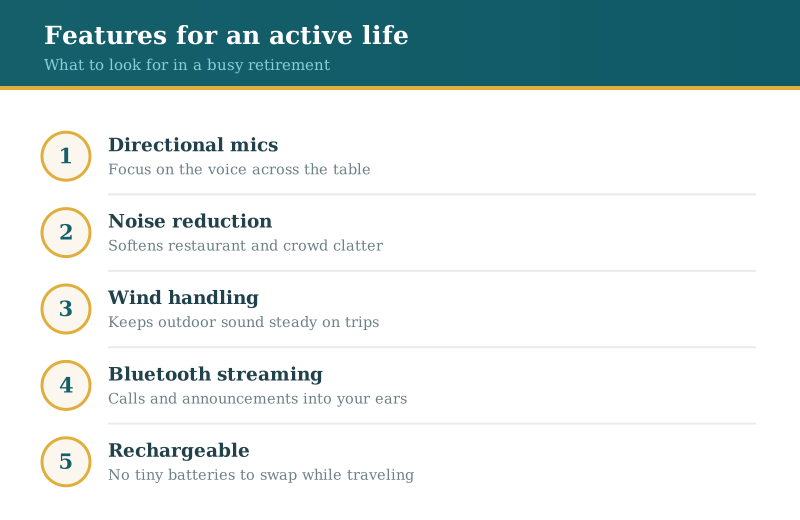
A noisy restaurant is the hardest listening job most people face, so it is worth building your choice around it. The feature that helps most is a set of directional microphones, which lean toward the voice in front of you and turn down the din bouncing off hard walls and tile floors. Pair that with the noise reduction built into current hearing aids, and a crowded table stops feeling like a wall of sound. Ask specifically how a model performs in background noise; that single answer tells you more than any other spec.
Features that earn their place on a trip
Travel piles on its own challenges. Wind across a microphone can turn a nice walk into static, so look for wind-handling that keeps outdoor sound steady on a hike or a ferry deck. Bluetooth streaming matters here too: it sends phone calls, boarding announcements read from an app, and turn-by-turn directions straight into your ears, which beats cupping a hand around a speaker at a busy gate. These conveniences are common across today's hearing aid brands, though the details differ, so it pays to compare.
Charge it in the evening, forget about it
Fussing with a battery the size of a shirt button is no fun at home, and it is worse in an airport bathroom. Rechargeable models drop onto a small dock overnight and give you a full day on one charge, with many cases holding several extra charges for long travel days. That convenience is a big reason rechargeables have become the default for people choosing hearing aids as they get older. Many current devices also shrug off sweat and humidity, which helps on a warm afternoon chasing grandkids around.
Matching the device to how you live
Style is where personal fit comes in. Behind-the-ear models leave room for bigger batteries and stronger streaming, while smaller in-ear designs sit more discreetly for people who want that. Neither is better in the abstract; the right pick follows your hearing, your dexterity, and your priorities. That is the whole point of a professional hearing aid fitting, where we tune the device to your ears and the settings to your week, then adjust as you live with it. A model that suits a homebody may be the wrong call for someone booking their next trip.
Frequently asked questions
A few questions worth asking
Which hearing aids work best in noisy restaurants?
Look past brand names to two features: directional microphones and solid noise reduction. Together they favor the voice in front of you and pull down the surrounding clatter. During a fitting we can demo how a model handles background noise so you hear the difference before you commit.
Can I stream phone calls and music straight to them?
Yes, most current models pair with a phone over Bluetooth and route calls, music, and podcasts directly into the devices. Some also stream audio from a TV or a small clip-on microphone a companion can wear across a loud table. It is worth confirming your phone is compatible, which we check during your visit.
Are rechargeable hearing aids dependable enough for travel?
For a typical day, a full overnight charge lasts from morning until bedtime, and the carrying case usually banks several more charges without a wall outlet. Bring the case and a charging cable and you are set for a long trip. Heavy all-day streaming drains the battery faster, so pack the case either way.
Will wind ruin the sound when I am outdoors?
Older devices did struggle with it, but wind handling has improved a lot. Newer models detect the rush across the microphone and tamp it down so speech stays clear on a walk or a boat. If you spend real time outside, name that when you shop, because performance still varies by model.
Do I need the most expensive model to hear well in noise?
Not necessarily. Premium tiers add more automatic adjustment and finer noise processing, which some active people value, but mid-range devices handle everyday restaurants and gatherings well. The bigger factor is a careful fit and good programming. We will point you to the level that matches your listening life rather than upselling features you would not notice.
How do I find the right fit for my lifestyle?
Start with a hearing evaluation so we understand your hearing, then talk through a normal week — where you eat, how often you travel, who you call. From there we match the device and dial in the settings, adjusting over the first weeks as you wear it out in the world. You can reach our audiologists to set that up whenever you are ready.