


Family & Hearing
This is not about cheerleading someone into hearing aids. Push too hard toward a fix and a parent hears judgment, or hears that you have already decided something is wrong with them. What tends to lower the temperature is treating hearing as a practical matter, the same as new glasses, rather than a verdict on their independence.
So the aim of a first conversation is modest: not agreement, not a purchase, just openness to a hearing evaluation and a willingness to keep talking. Our audiologists sit with families on the other side of a tense start more often than you would guess, and defensiveness fades faster than most people fear once the pressure is off.
At a glance
- Lead with a specific moment you both remember, not a diagnosis or an ultimatum.
- Defensiveness usually answers pressure, so frame a hearing check as routine, like an eye exam.
- Aim for one small yes — willingness to get tested — not agreement about hearing aids.
Why the subject turns into a fight
To your parent, admitting a hearing problem can feel like conceding something much larger: age, competence, the right to run their own life. So a comment that sounds neutral to you, like 'you've got the TV up again,' can land as a claim that they are slipping. Defensiveness is the reflex that follows. It helps to remember you are not arguing about decibels. You are touching a nerve about independence, and the person pushing back is guarding that, not denying reality out of stubbornness.
Name the moment, not the deficiency
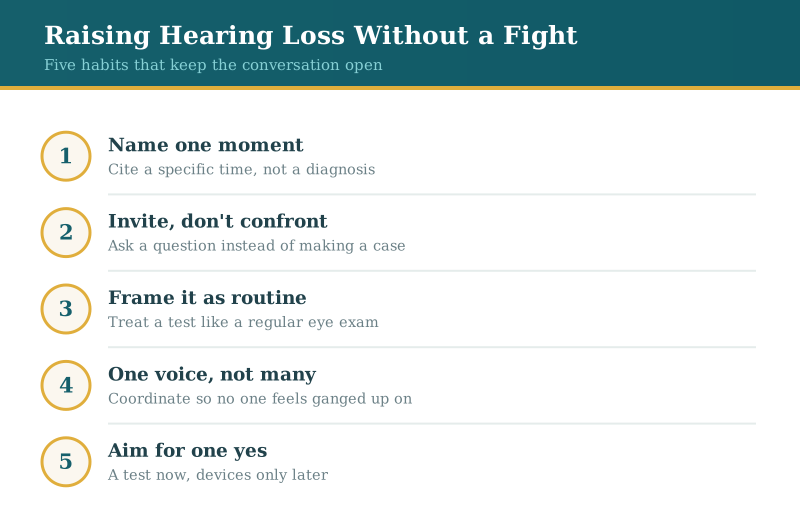
General statements invite argument. 'You never listen' or 'your hearing is bad' is easy to deny and easy to resent. A single shared moment is harder to wave off and far less accusatory: the grandkids' voices at dinner, the missed doorbell, the phone call that had to be repeated three times. Describe what you noticed and how it felt from your side, then let that sit. You are reporting your own experience, which no one can call wrong, instead of handing down a diagnosis you are not qualified to make.
Two ways to raise it: confront or invite
Broadly, families take one of two routes. The confrontation route gathers the evidence, sits the parent down, and lays out the case for why they need help. It feels efficient and sometimes it works, but it also casts your parent as the problem to be solved, and most people dig in when they feel cornered. The invitation route is slower. It asks a question instead of making a case, something like 'would you be up for getting a baseline test, just so we know?', and leaves the decision with them. You give up the satisfaction of winning the point. In exchange you usually keep their cooperation, which is the thing that actually leads to a hearing test getting booked.
Timing, setting, and who is in the room
Where and when you raise it matters as much as the words. A quiet one-on-one moment beats a holiday table where a parent can feel ganged up on, and a calm afternoon beats the tail end of a frustrating phone call when both of you are already short. Pick a low-stakes window. If siblings are involved, agree in advance on a single, gentle message so your parent is not fielding the same worry from four directions at once. One trusted voice tends to open the door; a chorus tends to slam it.
From talk to test
The win you are after is small and concrete: a yes to getting hearing checked, nothing more. Offer to handle the logistics and to come along, which turns a private worry into a shared errand. A baseline evaluation is low-pressure and simply establishes where things stand; plenty of people leave relieved, and some learn their hearing is fine. If the conversation stalls, let it rest and try again another day rather than forcing it. Some families find it steadying to read what other patients say beforehand. When your parent is ready, our team can explain the results in plain terms and lay out hearing aids made for older adults only if and when they are wanted.
Frequently asked questions
What patients often want to know
My parent gets angry whenever I bring up their hearing. What am I doing wrong?
Often nothing, beyond raising a tender subject head-on. Anger here is usually self-protection, not a rejection of your point. Try shrinking the ask: instead of 'you need to do something about your hearing,' offer 'would you get a baseline test with me, just so we have it on record?' Lowering the stakes tends to lower the heat.
Should I get my siblings involved, or will that feel like an ambush?
It can go either way, so coordinate before anyone speaks up. A parent facing the same concern from several children at once often feels cornered rather than cared for. Decide together on one calm messenger and one consistent message. If a sibling has the easiest, closest relationship, let that person open the door.
What if they flatly refuse to get their hearing checked?
Give it room rather than forcing the issue. Plant the idea, make clear you will help with the logistics, and return to it another day. Sometimes a different entry point works: a friend's good experience, a grandchild's story they missed, a routine referral from their own doctor. Readiness often arrives on its own timeline once the pressure is gone.
How do I talk about hearing aids without scaring them off?
Keep that conversation for later, and separate it cleanly from the first one. The initial goal is only a hearing evaluation; devices are a question for after the results, if they are needed at all. When the time comes, our audiologists walk families through the choices without pressure, so no one feels sold to.