


Ear Health
This page is the winter companion to our main guide, Dry Ears: Why Canals Get Flaky and What Actually Helps. That guide covers the causes of a dry canal, why cotton swabs make it worse and which kinds of ear drops are not safe to guess at. We do not repeat it here. We focus on what changes for people who wear hearing aids, and on small habits that help.
A calm note before we start. Most dry ears in winter are a nuisance, not an emergency. Pain, drainage, bleeding or a sudden change in hearing are different, and we list them below.
At a glance
- Cold, dry weather can dry out the skin around the ear and in the canal. The National Eczema Association lists cold weather, dry air, low humidity and wind among the triggers.
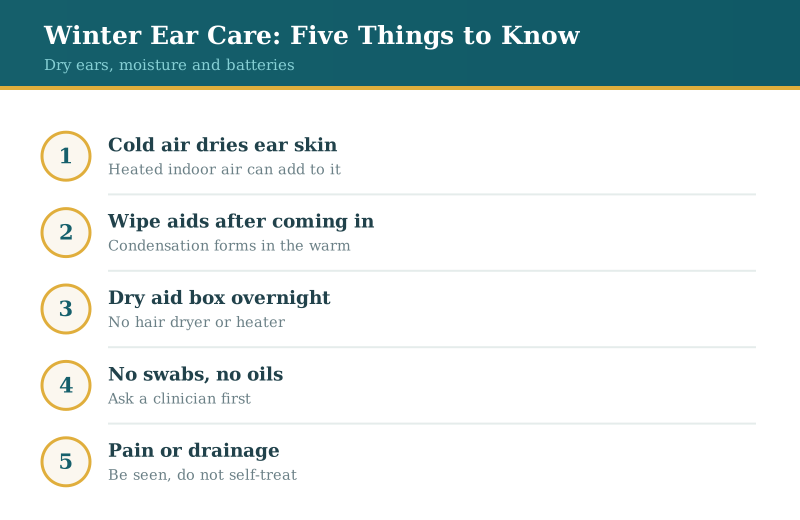
- Going from cold air into a warm room can cause condensation on hearing aids. Cold can also shorten battery life. A dry aid box and a soft cloth help.
- Do not put cotton swabs or other objects in the ear. Do not put oils or drops in the canal unless a clinician who has looked in your ear says it is safe.
- See a clinician for ear pain, swelling, discharge or bleeding, or if hearing aid sound changes and you are not sure why.
How winter dries the ear
The National Eczema Association names cold weather, dry air, low humidity and wind as factors that can dry out skin, including on and behind the ear. Heated indoor air can add to it. The usual signs are flaking or peeling skin, itching, and a burning or stinging feeling. For the deeper causes, such as over-cleaning and skin conditions that reach the canal, read our main guide on dry ears. If your main complaint is itching, see what causes itchy ears.
Why hearing aid wearers notice it more
A device in the ear keeps warm air in the canal and rubs against its lining. In a dry season that can make a mild problem more obvious. A hearing aid dome or custom mold can also be a source of friction. The National Eczema Association advises cleaning anything worn on the ears, such as hearing aids, headphones and helmets, regularly to reduce bacteria and friction. If you feel a sore spot where the device sits, tell us at your next visit. A different dome, a vent or a change of material is often possible. See our page on hearing aid fitting.
Moisture and condensation on hearing aids
UnitedHealthcare Hearing notes that moving from cold air into a warm home can cause condensation on hearing aids. The hasa.org winter tips page says the same temperature change can create condensation inside the device and the battery compartment. Moisture can harm electronics, even though newer hearing aids are more moisture resistant. Check how resistant yours is, and see our page on whether hearing aids are waterproof. After you come inside, wipe the devices with a soft cloth. If yours use disposable batteries, open the battery door so moisture can evaporate.
Dry aid boxes and safe drying
A dry aid kit, also called a drying box or dehumidifier, is a closed case that helps remove moisture that gathers in electronic devices. UnitedHealthcare Hearing suggests placing your hearing aids in one overnight. Some kits also charge the aids, and if yours does not, charge first and dry afterward. Do not dry hearing aids with a hair dryer, oven, radiator or furnace. The hasa.org page advises letting wet devices dry slowly at room temperature. If a device has been soaked or stops working, our hearing aid repair service can look at it.
Batteries in the cold
Cold can shorten battery life. UnitedHealthcare Hearing says rechargeable batteries may last less time in extreme cold, and the hasa.org page says low temperatures tend to drain batteries quickly. UnitedHealthcare Hearing suggests keeping the devices warm, for example by wearing a hat or earmuffs outdoors, and taking care that you do not pull the aids out when you remove them. Keep spare disposable batteries at home or in a case, and do not leave hearing aids in a cold car or an outer pocket. Battery life varies by model, so ask us about yours. Our pages on rechargeable hearing aids and rechargeable and battery-powered models cover the choice.
Safe habits for dry ears
The American Academy of Otolaryngology-Head and Neck Surgery Foundation says not to over-clean the ears, because excess cleaning can irritate the canal, cause infection and raise the chance of impaction. It also says not to put cotton swabs, hairpins, keys, toothpicks or other objects in the ear. The National Eczema Association advises avoiding products in the ear canal unless your doctor directs it, and suggests a gentle, fragrance-free moisturizer for the skin outside the ear. We would add one point. Do not put oils or drops in the canal on a friend's advice, because we cannot see from outside whether the eardrum has a hole or the canal has an infection. For drops, read the relevant section of our dry ears guide, and see how to deal with earwax and dry, flaky earwax.
Winter habits that help
A few small habits cover most of it. Dry the outer ear gently after a shower, and do not reach into the canal. Keep your hearing aids clean as your fitting visit explained. Put them in a dry aid box overnight. Keep your home air from becoming very dry, if you can. Wear a hat in the cold to keep the devices warm. Bring any sore spots to your next visit. Our page on protecting your devices and your hearing all year has more on daily care.
| Problem | What you may notice | What helps | See a clinician if |
|---|---|---|---|
| Dry ear skin | Flaking, peeling, itching, a stinging feeling | Stop cleaning inside the canal. Fragrance-free moisturizer on the skin outside the ear. | Pain, swelling, discharge or no improvement |
| Moisture in the aid | Fogging, crackling or sound cutting out after coming indoors | Wipe with a soft cloth. Open the battery door if disposable. Dry aid box overnight. | The aid stops working after drying |
| Cold and batteries | Shorter battery life outdoors | Keep the devices warm. Carry spare batteries or charge more often. | Battery life drops a lot at normal temperatures |
| Rubbing from a dome or mold | A sore spot where the device sits | Clean the device. Ask about another dome, vent or material. | Broken skin, bleeding or drainage |
| Wax or blocked sound | Aid sounds quieter, muffled or blocked | Do not use swabs. Ask a clinician before using drops. | Ear pain, fullness or a sudden change in hearing |
When to see a clinician
The AAO-HNSF says ear pain, drainage or bleeding are not signs of simple earwax and need a clinician. The National Eczema Association says to consult a doctor if pain, swelling or discharge occur, or if symptoms do not improve. See someone also if your hearing aids sound different, quieter or blocked and you cannot tell why, because wax or a skin problem in the canal can change how an aid works. Sudden hearing loss in one ear or new ringing is a reason to be seen soon. Our page on sudden or worsening tinnitus explains. We can look in the canal and, if wax is the cause, offer earwax removal at our San Mateo or San Carlos office.
Last updated and sources
Last updated October 16, 2026. What changed: this is the first version. Sources: National Eczema Association, Ear Eczema, UnitedHealthcare Hearing, How to help protect your hearing aids in winter weather, hasa.org, Winter Hearing Aid Tips and AAO-HNSF, Earwax: Dos and Don'ts. We could not confirm the publisher behind hasa.org from the page text, so we treat it as a general reference.
Medical information notice
This page offers general information. It is not a diagnosis or treatment plan. Ear pain, drainage, bleeding or sudden hearing change needs a clinician. A full hearing evaluation usually takes about an hour. Call 650-342-9449 to book at our San Mateo office, 88 N. San Mateo Drive, or our San Carlos office, 1008 Laurel Street.
Frequently asked questions
What patients often want to know
Can cold weather make my ears dry and itchy?
Yes, it can. The National Eczema Association lists cold weather, dry air, low humidity and wind as factors that dry out skin, including skin on and behind the ear. Heated indoor air can add to it.
Why do my hearing aids fog up in winter?
Moving from cold air into a warm room can cause condensation on and inside the devices. Wipe them with a soft cloth, and use a dry aid box overnight. Do not dry them with a hair dryer or a heater.
Do hearing aid batteries die faster in the cold?
They can. Sources we read say low temperatures can drain batteries faster, and rechargeable batteries may last less time in extreme cold. Keep the devices warm and ask us about your model.
Can I put oil or drops in my ear for dryness?
Not without advice. We cannot tell from outside whether you have a hole in the eardrum, an infection or a blockage. Ask a clinician who has looked in your ear. See our dry ears guide for more on drops.
Are cotton swabs safe for itchy ears?
No. The AAO-HNSF says not to put cotton swabs or other objects in the ear, because they can injure the canal or eardrum. Over-cleaning can also dry the canal further.
When should I see someone about dry ears and hearing aids?
See a clinician for ear pain, swelling, discharge or bleeding, or if symptoms do not improve. Also come in if your hearing aids sound different and you cannot tell why. Sudden hearing loss in one ear should be checked soon.