


Ear Health
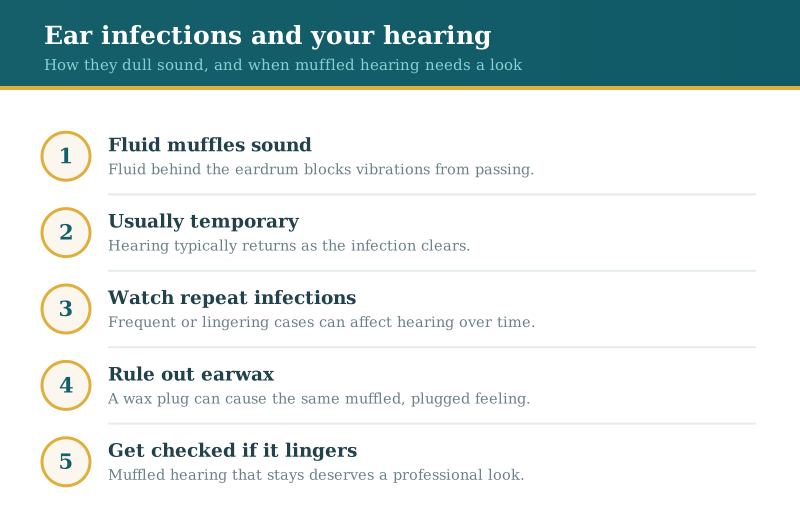
Most ear infections settle in the middle ear, the small air-filled space behind the eardrum. When it fills with fluid, the eardrum and tiny bones can't move as freely, so less sound energy passes through. That is called conductive hearing loss, and it typically lifts as the infection clears. Ear infections are among the most common reasons people, especially children, see a doctor, and the federal overview of ear infections and hearing covers what happens while one clears.
The part worth watching is what happens when infections keep coming back, linger, or leave symptoms behind after the pain is gone. If your hearing hasn't bounced back the way you expected, a hearing evaluation at our San Mateo or San Carlos office can tell you whether anything is still holding it down.
At a glance
- Ear infections usually cause temporary conductive hearing loss from fluid behind the eardrum.
- Most cases improve as the infection clears, but hearing can stay muffled for a while afterward.
- Repeated or long-lasting infections deserve attention, since they can affect hearing over time.
- Pain, drainage, fever, or hearing that doesn't return are reasons to get checked promptly.
How an infection dulls your hearing
The mechanics are simpler than they feel. Behind your eardrum sits a small chamber and three delicate bones that pass vibrations along toward the inner ear. During an infection, that chamber can swell and fill with fluid or pus, and a waterlogged system doesn't transmit sound well. The result is muffled, boxed-in hearing, sometimes with a sense of pressure or a faint ringing. Because the block is mechanical rather than nerve damage, hearing usually returns once the fluid drains and the tissue calms down.
Why children and adults aren't the same
Ear infections are far more common in young children, partly because the tube that drains the middle ear is shorter and more level early in life, so it clogs more easily. In adults, a single infection is often tied to a cold, allergies, or sinus trouble, and it tends to clear with time or treatment. What matters at any age is the pattern. An occasional infection that resolves is one thing; a run of them, or fluid that hangs around for weeks, is worth having someone look into.
Muffled hearing, pressure, and ringing
During and just after an infection, your ear can throw off a mix of symptoms: a plugged feeling, popping when you swallow, mild dizziness, or a temporary ringing. That ringing usually fades along with everything else, though people sometimes find it lingers and want to understand it better. If a sound in your ear sticks around after the infection is long gone, it is worth reading up on what tinnitus is and mentioning it when you come in, since persistent ringing is easier to address when it's evaluated rather than ignored.
Earwax or fluid? Telling them apart
A blocked, muffled ear doesn't always mean infection. A firm plug of earwax can cause the very same dull, underwater hearing, and the two are easy to confuse at home. Poking around with a cotton swab tends to make wax problems worse, not better. If you're not sure what's behind a stuffy ear, professional earwax removal is a safe way to rule out the simple explanation, and if wax isn't the culprit, we can look further into what is.
When to call a professional
Some symptoms mean don't wait it out. Steady ear pain, fluid or blood draining from the ear, a fever, dizziness that won't settle, or hearing that suddenly drops all warrant a prompt call, and sudden hearing loss in particular is treated as urgent. The same goes for hearing that stays muffled well after an infection should have cleared. These are not signs to panic over, but they are signs to have checked rather than guess about, since early attention gives you the most options.
Getting your hearing back on track
After the dust settles, a quick check confirms your hearing has returned to where it should be, and it catches anything that quietly stuck around. If repeated infections have left a lasting mark, that shows up too, and it's something worth knowing so you can weigh whether options like hearing aids make sense. Our audiologists can test your hearing, explain the results in plain terms, and lay out the next step, if any is needed. When your hearing feels off after an infection, contacting our offices is a low-key, sensible move.
Frequently asked questions
Questions patients ask us
Can an ear infection cause permanent hearing loss?
Most infections cause temporary hearing loss that clears as the fluid drains. Permanent loss is uncommon, but repeated or long-lasting infections can affect hearing over time, which is why a run of them is worth having checked.
How long does muffled hearing last after an ear infection?
It varies. Many people notice their hearing improve within days to a couple of weeks as the infection resolves. If it stays muffled beyond that, a hearing evaluation can show whether fluid or something else is still in the way.
Should I remove earwax at home if my ear feels blocked?
It's best not to dig at it with swabs, which often push wax deeper. If a blocked ear is bothering you, professional earwax removal is safer and lets us confirm whether wax, fluid, or an infection is behind the feeling.
When is an ear infection an emergency?
Sudden hearing loss, severe pain, high fever, drainage, or intense dizziness are reasons to seek care promptly. Sudden hearing loss is treated as urgent, so don't wait to have it looked at.