


Hearing & Whole-Body Health
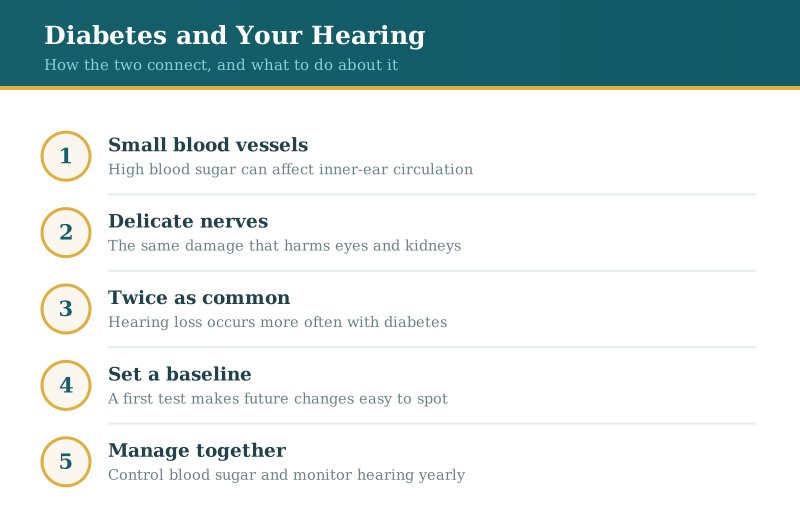
The relationship is real, but it is an association rather than a guaranteed cause. Hearing loss is about twice as common in adults with diabetes as in those of similar age without it. That is a meaningful pattern, not a verdict on any one person, and it is the kind of thing worth keeping an eye on.
If you are living with diabetes or prediabetes, adding a hearing evaluation to your regular health routine is a small, low-risk step. Our team sees patients from across the Peninsula, and a baseline reading gives you a clear starting point to measure against later.
At a glance
- Adults with diabetes have hearing loss more often than peers without it, though the link is an association, not proof of cause.
- High blood sugar is thought to affect the small blood vessels and nerves that serve the inner ear.
- A baseline hearing test creates a reference point so future changes are easier to catch early.
- Managing blood sugar well and monitoring your hearing work together as ordinary, sensible care.
How blood sugar reaches the inner ear
The inner ear depends on a dense network of tiny blood vessels and delicate nerve cells, and both can be vulnerable to the changes diabetes brings. Persistently high blood sugar is thought to damage those small vessels and nerves over time, the same way it can affect the eyes and kidneys. When the cochlea's fragile hair cells lose part of their blood or nerve supply, they cannot do their job as well, and sound arrives less clearly. That mechanism is one reason researchers keep studying hearing among people with diabetes.
Reading the research without overstating it
Study after study has found hearing loss showing up more often in adults with diabetes than in those without it. The word to hold onto is more often, not caused by. Plenty of things travel together without one driving the other, and hearing can dim for many reasons at once, so no test can pin a single person's loss on diabetes alone. What the evidence fairly supports is treating your hearing as part of your overall health picture rather than a separate concern you get to ignore. Latest: a 2026 review of 29 studies found that about 1 in 4 adults with diabetes had moderate-to-severe hearing loss. Read what the review found.
Signs that tend to overlap
The early markers here are easy to miss because they look ordinary: asking people to repeat themselves, struggling to follow talk in a busy restaurant, nudging the volume higher, or noticing a faint ringing that was not there before. These can creep in gradually, and it is tempting to file them under getting older. If you also live with diabetes or prediabetes, they are worth mentioning at your next visit instead of waiting for them to become obvious.
Why a baseline reading is so useful
Hearing rarely changes overnight, which is exactly why a first measurement matters. A hearing test done while things still sound fine gives you a reference point, so if your hearing shifts a year or two from now, the change is easy to see rather than a guess. For people managing a chronic condition, that kind of tracking fits naturally alongside the eye exams and foot checks already on the calendar.
Caring for both at the same time
Steady blood sugar control is good for your whole body, and your ears are part of that. Beyond the numbers, regular hearing checks let you act early if a change appears. When treatment makes sense, well-fitted hearing aids restore clarity and reduce the daily strain of straining to listen. A careful hearing aid fitting tunes the devices to your specific loss, so the goal is easier conversation, not just more volume.
When a change needs prompt attention
A few situations call for quick action rather than watchful waiting. Sudden hearing loss in one or both ears, or a fast drop over a day or two, is a medical urgency and should be seen right away, not booked for next month. Temporary muffling or dizziness during a low blood sugar episode is different and usually eases as your levels stabilize, but tell your care team if it keeps happening. When in doubt, it is always reasonable to ask.
Where our team fits in
You do not need to sort out the science on your own to make a smart choice about your ears. Our audiologists can test your hearing, explain what the results mean in plain language, and lay out your options without pressure. If you are managing diabetes and have wondered about your hearing, reach out to schedule a visit, and we will help you build hearing care into the routine you already keep.
Hearing and your wider health
See how hearing connects to other conditions on our Hearing and Your Health page.
Frequently asked questions
A few questions worth asking
Can diabetes cause hearing loss?
The honest answer is that diabetes is strongly associated with hearing loss, but association is not the same as proof of cause. High blood sugar is believed to affect the small vessels and nerves in the inner ear over time, which is a plausible pathway. Because hearing can decline for several reasons at once, no test can single out diabetes as the lone culprit for one person.
My blood sugar is well controlled. Am I still at risk?
Good control is genuinely protective for your whole body, and it is one of the best things you can do for your ears as well. It lowers risk rather than erasing it, so a periodic hearing check is still worthwhile. Think of it the way you already think of your regular eye exams, as sensible monitoring rather than a sign anything is wrong.
I have prediabetes, not diabetes. Should I bother getting my hearing checked?
It is a reasonable time to establish a baseline. An early measurement makes any future change far easier to spot. A baseline test is quick and gives you a clear reference point to return to.
If diabetes affected my hearing, will hearing aids help?
In most cases, yes. Hearing loss connected to diabetes is typically sensorineural, the kind that responds well to modern hearing aids. The devices will not reverse the underlying loss, but a proper fitting can restore a great deal of clarity and ease. Our team will walk you through what a realistic result looks like for your specific hearing.
How often should someone with diabetes have a hearing test?
For many adults, checking every year or two is a comfortable rhythm, and your audiologist may suggest a different pace based on your results and history. If you notice a change between visits, do not wait for the next scheduled test. Bring it up sooner so we can see whether anything needs attention.