


Costs & Buying
The same question sits underneath two others that people bring us regularly — whether a used pair found online can be made to work, and whether a discontinued model can still be serviced. All three come down to the same thing: who is allowed to talk to the chip, and does anyone still make the parts.
We are an independent practice fitting standard manufacturer platforms, so nothing we sell is locked. That is not a boast so much as a structural fact about how we buy, and it is the reason we can take over care for devices bought elsewhere. What follows is the honest version of each case, including where the answer is no.
At a glance
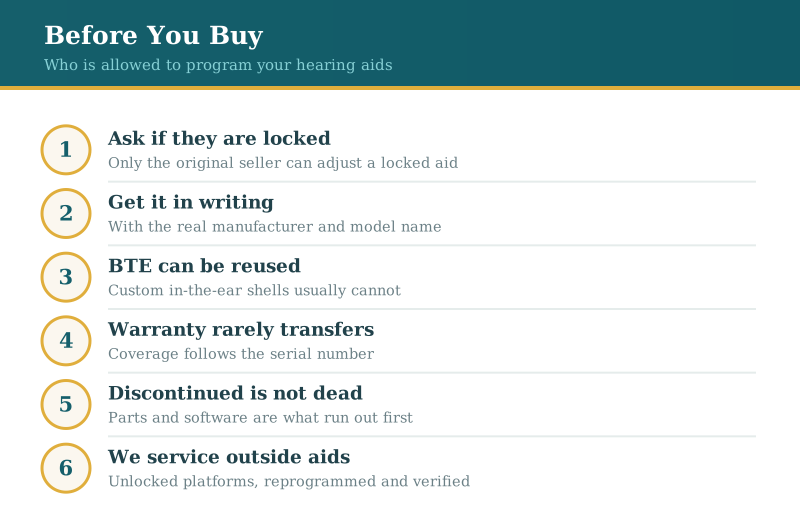
- A locked hearing aid can only be programmed by the seller that dispensed it, usually because it was private-labelled for that chain.
- Ask in writing whether devices are locked before you buy — it is the single question most likely to matter years later.
- Behind-the-ear aids bought used can often be reprogrammed for a new wearer; custom in-the-ear devices usually cannot.
- Discontinued models stay serviceable for a period after discontinuation, then become limited by parts and fitting software.
What locking actually is
A manufacturer builds a platform. A retail chain buys that platform, puts its own name on the case, and asks for the programming interface to be restricted to the chain's own fitting software. The result is a device that is technically a known manufacturer's hearing aid but that no unaffiliated clinic can adjust, because the software that would open it is not sold to anyone outside that network. The audiologist Cliff Olson has documented the practice in detail, and the names that recur in patient forums are the large retail chains rather than the manufacturers themselves. The hardware is often good. The constraint is commercial, not technical.
Why it matters later rather than now
On the day you buy, a locked device behaves exactly like an unlocked one, which is why the question rarely comes up in the room. It matters at the point where something changes. You retire and move to another state. The branch that fit you closes or the clinician leaves. You are travelling and a device fails. You simply want a second opinion on a fitting that has never felt right. In each of those situations an unlocked device can be handed to any competent audiologist, and a locked one cannot. We see the consequence most often as a patient arriving with aids we would happily adjust and cannot.
How to ask, and what a good answer sounds like
Ask it plainly: are these hearing aids locked to your fitting software, and can another clinic program them? Get the answer in writing, alongside the manufacturer and model. A provider fitting standard platforms will say no without hesitating and will be able to name the manufacturer's own model designation. An evasive answer — that any of their locations can help you, that the question does not really arise, that all hearing aids work this way — is itself the answer. It is a fair question and nobody reputable minds it.
Buying used: when it works and when it does not
The shape of the device decides most of it. A behind-the-ear aid sits behind the ear rather than inside it, so a new dome or a new earmold makes it wearable by someone else, and if the platform is unlocked it can be reprogrammed to a different prescription. A custom in-the-ear device is moulded to one person's canal and generally cannot be recased economically. Beyond fit, three things catch people out: manufacturer warranty usually does not transfer, the remaining service life may be short given a typical five to seven years, and a used aid still needs a current audiogram and a proper verified fitting to do anything useful. Savings are real but smaller than the sticker difference suggests once the fitting is paid for.
Discontinued models
Manufacturers support repairs for a period after a model is retired, so a discontinued aid is usually serviceable for several more years rather than instantly obsolete. What degrades first is not the device but the surroundings: older fitting software versions stop being distributed, replacement receivers and shells get harder to source, and at some point a repair costs more than the device is worth. Keep your purchase paperwork, because warranty coverage follows the serial number rather than the model name. If you are being told your model can no longer be touched, it is worth a second opinion — sometimes that means genuinely unsupported and sometimes it means unsupported by that particular provider.
What we can do with aids we did not sell
We take over care for hearing aids bought elsewhere, including devices from other clinics, from online sellers and bought used, provided the platform is not locked. That covers cleaning and servicing, wax guards, domes and receivers, reprogramming to your current audiogram, and real-ear verification so we can show you what the devices are actually delivering rather than what the software predicts. There is a fee for taking on devices we did not dispense, and we quote it before you commit to anything so there is no surprise on the invoice. Call 650-342-9449 — 88 N. San Mateo Drive in San Mateo, or 1008 Laurel Street in San Carlos — and bring the aids and any audiogram you have.
Frequently asked questions
Your questions, answered
Are some hearing aids locked so only the seller can adjust them?
Yes. Some retail chains sell private-labelled versions of major manufacturers' platforms with the programming restricted to their own software, so no unaffiliated clinic can adjust them. Ask in writing before you buy whether the devices are locked and which manufacturer and model they actually are. See also: whether Miracle-Ear has audiologists.
How do I find out whether my current hearing aids are locked?
Bring them in. We can usually tell from the model and the branding whether the device is a private-labelled platform, and connecting it to standard fitting software settles it quickly. If your aids turn out to be unlocked, we can adjust and verify them regardless of where you bought them.
Should I buy refurbished or used hearing aids?
It can work for behind-the-ear styles, which can be re-tipped and reprogrammed for a new wearer. Custom in-the-ear devices are moulded to one person's ear and usually cannot be reused economically. Factor in that the manufacturer warranty generally does not transfer, that the remaining life may be short, and that a professional fitting is still required and still costs money.
My hearing aid model was discontinued. Can it still be repaired?
Usually yes for several years after discontinuation, though it gets harder over time as fitting software versions and spare parts become scarce. Keep your paperwork, since warranty follows the serial number. When a repair starts costing more than the device is worth, that is the point to talk about replacement rather than before.
Can you adjust hearing aids I bought online?
If the platform is unlocked, yes — we can reprogram them to your audiogram and verify the result with real-ear measurement, which is the step that decides whether they work for you. There is a fee for taking on devices we did not dispense, quoted before you commit. What we cannot do is program a device locked to another company's software.
Are Costco hearing aids locked?
Costco's devices have not been locked for many years, which is one of the genuine advantages of buying there and something we say plainly. The brands most often described as locked in patient forums are other retail chains. Our comparison of Costco and private-clinic care goes through the rest of the trade-offs.