


Safe Listening
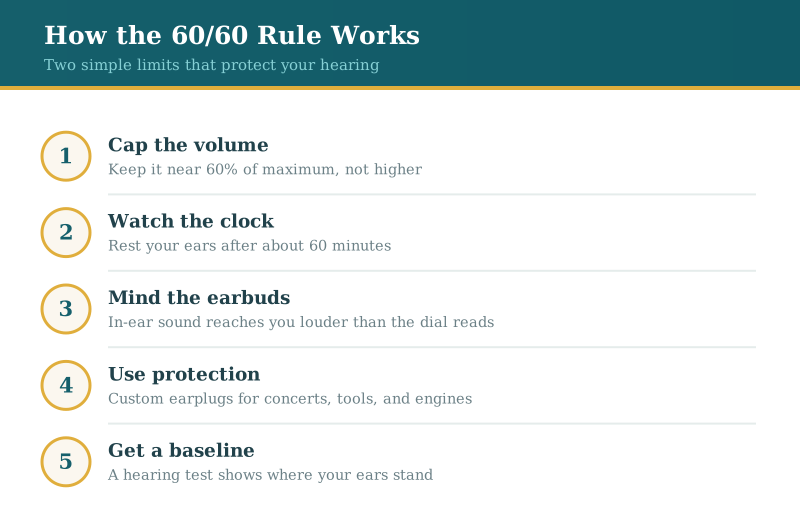
Loud sound harms hearing in two ways. One big blast can injure the ear, but so can moderate volume held for hours, day after day. Headphones and earbuds sit close to the eardrum, so the level reaching your inner ear runs higher than the number on the dial suggests. According to the Centers for Disease Control and Prevention, noise-induced hearing loss is permanent yet almost entirely preventable, and the 60/60 rule addresses both parts of the problem at once: the volume and the time.
None of this means giving up the music you love. It asks for a few small adjustments, plus the occasional hearing check so you know where your ears stand. Our offices on the San Francisco Peninsula are glad to help you set a baseline and keep it.
At a glance
- The 60/60 rule: keep volume near 60 percent and take a break after 60 minutes.
- Damage comes from both loudness and how long it lasts, not volume alone.
- Earbuds sit close to the eardrum, so real exposure runs higher than the dial reads.
- Noise-induced hearing loss is permanent but largely preventable with simple habits.
The rule in plain terms
The 60/60 rule is two limits working together. The first caps how loud you listen: stay around 60 percent of your device's maximum volume, not higher. The second caps how long: after about an hour, give your ears a rest before the next stretch. Neither number is a precise medical threshold, and no one is timing you. They are round, memorable figures meant to pull most people out of the range where casual listening begins to matter.
Why loudness and time both count
It helps to picture noise exposure as a budget rather than a single limit. A very loud sound spends the budget fast; a moderate sound spends it slowly but still adds up over a long session. That is why turning the volume down and shortening the session both help — you are trimming from two sides at once. The rule works because it moves both numbers into safer territory without asking you to carry a decibel meter.
What earbuds do to the numbers
The volume slider on your phone does not tell you the level reaching your inner ear. Earbuds and headphones deliver sound inches from the eardrum, and in-ear models seal the canal, which raises the level further. Add a noisy train or a busy street and many people push the volume up to drown it out, sailing past a safe level without realizing it. Noise-canceling headphones help here, since they let you hear clearly at a lower setting.
Signs a session was too loud
Your ears often tell you when you have overdone it. Ringing, buzzing, or a muffled, underwater feeling after listening are all signals that the volume or the duration crossed a line. Those symptoms usually fade, but repeated episodes are a warning, not a reset button. Enough of them leave damage that no longer recovers, and the first place it turns up is the high-frequency notch on a hearing test. Ringing that lingers has its own name and its own care — you can read more about tinnitus if the sound stays after the music stops.
Where earplugs beat a volume limit
The 60/60 rule governs what you pipe into your own ears. It does nothing about the concert, the power tools, or the motorcycle — sound you cannot turn down. For those, the answer is custom hearing protection that lowers the level evenly while keeping speech and music clear. Musicians, hunters, and hobbyists often find a well-made set pays for itself in comfort alone, and it guards the same hearing the 60/60 habit is meant to protect.
When to have your hearing checked
Habits protect what you have; a test tells you what that is. A baseline hearing evaluation captures where your hearing stands today, so a later change is easy to spot. It makes sense if you are around loud sound often, if you have noticed ringing that comes and goes, or if you simply want a starting point. You are welcome to reach out to our Peninsula team to set one up at our San Mateo or San Carlos office.
Frequently asked questions
What patients often want to know
Is 60 percent volume a strict safe limit?
Think of it as a practical guideline rather than a medical guarantee. Devices vary, so 60 percent on one phone is not identical to 60 percent on another. The point is to stay well below maximum and to notice when you are reaching for more volume than the room really needs.
Does the 60/60 rule apply to children?
Kids benefit from it even more than adults, since they may not recognize when sound is too loud. Volume-limiting headphones made for children handle the loudness side automatically, and building in breaks covers the time side. Setting the habit early tends to make it stick.
I already have some hearing loss — is the rule still worth following?
Yes, protecting the hearing you have is always worthwhile. Guarding against further noise damage matters at any age, and pairing good listening habits with the right support keeps you connected. A hearing evaluation is a sensible way to see where things stand and what, if anything, to do next.