


Ear Health & Safety
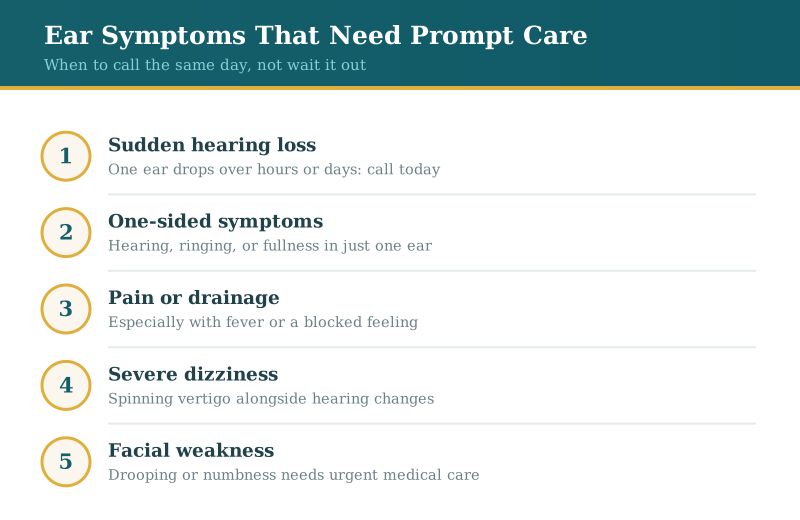
Knowing which is which spares you both needless worry and dangerous delay. Sudden hearing loss, in particular, is treated as a medical emergency, because the window for effective treatment can be short. The red flags here are the ones that warrant a same-day or next-day call rather than a routine booking.
If any of them sound familiar, our audiologists in San Mateo and San Carlos can see you quickly, sort out what is happening, and refer you on to a physician or ENT when that is the right call. You can call or request an appointment directly, and it is always reasonable to start there when you are unsure.
At a glance
- Gradual hearing changes can wait for a routine visit; sudden or one-sided changes should not.
- Sudden hearing loss is a medical emergency, so call the same day rather than watching and waiting.
- Pain, drainage, severe dizziness, or facial weakness alongside ear symptoms warrant prompt medical care.
Sudden hearing loss belongs in the urgent column
The clearest red flag is hearing that drops fast, usually in one ear, over the course of a few hours or days. This is sudden sensorineural hearing loss, and it is treated as an emergency for a practical reason: the odds of recovery are best when treatment starts within the first couple of weeks, and better still within days. It can feel like a plugged ear, so people wait, assuming it is wax or a cold that will pass. If a hearing test is not immediately available, contact a physician or urgent care the same day rather than watching and waiting.
Warning signs coming from the ear itself
Some symptoms point to the ear as a structure, not just to your hearing. Sharp or persistent ear pain, fluid or blood draining from the canal, or a fever alongside ear discomfort can signal infection or injury that needs medical treatment. A sense of fullness is usually harmless and often just earwax or congestion, but when it settles into one ear and stays, or arrives with pain and drainage, have it examined rather than assuming it will clear on its own.
When dizziness or one-sided ringing joins in
Balance and hearing share the same inner-ear neighborhood, so their symptoms often travel together. True spinning vertigo paired with hearing changes, pressure, or nausea can point to an inner-ear disorder that benefits from prompt assessment. One-sided tinnitus deserves particular attention: ringing in a single ear, especially with hearing loss on that side, is the kind of asymmetry a clinician wants to evaluate rather than brush aside. Ringing in both ears that waxes and wanes is far more common and rarely urgent.
Audiologist or ENT: which door to knock on
When something feels off, two doors are open, and the right one depends on the symptom. An audiologist is the efficient first stop for measuring hearing, spotting whether a pattern looks medical, and coordinating a referral, which is often the fastest way to understand what is going on. A physician or ENT is the better first call when there is significant pain, drainage, fever, or an obvious infection, and an emergency room is the right choice for sudden severe vertigo, facial weakness, or hearing that vanished within hours. When you are genuinely unsure, starting with a hearing clinic is reasonable, since we can quickly tell whether you need onward medical care.
Getting seen quickly, and what comes next
If a red flag applies to you, the goal is simply to be seen soon and pointed in the right direction. Our audiologists can perform a same-week evaluation, explain the findings in plain terms, and refer you to a physician or ENT when the situation calls for it. For non-urgent concerns, a routine hearing evaluation is still the sensible starting point, and you can check our locations and service area before you come in. Some symptoms can wait for a routine slot and some should not; the value of knowing the difference is getting the urgent ones in front of the right person quickly.
Frequently asked questions
What patients often want to know
Is sudden hearing loss really an emergency?
When hearing drops suddenly in one ear over a few hours or days, yes, it counts as sudden sensorineural hearing loss, and prompt treatment gives the best chance of recovery. Do not wait to see whether it clears on its own. Call your doctor or an audiologist the same day, or seek urgent care if you cannot reach either.
My ear feels blocked. Is that a red flag?
A blocked feeling is often just earwax or the tail end of a cold, and those are rarely urgent. The picture changes if the fullness comes with pain, drainage, fever, or a clear drop in hearing on that side. When it affects only one ear and lingers, have it looked at rather than assuming it is wax.
I have ringing in one ear. Should I worry?
Ringing in both ears that comes and goes is common and usually not an emergency. One-sided tinnitus, especially paired with hearing loss or dizziness, is a different situation and deserves a prompt evaluation. It does not always mean something serious, but it is the kind of asymmetry a clinician should check.
Who should I call first, my audiologist or a doctor?
Either is a reasonable starting point. An audiologist can measure your hearing, spot patterns that suggest a medical cause, and route you to an ENT when needed, while a physician can handle infection, pain, or medication questions. If symptoms are severe or came on with facial weakness or intense vertigo, treat it as urgent and seek immediate medical care.