


Tinnitus & Stress
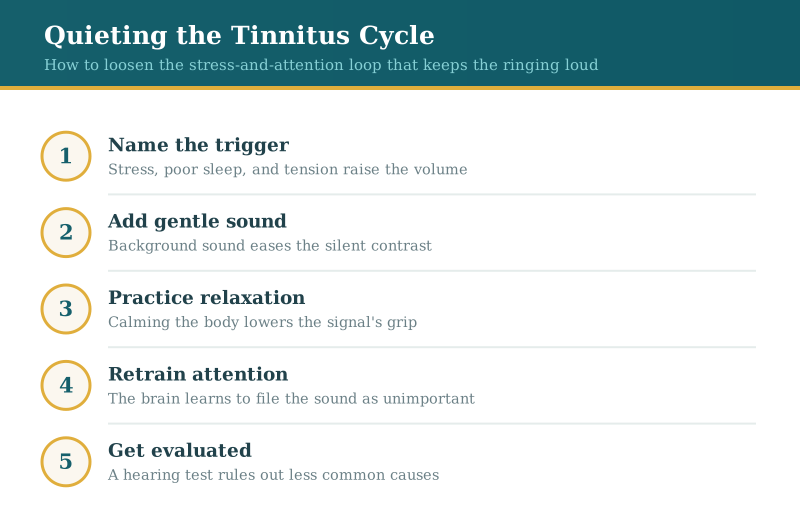
That loop is where stress earns its reputation. A hard week, poor sleep, and a mind that will not settle all make the ringing seem louder, which raises the stress, which sharpens the ringing again. Untangling that cycle is most of the work, and a good deal of it responds to sound and calm rather than any single fix. It helps to know first what tinnitus actually is before deciding what to do about it.
This piece sorts a few common misconceptions from what tends to hold up, so you can tell a genuine concern from an ordinary flare. If the sound is new, one-sided, or paired with dizziness, that is a reason to have it looked at, and our San Mateo and San Carlos team is glad to help you sort it out.
The ringing is rarely a sign of damage
The fear driving many first appointments is that the sound means the ears are failing fast. In the large majority of cases it does not. Tinnitus is a perception generated by the auditory system, often tied to existing hearing changes, and its presence alone does not mean anything is deteriorating. That reframing matters, because a calmer read of the sound is the first thing that tends to soften it. Tinnitus is a symptom rather than a disease in its own right, a distinction ASHA draws in its public tinnitus overview, and what tinnitus is covers that ground in plain terms.
Stress does not cause it, but it turns up the volume
A frequent belief is that stress is the root cause, so a calmer life would erase the sound entirely. The relationship runs sideways to that. Stress rarely creates tinnitus on its own, yet it reliably makes an existing signal more noticeable and harder to ignore. Cortisol, muscle tension, and a racing mind all prime the nervous system to flag the ringing as important. Ease the stress and the sound often recedes into the background, even though the underlying signal has not changed at all.
The attention loop is the real engine
People often picture tinnitus as a fixed volume dial, when it behaves more like a spotlight. The brain is built to notice anything it judges threatening or unresolved, and once it tags the ringing that way, it keeps checking on it, which keeps it loud. Bay Area life feeds this well: long screen days, notification overload, and short nights leave little quiet for the mind to stand down. Breaking the habit of monitoring the sound is central to tinnitus therapy, which trains the brain to file the signal as unimportant so it fades from awareness.
Silence makes it louder, not calmer
It seems logical that a quiet room would bring relief, so many people chase silence and end up worse off. In a truly quiet space, there is nothing to compete with the ringing, and the contrast pushes it to the front. Gentle background sound does the opposite by giving the brain something else to rest on. A fan, soft music, or a purpose-built program can lower how sharply the tinnitus stands out. That is the idea behind sound therapy, which uses steady, low-level sound to shrink the gap between the ringing and everything around it.
Relaxation is part of the treatment, not a bonus
There is a tendency to file relaxation under nice-to-have and skip it. With tinnitus it does real work. Slow breathing, progressive muscle release, and a steadier sleep routine lower the arousal that keeps the sound in the spotlight. None of this is a cure, and it would be dishonest to sell it as one, but it interrupts the stress-and-attention feedback that makes bad days worse. Many people find that pairing these habits with sound enrichment gives them the most reliable relief, and the combination is easy to build into an evening.
When the sound deserves a professional look
The last misconception is that tinnitus never warrants a visit, so people wait out symptoms that actually merit attention. Most tinnitus is benign, but some patterns are worth checking: ringing in only one ear, a sudden change, a pulsing that keeps time with your heartbeat, or new dizziness or hearing loss alongside it. A hearing evaluation can identify contributing hearing changes and rule out the less common causes, and from there our audiologists can map out a plan that fits how the sound is affecting your days.
Frequently asked questions
Questions patients ask us
Is tinnitus caused by stress?
Stress is usually an amplifier rather than the origin. Most tinnitus traces back to changes in the hearing system, but stress, poor sleep, and tension make an existing signal far more noticeable. That is why calming the nervous system can lower how loud the ringing feels, even when the underlying cause stays the same.
Will the ringing ever go away?
For some people it fades on its own, and for many others it stops feeling intrusive even when it is technically still there. The goal of treatment is usually that second outcome: the brain learns to stop flagging the sound, so it slips out of your attention during ordinary activity. Total silence is not guaranteed, but meaningful relief is a realistic aim.
Does sound therapy really help?
Many people get genuine benefit from it. By adding gentle background sound, sound therapy reduces the contrast that makes tinnitus stand out and gives the brain something neutral to settle on. It works best as part of a broader plan that includes attention retraining and relaxation, and results build gradually rather than overnight.
Should I worry if it is only in one ear?
One-sided ringing is worth having checked, even though it is often harmless. A sound isolated to a single ear, especially if it is new or comes with dizziness or hearing changes, is one of the patterns clinicians like to evaluate directly. Booking a hearing test is a straightforward way to find out what is behind it.