


Earwax & Hearing
Earwax — cerumen, in clinical terms — is supposed to be there. It traps dust, slows bacteria, and keeps the ear canal from drying out and flaking. Trouble starts only when it builds up faster than the ear can clear it, or when a cotton swab tamps it into a plug against the eardrum. Then sound has a harder time getting through, and the world turns flat and distant in a way that mimics hearing loss.
Nerve-related hearing loss works differently. It usually arrives gradually, affects both ears, and does not clear when the canal is cleaned. Sorting out which one you are facing is straightforward, and it begins with a look inside the ear. A hearing evaluation settles the question in a single visit.
At a glance
- A wax blockage can mimic hearing loss, but it tends to come on suddenly and in one ear.
- Cotton swabs push wax deeper; safe removal is gentle, and a clinician can clear a stubborn plug quickly.
- If clearing the wax does not restore your hearing, a hearing test can find what is really going on.
Signs it is wax and not something worse
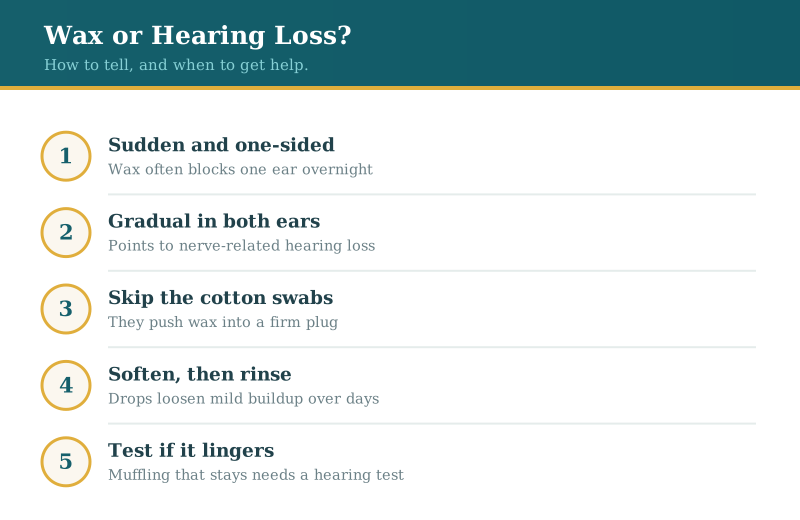
A wax blockage tends to announce itself. It often comes on suddenly, sometimes right after a shower, a swim, or an over-eager pass with a cotton swab, and it usually hits just one ear. You might notice a plugged or full feeling, a faint itch, or the odd sensation that your own voice echoes inside your head. Age-related hearing loss behaves almost the opposite way: it settles in slowly over months or years, affects both ears fairly evenly, and does not budge when the canal is cleared. The only way to know for certain is to look inside, which takes a clinician about a minute.
Clearing a blockage without hurting your ear
Start by leaving the cotton swabs in the drawer. The ear canal migrates wax outward on its own. Swabbing works against that, packing wax down into a firm plug. For mild buildup, a few drops of mineral oil, baby oil, or an over-the-counter wax softener over several days will often loosen things enough to rinse clear with warm water. What you want to avoid is anything sharp, along with ear candling, which has no evidence behind it and a genuine risk of burns. If a plug is stubborn, painful, or paired with drainage, that is the moment to stop improvising and let a professional handle earwax removal properly.
When cleaning does not bring the sound back
One simple check tells you a lot: if the wax is gone and sound is still muffled, wax was probably not the whole story. Nerve-related hearing loss does not clear with a cleaning, so the next step is a proper hearing evaluation to find out what you are working with. If a test confirms lasting loss, modern hearing aids are smaller and more capable than most people picture, and for an older adult weighing the options, our guide to hearing aids for seniors is a calm place to start.
Wax, hearing aids, and keeping both working
If you already wear hearing aids, wax deserves a little extra attention. The devices sit in or against the canal, which nudges your ears to produce and trap more wax than they otherwise would. That wax then finds its way into the receiver and wax guard, where it can muffle or silence the aid entirely. Plenty of wearers assume a quiet hearing aid is broken and needs repair when the real culprit is a clogged wax guard that takes seconds to swap. Keeping the canals reasonably clear and changing wax guards on schedule keeps both your ears and your devices working the way they should.
Frequently asked questions
What patients often want to know
Can earwax really make me feel like I'm going deaf?
Yes, and it happens more often than people expect. A full plug of wax against the eardrum can drop the volume of everything you hear and leave one ear feeling stuffed or underwater. Once the blockage is cleared, that muffling usually lifts right away, which is a good clue it was wax rather than nerve-related loss all along.
Is it safe to use cotton swabs to clean my ears?
Ear canals are built to clean themselves, and swabs tend to push wax deeper rather than pull it out. That is one of the most common causes of an impacted plug. If your ears feel waxy, softening drops or a professional cleaning are far kinder to the canal and the eardrum.
What are the home options for softening wax?
Over-the-counter drops, a few drops of mineral or baby oil, or a warm-water bulb rinse can loosen mild buildup over several days. Skip all of that, though, if you have ear pain, drainage, or any history of a punctured eardrum — those call for a clinician instead of a home remedy.
When should I let a professional remove it?
Bring it in when home softening has not worked after a week, when both ears are blocked, or when the plug keeps coming back. Our team can remove wax gently in a single visit, and while we are at it we can check whether anything besides wax is affecting your hearing. You can contact our offices to set that up.
My hearing aid sounds dead — could wax be the cause?
It is one of the first things worth checking. Wax works its way into the receiver and wax guard of an aid and muffles or silences it, which is easy to mistake for a device that needs repair. A quick cleaning or a fresh wax guard often brings it right back to life.
Could it be both wax and hearing loss at once?
Certainly, and that combination is common, especially as we get older. Clearing the wax handles the part that is fixable, and a hearing test sorts out whatever remains. Treating them together gives you the clearest, most honest picture of how you actually hear.