


Tinnitus & Online Safety
The honest picture is less dramatic than the marketing. For most people tinnitus has no single switch that turns it off, but it can very often be managed so it fades into the background and stops running the day. ASHA's write-up on managing tinnitus describes evidence-based care in those terms, as relief and management rather than a guaranteed cure. Anyone claiming a permanent fix for all tinnitus is running ahead of what the science supports.
You do not need a medical degree to tell a trustworthy source from a sales pitch. A few habits, like checking who is behind the information, watching for pressure and absolute promises, and bringing what you find to a professional, will keep you out of most rabbit holes. Our tinnitus care team can help you make sense of what you have read and point you toward options with genuine support behind them.
At a glance
- Most tinnitus cannot be switched off, but it can usually be managed so it bothers you far less.
- Be skeptical of any product promising a fast, permanent cure for all tinnitus.
- Check the source, watch for red flags, and confirm what you read with a professional.
Why tinnitus attracts so many miracle cures
Tinnitus is common, it can be miserable, and for many people it has no obvious fix, which is a near-perfect recipe for aggressive marketing. When something bothers you every waking hour and the standard advice is to learn to manage it, a headline that promises to silence the ringing for good is hard to scroll past. That emotional gap is what these products are built to fill. Recognizing the pattern makes the pitches easier to see for what they are, and it lowers the odds you will hand over a credit card in a discouraged moment.
Red flags in an online promise
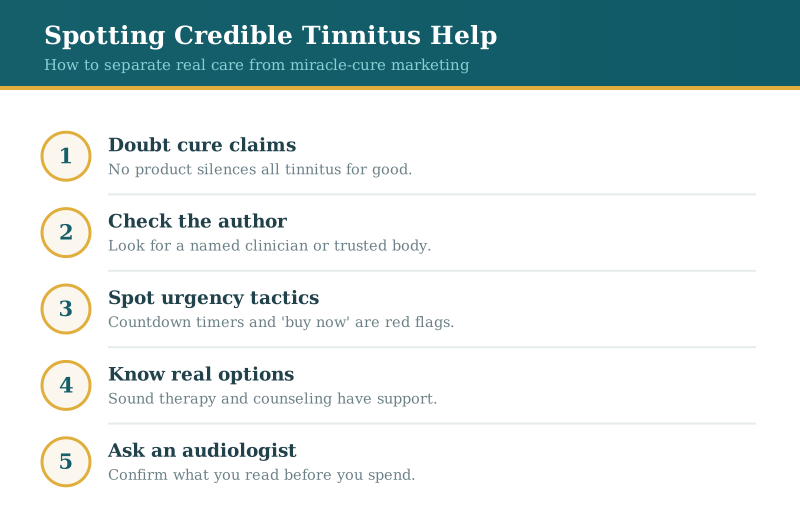
A few signals reliably separate a sales page from a genuine resource. Watch for guarantees of a total cure, glowing testimonials with no named clinician or study behind them, countdown timers and "only a few left" urgency, and pages where the real goal is a checkout button rather than clear information. Supplements built on proprietary blends and vague "clinically proven" language deserve particular caution. Any one of these might be innocent, but stack two or three together and you are almost certainly looking at marketing, not medicine.
How to judge whether a source is credible
Good information usually tells you who wrote it and why they can be trusted. Look for a named audiologist, physician, or recognized professional body, a recent review or update date, and language that describes options honestly, including their limits. Nonprofit and university medical sites, professional associations, and established audiology practices tend to explain tinnitus in shades of gray rather than in miracle terms. If a page never names its author and never admits any uncertainty, treat it as advertising until it earns more trust.
Where real help tends to come from
The approaches with genuine support behind them are less flashy than a pill. Sound therapy, counseling and cognitive strategies, addressing any underlying hearing loss, and structured programs like tinnitus retraining are the tools reputable clinics reach for. If hearing loss is part of the picture, treating it often takes some of the edge off the tinnitus as well. Our sound therapy and broader tinnitus therapy options are built around what the evidence supports, not around a single gadget.
Bringing what you found to a professional
The most useful thing you can do with an article or an ad is bring it to someone who can put it in context. A tinnitus-focused audiologist can tell you whether a claim holds up, whether a product is worth trying, and what is likely to help in your particular case. That conversation costs far less than a string of hopeful online purchases. You are welcome to contact our offices with the links and questions you have collected, because sorting the promising from the pointless is a normal part of the work we do.
Frequently asked questions
Finding Trustworthy Tinnitus Help Online: questions we hear a lot
Is there really no cure for tinnitus?
For most people, no treatment erases tinnitus completely, and that is the honest state of the science today. What does exist is a real toolkit, from sound therapy to counseling to treating any related hearing loss, that helps the majority of people notice it far less. A source promising to eliminate all tinnitus permanently is overselling.
Are tinnitus supplements worth trying?
The evidence behind most over-the-counter tinnitus supplements is thin, and some make claims no pill could back up. Before spending money, ask an audiologist whether anything in the formula has real support and whether it could interact with your other medications. More often than not, that money does more good aimed at approaches known to help.
How can I tell if a tinnitus website is trustworthy?
Start with who is behind it. A trustworthy page names its author or organization, points to recognized sources, shows a recent date, and is upfront about what treatment can and cannot do. If the page is mostly a sales funnel with urgent language and a large buy button, read it as an ad and confirm anything useful with a professional before acting on it.