

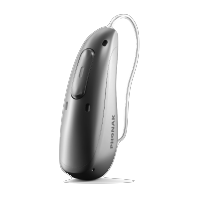
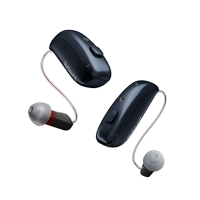
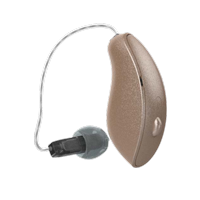
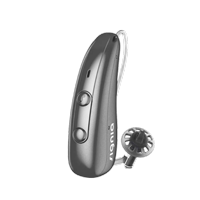


When your voice sounds boomy, hollow, or like you’re talking inside a barrel while wearing hearing aids, you’re experiencing the occlusion effect — a well-understood acoustic phenomenon caused by low-frequency bone-conducted sound becoming trapped in a blocked ear canal. It is extremely common, particularly with new wearers and closed-fit devices, and in the vast majority of cases it is fully correctable with a combination of fit adjustments, venting changes, and programming tweaks.
The occlusion effect is not a sign of a broken hearing aid or wrong prescription — it is a physics problem with a physical solution. Probe microphone measurements published in The Hearing Review show that blocking the ear canal can increase sound pressure at 250 Hz by approximately 25 dB — roughly quadrupling perceived loudness of your own voice at that frequency. The fix — larger vents, deeper fit, open domes, or low-frequency gain reduction — is almost always achievable without sacrificing the amplification your hearing loss requires. Don’t adapt around it; tell your audiologist.
Occlusion Effect: Causes, Severity Factors, and Fixes
| Factor | How It Contributes | Fix | Who Applies It |
|---|---|---|---|
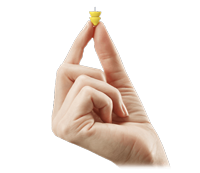
| Closed / occluding dome | A closed dome seals the ear canal, trapping low-frequency bone-conducted sound from the jaw and skull with nowhere to escape — the most common cause in RIC/RITE hearing aids. | Switch to an open dome or vented dome, which allows low-frequency energy to leak out rather than build up at the eardrum. | Audiologist at a follow-up visit — dome change takes under a minute. |
| Earmold seated in cartilaginous canal | The outer, cartilaginous portion of the ear canal acts as a resonator for jaw vibrations. An earmold or dome sitting here amplifies that resonance directly. Probe mic studies measure up to ~25 dB SPL increase at 250 Hz in this position. | Move the fit deeper into the bony canal portion — “deep fit” — which bypasses the resonating cartilaginous segment and dramatically reduces occlusion without opening the seal. | Audiologist — requires careful anatomical assessment before attempting. |
| Insufficient or absent venting | Earmolds without a vent, or with vents smaller than ~2 mm, do not provide enough of an acoustic release pathway for low-frequency energy. The trapped energy has no exit. | Add or enlarge the vent to at least 2 mm diameter. For earmolds, the audiologist can drill or re-order with a larger vent. Tradeoff: larger vents increase feedback risk — balanced against gain requirements. | Audiologist — earmold modification or remakes. |
| Excessive low-frequency gain | Hearing aids programmed with high low-frequency gain amplify the trapped bone-conducted sound even further, compounding the occlusion sensation. Even when the fit is correct, aggressive bass amplification worsens perceived boominess. | Reduce gain below 1,000 Hz in quiet listening programs. For patients with normal low-frequency hearing, this usually has no negative impact on speech clarity — most speech energy sits above 1 kHz. | Audiologist — programming adjustment, often same visit. |
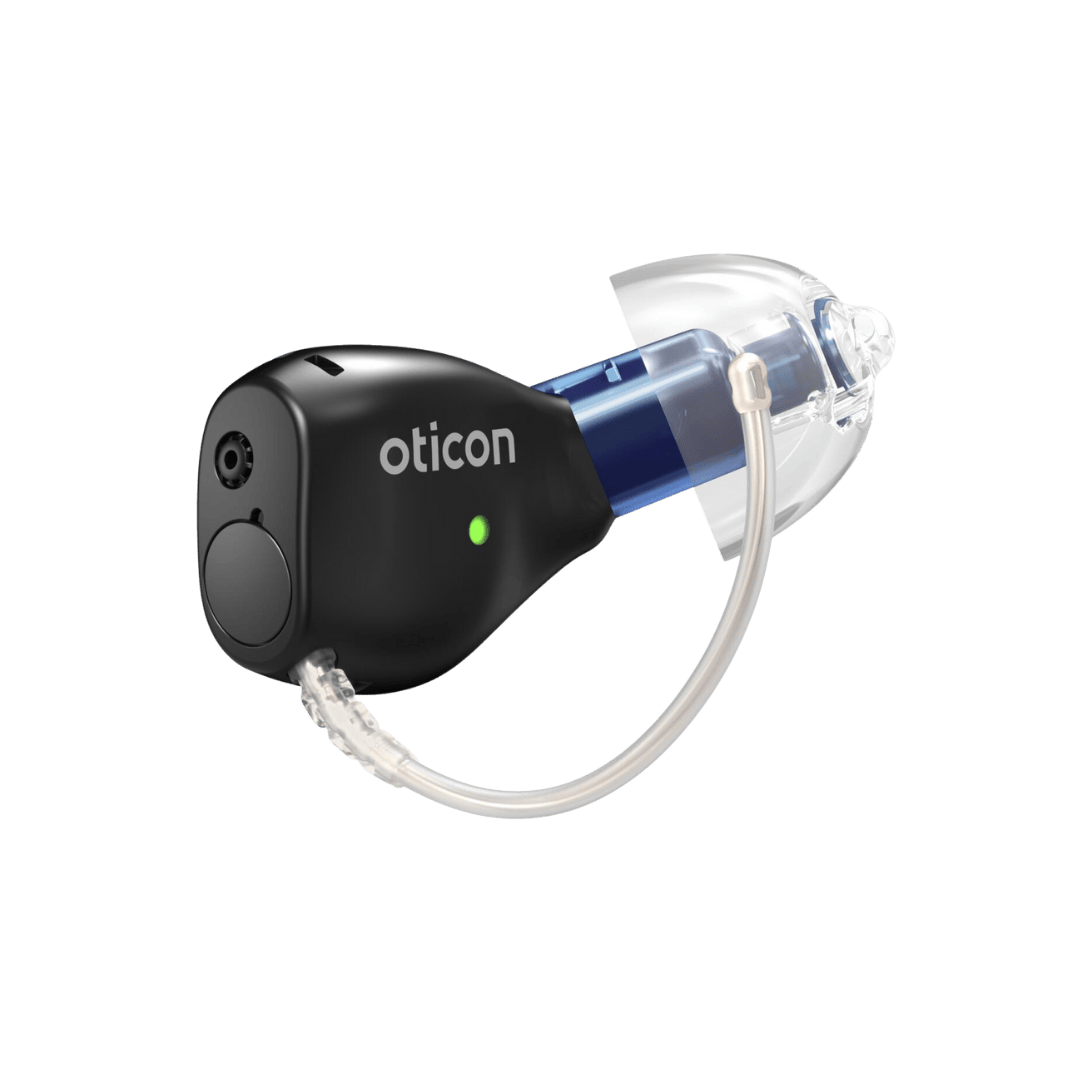
| Hearing aid style (ITE/ITC/CIC) | In-the-ear styles house both microphone and receiver in the ear canal, making a tight acoustic seal necessary. The resulting occlusion is often more significant than with RIC aids, which allow more flexible dome/vent selection. | Custom ITE shells can be modified with larger vents. In some cases, switching to a RIC style with open fitting resolves occlusion that ITE fitting cannot adequately address. | Audiologist — may require remakes or style change discussion. |
| Own Voice Processing (OVP) not enabled | Several current-generation hearing aids (notably Signia and Rexton) include dedicated Own Voice Processing — a separate processing pathway specifically for the wearer’s voice that reduces the boomy quality without affecting how other sounds are heard. | Ask your audiologist whether your hearing aids include OVP and whether it is activated. If not enabled, activation is a programming change — no hardware adjustment needed. | Audiologist — firmware/programming. |
| New wearer adjustment period | The brain takes time to recalibrate to the new acoustic environment created by hearing aids. Some degree of occlusion perception is normal in the first 1–2 weeks and does diminish as adaptation occurs — but only for mild cases. | For mild cases: practice reading aloud, give it 1–2 weeks. For moderate-to-severe occlusion: adaptation will not resolve it — intervention is needed. Don’t wait longer than 2 weeks before calling your audiologist. | Patient (adaptation) + Audiologist if it persists. |
Quick self-test for occlusion: Plug both ears firmly with your fingers and say “eeeee” out loud. That hollow, over-amplified sound of your own voice is exactly what the occlusion effect feels like acoustically. Now unplug your ears — normal. This demonstrates the physics directly: blocking the canal traps the bone-conducted low-frequency energy of your own voice. Everything your audiologist does to fix occlusion is aimed at giving that energy somewhere to go.
What is the occlusion effect, exactly?
When you speak, sound reaches your inner ear through two simultaneous pathways. Air-conducted sound travels through the air, into the ear canal, and through the eardrum. Bone-conducted sound travels through the bones and soft tissues of your skull and jaw — independently of the ear canal — and vibrates the cochlea directly.
In an open, unoccluded ear, the low-frequency components of your bone-conducted voice energy dissipate harmlessly from the ear canal into the surrounding air. When a hearing aid — or any object — blocks the canal, that escape route is closed. The low-frequency energy, particularly below 1,000 Hz, has nowhere to go and builds up as increased sound pressure at the eardrum. The result is a measurable and subjectively prominent increase in the perceived loudness and “boominess” of your own voice — and to a lesser extent, of other self-generated body sounds like chewing, swallowing, and footsteps.
Probe microphone studies consistently measure this as approximately a 20–25 dB SPL increase at 250 Hz in the sealed ear compared to the open ear — not a subtle difference. That’s the equivalent of your voice sounding roughly three to four times as loud at bass frequencies the moment the ear canal is blocked.
Why does it happen more with some hearing aids than others?
The occlusion effect is directly tied to how completely the ear canal is sealed by the hearing aid. Devices that create a tight seal — particularly in-the-ear (ITE), in-the-canal (ITC), and completely-in-canal (CIC) styles — are the most prone to causing significant occlusion because sealing the canal is a design requirement for their function. The entire shell sits inside the canal, and a good seal is necessary for both amplification and feedback control.
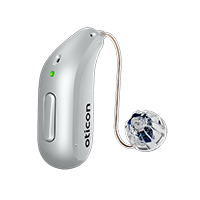
Receiver-in-canal (RIC) aids with open domes — slotted or multi-vent styles that leave much of the canal cross-section unoccluded — typically produce very little occlusion. The dome sits in the canal but doesn’t seal it, allowing bone-conducted low-frequency energy to disperse normally. This is one of the primary reasons RIC aids with open fittings have become the dominant style for mild-to-moderate high-frequency hearing loss: they provide amplification where it’s needed (high frequencies) while leaving low-frequency transmission essentially natural.
The complication arises when a patient’s degree of hearing loss requires a tighter seal than an open dome provides — either because they need significant low-frequency amplification, or because the gain requirements make feedback management impossible with an open fit. In those cases, the audiologist must balance acoustic seal (for gain and feedback stability) against occlusion (for own-voice comfort), using venting and fit depth as the primary adjustment levers.
How does venting reduce occlusion — and what are the tradeoffs?
A vent is a small channel bored through an earmold or hearing aid shell that connects the sealed ear canal space to the outside air. Its primary purpose is to give the trapped low-frequency bone-conducted energy an escape route — the same escape route that was available before the hearing aid was inserted. A vent of at least 2 mm diameter is generally the clinical threshold for meaningful occlusion reduction, based on published data from Revit (1992) and replicated across subsequent studies.
The tradeoff is real and must be managed carefully. A larger vent reduces the acoustic seal of the earmold — meaning more sound leaks out of the canal in both directions. At low frequencies, this reduces the effective amplification delivered to the eardrum (insertion loss). More critically for feedback management, a larger vent creates a shorter acoustic pathway for amplified sound to leak back to the microphone, increasing feedback risk. The practical limit on vent size is therefore set by the combination of the patient’s low-frequency gain requirements and the hearing aid’s feedback management capability.
Modern premium hearing aids with sophisticated adaptive feedback cancellation have significantly expanded the range of vent sizes that are clinically viable — allowing larger vents without sacrificing gain or triggering persistent feedback. This is one of the more consequential practical benefits of investing in current-generation devices for patients prone to occlusion.
Can programming changes fix occlusion without changing the fit?
Sometimes — and it’s always worth trying before any physical modification, because it’s instantaneous and reversible. The two most effective programming approaches are low-frequency gain reduction and Own Voice Processing activation.
Reducing gain below 1,000 Hz directly reduces the amplification of the trapped bone-conducted energy. For patients with normal or near-normal low-frequency hearing — which describes the majority of people with age-related high-frequency hearing loss — low-frequency gain can be reduced substantially without affecting speech clarity, because the speech frequencies that carry most meaning sit above 1,000 Hz. The audiologist can dial back bass amplification in real time during the appointment, with the patient providing immediate feedback.
Own Voice Processing (OVP), offered by Signia and Rexton under that name and available in various forms from other manufacturers, uses a dedicated processing pathway to identify the wearer’s own voice and apply a separate gain profile to it — specifically reducing the boom without affecting how other voices and sounds are processed. A clinical study on Signia’s OVP showed that it significantly reduced own-voice dissatisfaction even when the physical fit remained fully occluded.
Is occlusion the same as feedback, muffled sound, or tinnitus?
✅ Occlusion sounds like
- Your own voice sounds boomy, hollow, or too loud
- Speaking feels like talking into a barrel or a closed room
- Footsteps, chewing, and swallowing sound unusually loud to you
- Your ears feel full or pressurized when you speak
- Other people’s voices sound fine — only self-generated sounds are affected
⚠️ Not occlusion — different issues
- Feedback / whistling — a high-pitched squeal caused by amplified sound looping back to the microphone (not related to your voice specifically)
- Muffled / reduced sound quality — usually a blocked wax guard, dead receiver, or programming issue affecting all sounds equally
- Tinnitus — a ringing, buzzing, or hissing sound that originates internally; hearing aids don’t cause tinnitus, though occlusion can make you more aware of pre-existing tinnitus
- Distortion — crackling or buzzing that affects all sounds; typically a hardware issue requiring repair
How quickly does occlusion resolve — and when should you stop waiting?
For mild occlusion — a slight increase in own-voice loudness that isn’t significantly bothersome — many patients do adapt within one to two weeks as the brain recalibrates its perception of self-generated sounds. Practicing reading aloud or speaking naturally while wearing aids accelerates this adaptation by giving the auditory system more exposure to the new acoustic environment.
For moderate-to-significant occlusion — the clear barrel-voice quality that is genuinely uncomfortable or distracting — adaptation alone will not resolve it. The physics of sound pressure buildup in a sealed canal don’t change with time; only the fit, venting, or programming can. Waiting more than two weeks for significant occlusion to resolve is waiting for a physical problem to fix itself without physical intervention.
The clinical benchmark: if your voice still sounds clearly unnatural after two weeks of consistent wear, call your audiologist. Occlusion is one of the most solvable hearing aid problems — but only if it’s addressed. At California Hearing Center, resolving occlusion is a standard part of our follow-up care, not an unusual request.
Why Choose California Hearing Center?
At California Hearing Center, we use real-ear measurement as part of every new fitting — which means we can objectively measure the occlusion effect at your eardrum, not just ask how your voice sounds. That measurement guides the venting, fit depth, and programming decisions that resolve it efficiently. If you’re experiencing occlusion with existing aids fitted elsewhere, we can assess and address it at a follow-up appointment. Your voice should sound like you — and it can.
- Dillon, H. (2012). Hearing Aids (2nd ed.). Thieme / Boomerang Press. — Comprehensive clinical reference; primary source for occlusion effect physics, earmold venting principles, and the cartilaginous vs. bony canal distinction.
- Revit, L. J. (1992). Two techniques for dealing with the occlusion effect. Hearing Instruments, 43(12), 16–18. — Original clinical paper establishing the 2 mm vent threshold for meaningful occlusion reduction; widely cited in subsequent literature.
- Kiessling, J., Brenner, B., Jespersen, C. T., Groth, J., & Jensen, O. D. (2005). Occlusion effect of earmolds with different venting systems. Journal of the American Academy of Audiology, 16(4), 237–249. — Peer-reviewed study comparing subjective and objective occlusion across vent configurations. doi:10.3766/jaaa.16.4.5
- Laugesen, S., Jensen, N. S., Maas, P., & Nielsen, C. (2011). Own Voice Qualities (OVQ) in hearing-aid users: There is more than just occlusion. International Journal of Audiology, 50(4), 226–236. — Key study separating amplification from occlusion as independent contributors to own-voice dissatisfaction. doi:10.3109/14992027.2010.547991
- Froehlich, M., Freels, K., & Powers, T. (2015). Speech recognition benefit obtained from binaural beamforming hearing aids: Comparison to omnidirectional and individuals with normal hearing. AudiologyOnline. — Referenced for Own Voice Processing (OVP) clinical outcomes in Signia hearing aids. audiologyonline.com
- Stender, T., Boyle, P., & Mehra, S. (2017). Open versus closed fittings: A literature review. PMC / NCBI. — Peer-reviewed review of open vs. closed fitting tradeoffs, including occlusion, feedback, and directional microphone performance. pmc.ncbi.nlm.nih.gov/articles/PMC4765810