

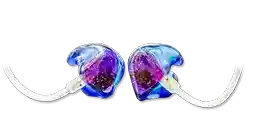

Hearing aid feedback — that high-pitched whistle or squeal — happens when amplified sound escapes from your ear canal and gets picked up by the hearing aid microphone, creating a loop that re-amplifies itself. The cause is almost always one of five things: poor fit, earwax buildup, a worn wax guard, an external object near the mic, or a programming issue — and most cases are fixable in minutes, either at home or at a clinic visit.
Occasional, brief feedback — when hugging someone or pulling on a hat — is normal and expected. Persistent or frequent whistling is not normal and always has a fixable cause. Research published in PMC estimates that 10–15% of in-the-ear hearing aids are returned to manufacturers within 90 days for feedback-related issues — the majority of which are fit and maintenance problems that a clinic visit could have resolved. If your hearing aids whistle regularly, don’t adapt around it: get it fixed.
Hearing Aid Feedback: Causes, Self-Checks, and Fixes
| Cause | What’s Happening | Try This First | When to See Your Audiologist |
|---|---|---|---|
| Poor fit / loose seal | The dome, earmold, or shell isn’t sealing the ear canal properly — amplified sound leaks out and loops back into the microphone. | Remove and reinsert the hearing aid carefully, ensuring the dome is seated fully in the canal. Try a larger dome size if you have spares. | If reinsertion doesn’t stop it. Domes harden and lose their seal over time; earmolds may need to be remade if your ear shape has changed. |
| Earwax blockage | Wax in the ear canal creates a hard barrier that reflects amplified sound back toward the microphone instead of allowing it to be absorbed by the canal walls. | Check whether your ear canal feels blocked or full. Do not attempt to remove wax with cotton swabs — this compacts it further. | Have wax professionally removed by your audiologist or physician. Do not use ear candling — it is ineffective and unsafe. |
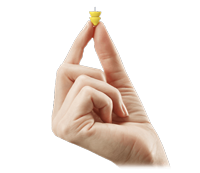
| Blocked or worn wax guard | A clogged wax guard partially blocks the receiver output, reducing the efficiency of sound delivery into the canal and increasing the likelihood of sound reflecting back. | Replace the wax guard — this takes under 30 seconds with the tool provided with your aids. Check whether feedback stops immediately after replacement. | If wax guards are clogging very frequently, your audiologist may adjust the dome size or style to reduce wax entry into the device. |
| External object near the mic | A hand, hat, pillow, scarf, or phone held close to the ear reflects the hearing aid’s output back into its own microphone. This is the most common source of brief, situational feedback. | This is normal and expected — brief feedback when hugging someone or adjusting glasses is not a sign of a problem. Move the object away and the feedback stops. | Only if the feedback persists after the object is removed, which would suggest a different underlying cause. |
| Volume set too high | At very high volume settings, the output pressure in the ear canal increases to the point where even a small acoustic leak causes feedback. Turning up the volume to compensate for poor clarity often makes feedback worse, not better. | Reduce volume by one or two steps. If clarity improves without feedback returning, the volume was the issue. | If you need high volume to hear adequately, your hearing may have changed — a reprogramming visit is warranted rather than tolerating feedback. |
| Tubing crack or damage (BTE aids) | Cracked or hardened tubing in behind-the-ear aids creates a gap that allows sound to escape before reaching the earmold, creating a partial feedback path. | Visually inspect the tubing for cracks, yellowing, or stiffness. Also check the junction between the tubing and earmold for a secure fit. | Tubing should be replaced by your audiologist — typically every 3–6 months as part of routine maintenance. |
| Programming / gain issue | A hearing aid programmed with more gain than the physical fit of the device can accommodate will produce feedback at certain frequencies — a direct cause-and-effect between amplification target and acoustic seal. | No home fix for this — the issue is in the software settings relative to the fit. | Your audiologist can measure the feedback threshold directly using real-ear equipment and adjust gain at the specific frequencies causing the loop. This is a same-visit fix. |
| Hearing loss progression | If your hearing has changed since your last fitting, your audiologist may have increased gain to compensate — which can push the device past its feedback stability threshold if the physical fit hasn’t been updated accordingly. | Note whether feedback started after a recent programming change or has developed gradually over several months. | A hearing recheck and reprogramming visit — the gain and fit need to be evaluated together. |
The fastest home check: Remove the hearing aid, hold it in your hand, and listen — does it whistle? If yes, the feedback is coming from the device itself (likely a wax guard or programming issue), not from how it’s seated in your ear. If it only whistles when worn, the issue is almost always fit or wax in the canal.
What is hearing aid feedback, exactly?
Acoustic feedback in hearing aids is the same physical phenomenon as the squeal you hear when a microphone is held too close to a loudspeaker on a PA system. Sound exits the hearing aid’s receiver (the tiny speaker in your ear canal), some of it leaks back out past the dome or earmold, gets picked up by the hearing aid’s microphone, gets amplified again, and the loop repeats — faster than you can perceive individual cycles — producing a sustained whistle or squeal, typically in the 2,000–4,000 Hz range where hearing aids provide the most amplification.
The physics that govern whether a hearing aid will produce feedback are described by the Nyquist Stability Criterion: a feedback loop becomes audible (oscillates) at any frequency where the amplified signal that leaks back to the microphone is strong enough to sustain itself. This is why feedback tends to occur at specific pitches rather than as broadband noise — only certain frequencies have enough gain and enough acoustic leakage to complete the loop.
In practical terms: the higher the gain (amplification) at a given frequency, the less acoustic leakage is needed to trigger feedback. This is why high-frequency feedback is so common — most hearing aids provide the most gain in the 2,000–4,000 Hz range to compensate for high-frequency hearing loss, which is exactly where feedback instability is hardest to avoid.
When is feedback normal vs. a problem?
✅ Normal — occasional and situational
- Brief whistle when hugging someone tightly
- Feedback as you cup your hand over your ear
- Momentary squeal when pulling on a close-fitting hat or helmet
- Whistle when the hearing aid is held in your hand (not in your ear) — it’s amplifying its own output into open air
- Brief feedback immediately after insertion before the dome fully seats
⚠️ Not normal — get it checked
- Persistent whistling throughout the day with no obvious trigger
- Feedback that has developed gradually and is getting more frequent
- Feedback at moderate volume levels that didn’t occur when the aids were newer
- Feedback accompanied by reduced volume or sound quality
- Feedback that started after a programming adjustment
- Feedback in only one ear when both aids have the same settings
How do modern hearing aids manage feedback?
Current-generation hearing aids include adaptive digital feedback cancellation (AFC) systems that operate continuously in the background — detecting the onset of a feedback loop before it becomes audible and canceling it in real time. The most common mechanism is phase inversion: the hearing aid detects the feedback frequency, generates a signal that is the mathematical inverse of the offending wave, and the two cancel each other out before reaching the receiver.
More sophisticated systems use machine learning to distinguish true acoustic feedback from signals that simply resemble it — like a high-pitched doorbell, a bird call, or a ringing phone. Less advanced feedback cancellation can incorrectly suppress legitimate sounds; premium devices are significantly better at this discrimination.
Some devices also use notch filtering — selectively reducing gain at the specific frequency where feedback occurs — as a secondary strategy. The limitation of notch filtering is that it reduces amplification at that frequency for all sounds, not just the feedback signal, which can affect speech clarity if the notched frequency falls in a critical speech range.
The important nuance: feedback cancellation is a compensatory technology. It manages feedback that occurs despite the fit, not a substitute for achieving a good acoustic seal in the first place. A well-fitted hearing aid with a good seal needs less feedback cancellation — and the hearing aid’s processing resources are freed up for noise reduction and speech enhancement instead.
How does an audiologist fix persistent feedback?
When home troubleshooting doesn’t resolve persistent feedback, a clinic visit typically follows a systematic process. First, the audiologist checks the physical fit — examining the dome or earmold for wear, testing the seal, and assessing whether earwax or a blocked wax guard is contributing. These mechanical causes are addressed immediately.
If the fit is sound, the audiologist uses real-ear measurement equipment to run a feedback stability test — mapping the exact frequencies where the device is at or near feedback threshold. This produces objective data rather than relying on the patient’s verbal description of when whistling occurs.
From there, the fix depends on what the test reveals. If the device is operating near its maximum stable gain at certain frequencies, the audiologist can reduce gain at those specific frequencies, switch to a more occlusive dome style that provides a better acoustic seal, or — for significant gain requirements that exceed what the current dome can accommodate — move to a custom earmold that provides a tighter fit and higher feedback stability margin.
At California Hearing Center, feedback troubleshooting is a same-appointment service. In the majority of cases, the cause is identified and resolved in a single visit.
Can the hearing aid style affect how much feedback occurs?
Yes — significantly. The physical relationship between the receiver and the microphone is one of the primary determinants of feedback susceptibility, and this varies considerably across hearing aid styles.
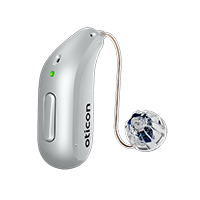
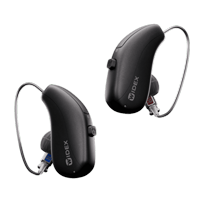
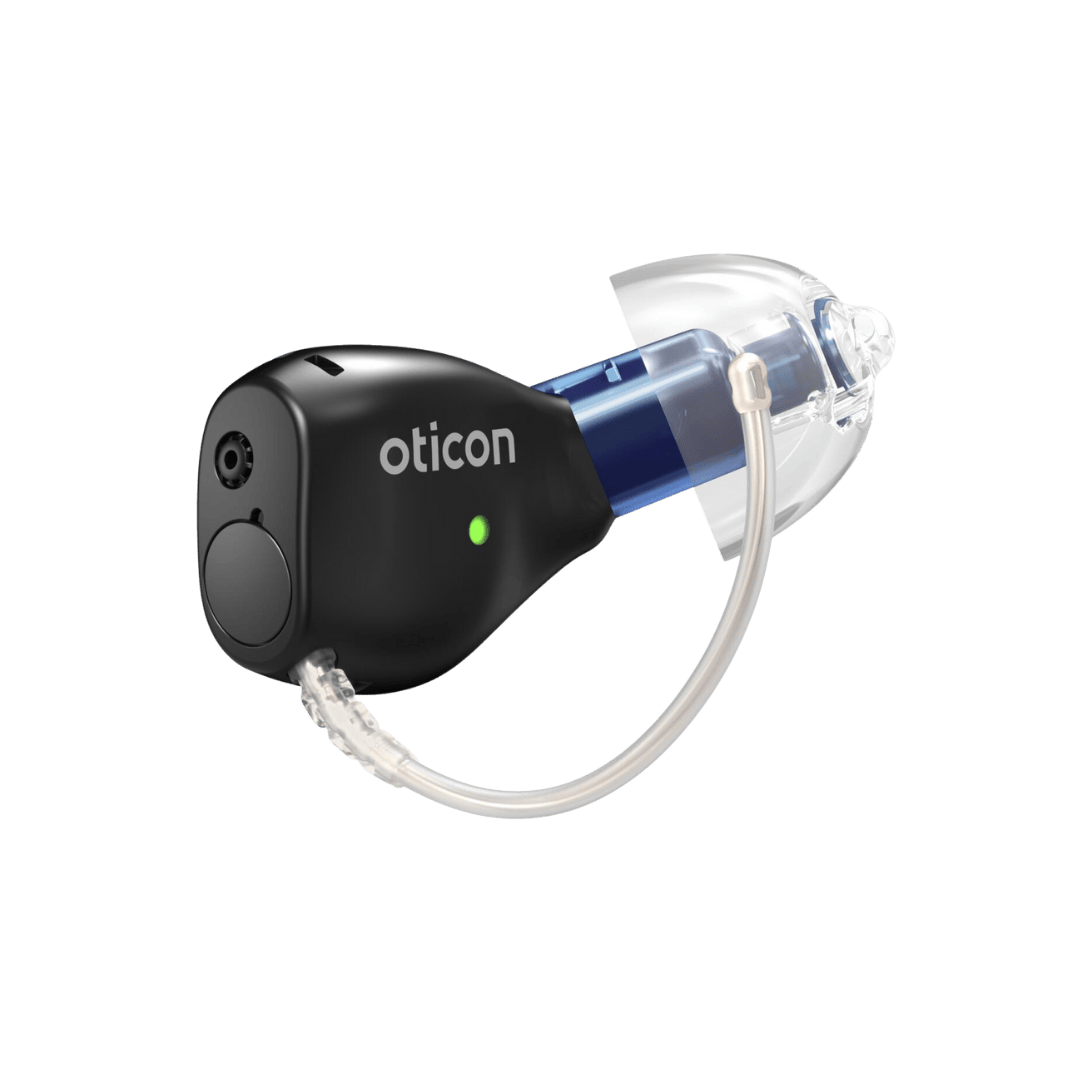
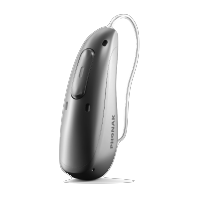
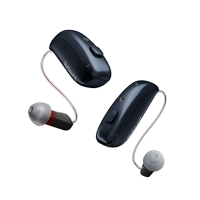
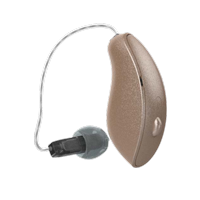
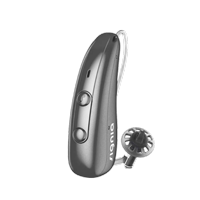
Receiver-in-canal (RIC/RITE) aids place the receiver directly in the ear canal, very close to the microphone on the body of the aid behind the ear. The thin wire connecting them means that even a small acoustic leak from around the dome can create a short feedback path. RIC aids depend heavily on a good dome seal — which is why dome size selection matters as much as it does for this style.
Behind-the-ear (BTE) aids with earmolds have the receiver at the end of the tubing inside the earmold, which typically provides a more complete seal than a soft dome — making them somewhat more feedback-resistant at high gain levels, though cracked tubing introduces its own feedback pathway.
In-the-ear (ITE/ITC/CIC) aids have both the microphone and receiver housed in the same custom shell, with a very short acoustic path between them. These styles are often the most feedback-prone at high gain levels, which is one reason industry data shows that 10–15% of ITE products are returned for feedback-related issues within the first 90 days. Custom earmolds for this style require precise fit to maintain the acoustic seal needed.
Why Choose California Hearing Center?
At California Hearing Center, we use real-ear measurement equipment to assess feedback stability at every new fitting — not just subjective listening. If you’re experiencing persistent feedback with existing aids, we can run a feedback threshold test, identify the exact cause, and resolve it the same day in most cases. Feedback is always a solvable problem; you shouldn’t be living with it.
- Dillon, H. (2001). Hearing Aids. Thieme / Boomerang Press. — Comprehensive clinical reference covering acoustic feedback theory, causes, and feedback cancellation algorithms.
- Engebretson, A. M., & Morley, R. E. (1987). Acoustic feedback and its management. Journal of Rehabilitation Research and Development, 24(4), 161–174. — Early foundational study of hearing aid feedback physics and the Nyquist Stability application to hearing aids.
- Chung, K. (2004). Challenges and recent developments in hearing aids. Part I. Speech understanding in noise, microphone technologies and noise reduction algorithms. Trends in Amplification, 8(3), 83–124. — Peer-reviewed overview of adaptive feedback cancellation in digital hearing aids. pubmed.ncbi.nlm.nih.gov/15678226
- Freed, D. J., & Soli, S. D. (2006). An objective procedure for evaluation of adaptive antifeedback algorithms in hearing aids. Ear and Hearing, 27(4), 382–398. — Study establishing objective methods for measuring feedback cancellation performance. pubmed.ncbi.nlm.nih.gov/16825892
- Kuk, F., et al. (2014). Acoustic and Processing Factors Affecting Perception of Feedback. PMC / NCBI. — Peer-reviewed article including the 10–15% ITE return rate data and sub-oscillatory feedback effects. pmc.ncbi.nlm.nih.gov/articles/PMC4172233
- American Academy of Audiology (AAA). Clinical Practice Guidelines: Adult Patients with Severe-to-Profound Hearing Loss. — AAA guidance on feedback management as part of fitting verification. audiology.org