



If you’re searching for a tinnitus evaluation in San Mateo or San Carlos, there’s a good chance you’ve already been told some version of, “Your hearing is fine,” while the ringing in your ears is very much not fine.
At California Hearing Center, our tinnitus assessments go far beyond a quick “pass/fail” hearing screen. Guided by the same evidence-based approach used by tinnitus specialist Dr. Emily E. McMahan, AuD at Alaska Hearing & Tinnitus Center (All Ears Alaska), we look at your ears, your hearing, and your nervous system as a connected whole.
In this article, we’ll walk you through what really happens during a comprehensive tinnitus evaluation — so you know exactly what to expect when you book with us in San Mateo, San Carlos, or visit from nearby communities like Atherton or Fremont.
Quick screening vs. full tinnitus evaluation: what’s the difference?
A lot of people who come to us for a second opinion have only had a basic hearing screen that looks something like this:
- You sit in a booth.
- You raise your hand when you hear beeps.
- Someone says, “Your hearing is within normal limits.”
That is not a full tinnitus evaluation.
A true tinnitus assessment looks at:
- Ear health (outer and middle ear).
- Hearing levels across a range of pitches and volumes.
- How your brain reacts to sound (including uncomfortable loudness).
- The tinnitus itself — what it sounds like, how loud it seems, and how much it affects your life.
Our goal is not just “Do you hear beeps?” but: What’s driving your tinnitus, and what can we do about it?
You can see how this fits into our broader approach on our Tinnitus Therapy page.
Step 1: History, goals, and “your story”
Your tinnitus evaluation usually starts before you step into the booth.
We’ll review:
- When your tinnitus started (suddenly or gradually).
- How you describe the sound (ringing, buzzing, hissing, roaring, etc.).
- Noise exposure (concerts, tools, military, earbuds, loud workplaces).
- Medical history (ear infections, head injuries, jaw/neck issues, meds).
- Sleep, stress levels, and mental health.
- How tinnitus is affecting your day-to-day life (work, relationships, mood).
We may also use simple questionnaires to measure how bothersome your tinnitus feels. This helps us track progress over time.
This part matters just as much as the tests. As Dr. McMahan often points out in her interviews and talks, tinnitus is not just about the ears — it’s about the whole person.
Step 2: Ear exam and middle-ear testing (otoscopy & tympanometry)
Next, we make sure there isn’t a simple, fixable reason your tinnitus is worse than it needs to be.
Otoscopy (ear exam)
We look in your ears to check for:
- Earwax build-up that might be blocking sound.
- Signs of infection or fluid.
- Structural changes in the eardrum.
If earwax or ear health issues are part of the problem, we’ll discuss options for managing those as part of your plan. (You can learn more in Can Earwax Cause Tinnitus?.)
Tympanometry (middle-ear function)
Tympanometry is a quick and gentle test that tells us how well your eardrum and middle ear are moving. We’re checking for:
- Stiffness or fluid behind the eardrum.
- Pressure issues (for example, Eustachian tube problems).
If something in the middle ear needs medical attention, we’ll collaborate with your primary care provider or ENT.
Step 3: Full diagnostic hearing evaluation
Now we move into the part most people recognize — but with more depth than a quick screening.
Pure-tone testing (air & bone conduction)
We measure how softly you can hear tones at different pitches through headphones (air conduction) and through a small bone oscillator behind your ear (bone conduction). This helps us understand:
- Whether you have hearing loss.
- What type of hearing loss it is (conductive, sensorineural, or mixed).
- Which pitches are most affected — often overlapping with your tinnitus pitch.
Speech testing
We also look at how well you hear and understand speech in quiet, and sometimes in noise. Many people with tinnitus say, “I hear people talking, I just can’t understand them,” especially in busy environments.
These tests give us real-world information we can use to recommend hearing strategies, hearing aids, or sound therapy — not “your hearing is fine, goodbye.”
Step 4: OAEs – how your inner ear hair cells are doing
In many tinnitus cases, the inner ear is part of the story even when basic hearing seems “okay.”
Otoacoustic Emissions (OAEs) are tiny sounds generated by the outer hair cells in your inner ear when they respond to a stimulus. We can measure these emissions to see how well those cells are working.
Why this matters for tinnitus:
- OAEs can reveal subtle damage even when a standard audiogram looks mostly normal.
- They help us understand whether noise exposure, aging, or other factors may be affecting the inner ear.
- They’re an important piece in deciding whether hearing aids, sound therapy, or Lenire® might help.
This is one of the reasons our approach at California Hearing Center — influenced by Dr. McMahan’s protocols — goes deeper than a simple “you passed the test.”
Step 5: Loudness discomfort levels (LDLs) and sound tolerance
Not everyone with tinnitus has the same relationship with sound.
Some people also experience hyperacusis (sound sensitivity) or feel like everyday sounds (dishes, kids, traffic, music) are too loud or painful.
To understand this, we may measure your loudness discomfort levels (LDLs) — the volume at which sound stops being comfortable and starts to feel too loud.
This helps us:
- See how your sound tolerance compares to typical ranges.
- Determine whether hyperacusis or misophonia-like symptoms are part of your picture.
- Design sound therapy that is gentle and safe, not overwhelming.
Knowing your LDLs is also important when we consider treatment options like hearing aids or Lenire® tinnitus therapy in San Mateo, so we don’t overdrive your system.
Step 6: Tinnitus pitch and loudness matching
Once we understand your hearing and sound tolerance, we’ll focus specifically on the tinnitus itself.
We may:
- Play different tones or noises and ask you which one sounds closest to your tinnitus (pitch matching).
- Gradually increase volume until the external sound matches how loud your tinnitus feels (loudness matching).
- Explore whether your tinnitus changes with certain jaw or neck movements (somatic modulation).
These tests are not about proving that your tinnitus “exists” — we already trust you. They’re about giving us precise information so we can tailor sound therapy, hearing aid programming, or Lenire® settings to your specific tinnitus profile.
For more on this brain-based process and why it matters, see our article on Understanding Tinnitus Habituation.
Step 7: Tinnitus and hearing loss — related, but not the same problem
A common myth in hearing care is that you can “just slap on a hearing aid and call it done.” That’s not how we treat tinnitus.
Following Dr. McMahan’s philosophy, we look at tinnitus and hearing loss as separate but related issues:
- If you have hearing loss, hearing aids can reduce tinnitus by restoring sound and reducing the brain’s “over-amplification.”
- But we still address tinnitus directly with counseling, sound therapy, and sometimes devices like Lenire®.
- If your hearing is technically “normal” but you have tinnitus, we still take it seriously and build a plan — not send you home.
Your evaluation results help us decide whether your next best step is:
- Education and counseling alone.
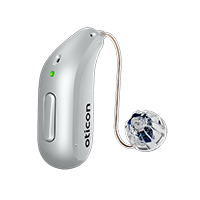
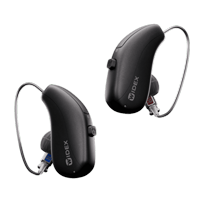
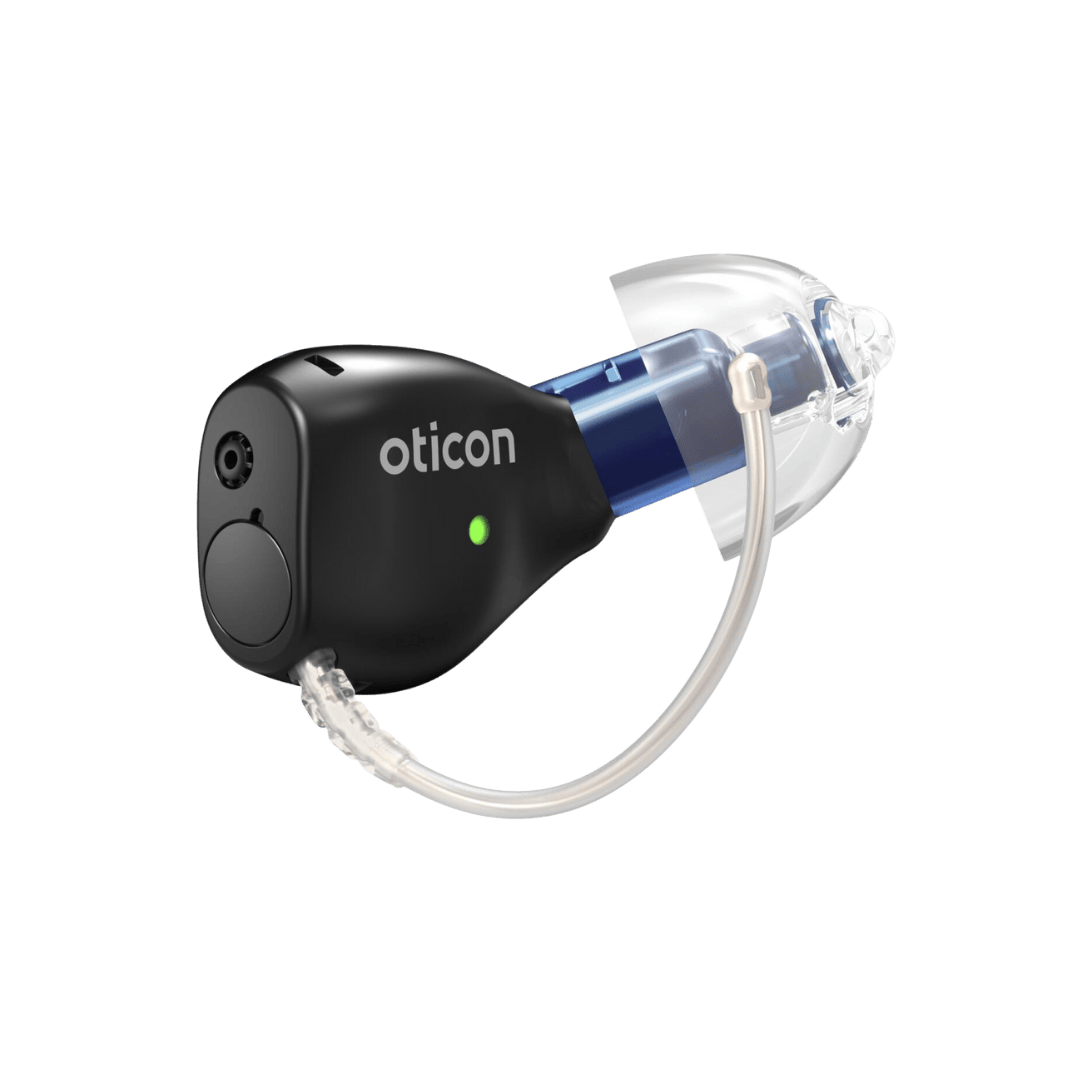
- Hearing aids with tinnitus features.
- A structured tinnitus therapy program (like TRT-style care).
- A Lenire® candidacy evaluation.
To explore treatment paths, visit our Tinnitus Therapy page or our Tinnitus Knowledge Hub.
Where Lenire® and Dr. Emily McMahan fit into your evaluation
Dr. Emily McMahan is one of the first Lenire® providers in the U.S. and co-author of a major real-world Lenire® outcomes study. She partners with California Hearing Center to bring her protocols to patients in the Bay Area through tinnitus & Lenire® clinics in San Mateo.
If, based on your evaluation, we think you might be a good candidate for Lenire®:
- We’ll review your hearing test, tinnitus history, and goals.
- We’ll discuss how Lenire® works and what a typical program looks like.
- We can help coordinate next steps with Dr. McMahan’s team for a full Lenire® assessment and fitting.
You can read more about this process here: Tinnitus Therapy & Lenire in San Mateo — Featuring Dr. Emily McMahan.
How long does a tinnitus evaluation take?
Most comprehensive tinnitus evaluations at California Hearing Center take about 60–90 minutes, depending on:
- How complex your hearing profile is.
- Whether we are doing extended testing (OAEs, LDLs, detailed matching).
- How much time we spend on counseling and next steps during the visit.
We serve patients from across San Mateo County and the broader Bay Area, including communities like Atherton, Redwood City, Palo Alto, Fremont, and beyond.
FAQ: Tinnitus evaluation in San Mateo & San Carlos
What is a tinnitus evaluation?
A tinnitus evaluation is a detailed appointment that looks at your ear health, hearing levels, sound tolerance, and tinnitus characteristics. It goes far beyond a basic hearing screen and includes tests like middle-ear measures, OAEs, loudness discomfort levels, and tinnitus pitch/loudness matching, along with counseling and goal-setting.
How is a tinnitus evaluation different from a regular hearing test?
A regular hearing test often focuses only on whether you can hear certain tones in quiet. A tinnitus evaluation adds tests of sound tolerance, inner ear function, and tinnitus characteristics, plus more time to talk about how tinnitus affects your life and what you want to change.
Do I need a referral for a tinnitus evaluation?
In most cases, no referral is required to see us for a tinnitus evaluation in San Mateo or San Carlos. If your insurance plan requires one, our team will let you know when you schedule.
Can I have a tinnitus evaluation if my previous test said my hearing is “normal”?
Yes — and you should, if tinnitus is bothering you. Even with “normal” hearing on paper, many people still benefit from a full tinnitus evaluation and management plan. We take your symptoms seriously regardless of what a quick screening said.
I live in Atherton or Fremont. Do I have to go to multiple clinics?
No. Many patients from Atherton, Fremont, and throughout San Mateo County and Alameda County schedule their tinnitus evaluation directly at our San Mateo or San Carlos locations. We can complete most or all of your testing and planning in a single, extended visit.
Will my evaluation tell me if I’m a candidate for Lenire®?
It’s an important first step. Your tinnitus evaluation will give us the hearing, tinnitus, and sound tolerance information we need to decide whether a Lenire® candidacy assessment with Dr. Emily McMahan is appropriate. If it is, we’ll walk you through next steps.
Ready to schedule a tinnitus evaluation?
If your tinnitus has been minimized or brushed off, a comprehensive tinnitus evaluation can be a turning point — a chance to finally understand what’s going on and what you can do next.
At California Hearing Center, our clinics in San Mateo and San Carlos offer:
- Full diagnostic hearing and tinnitus evaluations.
- Evidence-based tinnitus therapy and counseling.
- Access to Lenire® tinnitus therapy in partnership with Dr. Emily McMahan.
Ready to find out what’s really going on with your tinnitus?
- Request a Tinnitus Therapy appointment
- Explore the Tinnitus Knowledge Hub
- Learn about Tinnitus Therapy in Atherton
- See tinnitus care options for Fremont & the Tri-City area
Your tinnitus may not disappear overnight — but with a proper evaluation and plan, it doesn’t have to run the show anymore.