


At California Hearing Center, we’ve been watching Auracast develop for several years — and the pace of real-world adoption is now moving fast enough that it’s become a meaningful part of our fitting conversations. If you’ve never heard the term, you’re not alone. Auracast is the biggest shift in how hearing aids connect to the world since Bluetooth was introduced to hearing technology, and for people with hearing loss it has the potential to change how public spaces feel entirely. Here’s what it is, how it differs from what we have today, and why it matters to you.
What Is Auracast? (Plain-English Definition)
Auracast is a Bluetooth broadcast technology — part of the Bluetooth LE Audio standard — that lets a single audio source stream to an unlimited number of receivers simultaneously, without any pairing required. Instead of connecting your hearing aids one-to-one to a device (the way Bluetooth works today), Auracast lets a venue, a TV, or a PA system broadcast audio that any compatible hearing aid — or earbud, or headphone — can simply tune into, the same way you connect to a Wi-Fi network.
The analogy that explains it best: today’s Bluetooth is like a private phone call — one device talking to one other device. Auracast is like a radio station — one source broadcasting to everyone in range who wants to listen. No pairing requests. No compatibility barriers between brands. No limit on how many people can receive the stream at once.
Auracast was announced by the Bluetooth Special Interest Group (SIG) in 2020 as part of the Bluetooth 5.2 specification. It has been rolling out in hearing aids and public venues since 2023, with adoption accelerating rapidly through 2024 and 2025.
Today vs. Auracast: How Connectivity Changes
| Feature / Situation | Classic Bluetooth (Today) | Auracast |
|---|---|---|
| How connection works | One-to-one pairing. Your hearing aid pairs to your specific phone or TV streamer. New device = new pairing process. | One-to-many broadcast. A venue or device transmits a stream; you tune in — no pairing, no setup. |
| Airport announcements | Gate PA audio is lost in background noise. Hearing aid microphones pick up everything in the terminal equally. | Gate PA broadcasts an Auracast stream. You select it on your phone — like choosing a Wi-Fi network — and the announcement plays directly into your hearing aids, free of background noise. |
| Movie theaters & cinemas | Requires borrowing a proprietary assistive listening receiver from the venue. Varies by location; often unavailable or inconvenient. | Theater broadcasts the film audio via Auracast. You stream it directly to your hearing aids wherever you’re seated — no borrowed equipment needed. |
| Houses of worship | Hearing loops (T-coil) work well where installed, but installation is expensive and not universal. | A small, affordable Auracast transmitter connected to the PA broadcasts the sermon. Any compatible hearing aid — or earbud — can receive it instantly. |
| Gym / sports bar TVs | Silent TVs are silent. No access to audio without headphones provided by the venue. | Each TV can broadcast its own Auracast stream. You select the one you want directly from your phone — like choosing a channel. |
| Lectures, museums, tours | Speaker audio is subject to room acoustics and distance. Hearing aid microphones struggle with reverberation and distance. | Presenter wears or uses an Auracast microphone. Audio is broadcast directly to all compatible devices in the room — identical quality regardless of where you’re seated. |
| Sharing audio with others | Not possible to share a hearing aid’s audio stream with another person in real time. | An Auracast-enabled accessory (like the ReSound Multi-Mic+) lets you start your own broadcast — share a TV, a podcast, or a music stream with other Auracast-equipped listeners nearby. |
| Battery impact | Classic Bluetooth streaming drains hearing aid batteries significantly during extended use. | Bluetooth LE Audio (the standard Auracast runs on) uses meaningfully less power — extending streaming battery life compared to current Bluetooth protocols. |
| Brand compatibility | Dependent on proprietary protocols (Apple MFi, Google ASHA). A Phonak hearing aid may not stream from the same phone as an Oticon. | Open standard — any Auracast-compatible hearing aid can receive any Auracast broadcast, regardless of manufacturer or phone brand. |
The Wi-Fi analogy is the most useful one: Auracast works like joining a Wi-Fi network — you see the available streams nearby, select the one you want, and you’re in. No pairing codes, no device-to-device handshakes, no compatibility questions. That simplicity is the reason it matters as much to casual users as it does to people managing complex hearing loss.
1. Why Classic Bluetooth Falls Short in Public Spaces
Today’s Bluetooth hearing aid streaming is genuinely good — within its limits. Streaming music, calls, and TV audio from your personal devices works reliably for most users, and the sound quality improvement over previous generations has been substantial. The problem is that classic Bluetooth was designed as a personal connection protocol, not a public infrastructure one.
When you’re in a theater, a place of worship, a busy airport, or a lecture hall, your hearing aids are receiving their audio from their microphones — picking up everything in the acoustic environment, including the noise you want to filter out. Assistive listening systems (hearing loops, FM systems, infrared systems) have addressed this for decades, but they require expensive venue installation, are inconsistently available, and require borrowing hardware that announces your hearing loss to everyone nearby.
Auracast solves this at both ends simultaneously. For venues, installation is straightforward and affordable — a small Auracast transmitter connected to an existing PA system is enough. For users, access is seamless and private — just select the stream from your phone, exactly as you’d connect to Wi-Fi. No borrowed equipment, no staff interaction, no visibility.
2. Where Auracast Is Already Deployed
Auracast is no longer a future technology — it’s in active deployment in public venues globally. Early adopters include Oslo Central Theater, St. Paul’s Cathedral in London, the University of the Arts London, and CES 2025, where the technology was demonstrated at scale. Frankfurt Airport has begun testing Auracast at select gates for direct broadcast of gate announcements to passengers’ compatible devices.
In the United States, churches, universities, and fitness centers are among the first categories of venue rolling out Auracast transmitters. The installation cost is low enough that even small organizations can deploy it — a meaningful difference from hearing loop installation, which requires significant infrastructure work.
Industry forecasts suggest more than 1.5 million public venues globally will offer Auracast access by 2029, alongside projections of over 3 billion Bluetooth LE Audio-enabled consumer devices — phones, computers, TVs — in circulation by that time. The infrastructure buildout is underway; the question is timeline, not direction.
3. Which Hearing Aids Support Auracast Right Now?
The Auracast hearing aid landscape is moving quickly. As of early 2026, the picture looks like this:
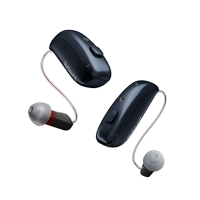
Fully Auracast-enabled (can receive Auracast broadcasts today): ReSound Nexia and Jabra Enhance Pro 20 were the first to market. ReSound’s lineup has expanded significantly, and GN — ReSound’s parent company — has been the most aggressive early adopter in the category.
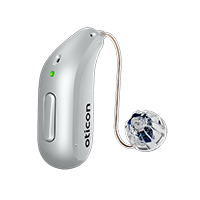
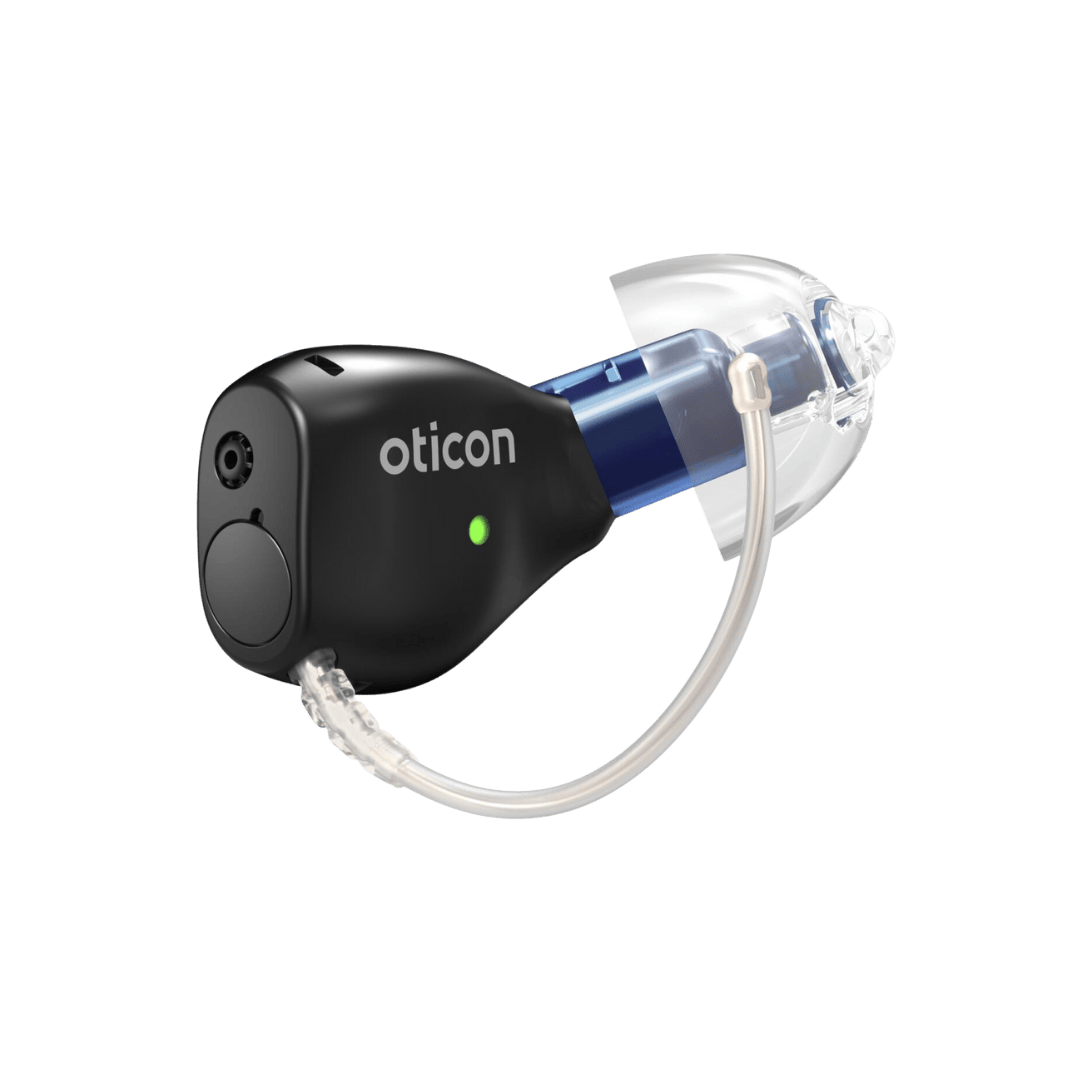
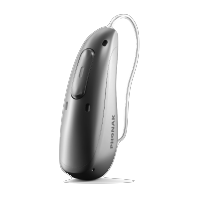
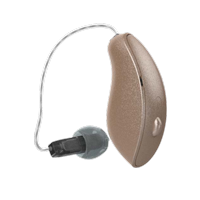
Auracast-ready (hardware capable, awaiting firmware activation): Signia IX, Oticon Intent, Starkey Edge AI, Philips HearLink 9050, and Rexton Ready all have the Bluetooth LE Audio hardware built in and are expected to enable Auracast via firmware update. For cochlear implant users, the Cochlear Nucleus 8 sound processor is also Auracast-ready.
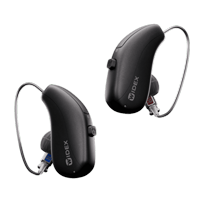
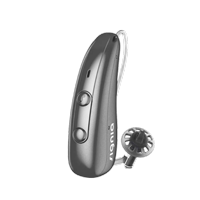
Preparing for integration (publicly evaluating or in active development): Phonak, Widex, Unitron, and Miracle-Ear have all indicated active Auracast development. Every major manufacturer is moving toward it — the question is the pace of specific model rollouts.
At California Hearing Center, Auracast compatibility is now part of the conversation at every new fitting — particularly for patients who regularly attend theaters, places of worship, or travel frequently.
4. Auracast and Telecoil: Complementary, Not Competing
A common question we hear: does Auracast replace telecoil (T-coil)? The short answer is no — not yet, and probably not for a long time. The Hearing Loss Association of America (HLAA) and accessibility advocates including the RNID have been clear that the best practice for venues is to install Auracast alongside existing hearing loop systems during the transition period, not as a replacement.
There are tens of millions of hearing aid users currently relying on telecoil technology, and the venues with established hearing loops represent years of accessibility investment. Auracast coexists with those systems — it doesn’t require tearing them out. Over the long term, Auracast’s lower installation cost and greater flexibility (it works with any compatible device, not just T-coil-equipped hearing aids) make it the likely dominant standard. But that transition will take years, not months.
For patients choosing a new hearing aid today, we recommend considering whether T-coil remains relevant to your lifestyle — for users who regularly visit looped venues, it’s still worth preserving alongside Auracast readiness.
5. Should Auracast Factor Into Your Next Hearing Aid Purchase?
✅ Prioritize Auracast if you
- Travel frequently — airports are among the first venues adopting Auracast broadcasts
- Regularly attend theaters, concerts, cinemas, or lectures
- Attend a house of worship and struggle with PA audio
- Visit gyms or sports bars with silent TVs
- Want to share audio experiences with a partner or family member who also has hearing loss
- Are purchasing new aids now and want technology that will be relevant for the full 5–7 year device lifespan
⚠️ Keep in mind
- Auracast-enabled models currently sit mostly in the premium tier — mid-range availability is expanding but not yet universal
- Public venue infrastructure is still rolling out — Auracast-ready aids are future-proofing an investment, not an immediate daily-use feature for most users
- “Auracast-ready” (firmware update pending) is not the same as “Auracast-enabled” — ask specifically which applies to a device you’re considering
- Existing aids 3–4 years old almost certainly don’t support LE Audio — no firmware update will add Auracast to hardware that wasn’t built for it
6. What to Ask at Your Next Fitting Appointment
If Auracast is relevant to your lifestyle, come prepared with a few direct questions. “Is this model fully Auracast-enabled, or Auracast-ready pending a firmware update?” The distinction matters — enabled means you can use it today where infrastructure exists; ready means you’re waiting on the manufacturer’s timeline.
“Which Auracast use cases are currently practical in my area?” Your audiologist should know which local venues — theaters, churches, transit hubs — have deployed Auracast transmitters, or where rollout is expected soon. This gives the feature immediate real-world context rather than treating it as purely theoretical.
“Does this device also retain T-coil?” If your lifestyle includes looped venues, make sure the Auracast-capable model you’re considering hasn’t traded away T-coil support in the process. Most haven’t, but it’s worth confirming.
At California Hearing Center, we carry Auracast-enabled and Auracast-ready devices from the manufacturers leading this transition, and we’re happy to walk through exactly what the technology means for your specific listening life — not just what the spec sheet says.
Why Choose California Hearing Center?
At California Hearing Center, staying current on emerging technology is part of how we serve our patients well. Auracast is moving from promising to practical quickly, and we want every patient to understand what it means for them before they make a device decision — whether that means recommending an Auracast-ready device today, or helping a patient with existing aids understand what their upgrade path looks like when the timing is right.