

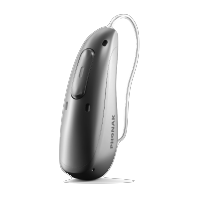
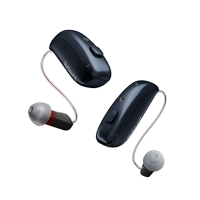
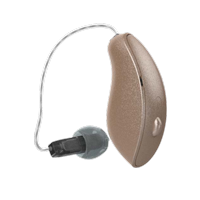
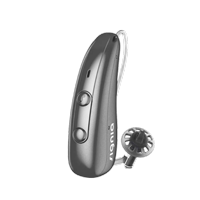


At California Hearing Center, patients ask us regularly whether their phone will work with their hearing aids — and the honest answer has always been “it depends.” That’s changing. In October 2024, the FCC adopted new rules requiring every smartphone sold in the United States to be hearing aid compatible, ending years of fragmented, manufacturer-specific standards. Here’s what “hearing aid compatible” actually means, what the new rules require, and what it means for you in practice.
What Does “Hearing Aid Compatible” Actually Mean?
A “hearing aid compatible” (HAC) phone is one that meets technical standards for connecting with hearing aids without interference or signal degradation. In practice this means three things: the phone doesn’t emit electromagnetic interference that causes buzzing in hearing aids, it supports direct audio coupling via telecoil (T-coil) or Bluetooth, and it allows the user to raise call volume to a level useful for people with hearing loss — without introducing distortion.
The term sounds straightforward, but it has historically been more complicated than it appears. “Compatible” once referred almost exclusively to a phone’s M-rating (microphone coupling — acoustic interference) and T-rating (telecoil coupling). Bluetooth compatibility — now the primary way most modern hearing aids connect to phones — was not part of the original HAC definition at all, which is why so many patients have experienced connectivity gaps even with supposedly compatible devices.
The 2024 FCC rules update that definition to reflect how people actually use hearing aids today — and close those gaps going forward.
FCC Hearing Aid Compatibility Rules: What’s Required and When
| Requirement | What It Means | Who It Applies To | Deadline |
|---|---|---|---|
| 100% HAC mandate | Every smartphone model offered for sale in the U.S. must meet hearing aid compatibility standards — not just a percentage of models. Previously, only 85% of a manufacturer’s lineup had to comply. | All handset manufacturers selling in the U.S. | 24 months from December 13, 2024 (i.e., by December 2026) |
| Bluetooth coupling requirement | Phones must support Bluetooth connectivity with hearing aids using open, non-proprietary standards — discouraging manufacturer lock-in like Apple’s MFi protocol. This means Android phones must work with AirPods Pro 2 in hearing aid mode, and iPhones must work with non-Apple hearing aids. | All handset manufacturers | 24 months (manufacturers) / 30 months (nationwide carriers) from December 13, 2024 |
| Volume control benchmarks | Phones must allow users to raise call volume to levels useful for people with hearing loss, without introducing audio distortion at higher volumes. This benefits both hearing aid users and those with hearing loss who don’t use hearing aids. | All handset manufacturers | Same 24-month transition period |
| Updated labeling & disclosure | Manufacturers must clearly indicate on their websites whether a given handset model is hearing aid compatible, including telecoil and Bluetooth functionality. Easier comparison-shopping for consumers at the point of purchase. | All handset manufacturers and carriers | Effective December 13, 2024 (already in effect) |
| Non-nationwide carriers | Smaller regional carriers have a longer runway to comply with the full requirements. | Non-nationwide service providers | 42 months from December 13, 2024 |
Where things stand right now (March 2026): The FCC rules took effect December 13, 2024. Manufacturers are currently in their 24-month transition window — meaning full 100% compliance is required by approximately December 2026. Most flagship phones from Apple, Samsung, and Google already exceed current standards; the rules primarily close gaps in mid-range and budget devices, and eliminate proprietary Bluetooth barriers industry-wide.
1. The M-Rating and T-Rating System — and Why It’s No Longer Enough Alone
The original HAC framework, dating back to the Hearing Aid Compatibility Act of 1988, rated phones on two scales. The M-rating (M1–M4) measures how much radio frequency interference a phone produces — a higher number means less interference and clearer acoustic sound for hearing aid users in microphone mode. The T-rating (T1–T4) measures how well the phone couples with telecoil-equipped hearing aids.
An M3/T3 or M4/T4 rating has long been the minimum standard for a phone to be considered usable with hearing aids. Most flagship smartphones from major manufacturers have met or exceeded this for years. The problem is that this system was designed around phone call audio — it says nothing about Bluetooth audio quality, streaming reliability, or whether a hearing aid can pair directly to the phone at all.
As the majority of modern hearing aids have moved to Bluetooth as their primary connection method, the M/T rating system alone became an incomplete picture of real-world compatibility. The 2024 rules add Bluetooth coupling standards to the definition, making the framework match how hearing aids actually work today.
2. The Proprietary Bluetooth Problem — and Why the FCC Stepped In
Until the 2024 rules, smartphone makers were free to implement proprietary Bluetooth protocols for hearing aid connectivity. Apple’s Made for iPhone (MFi) program is the most prominent example — it allows direct, low-energy Bluetooth streaming between iPhones and MFi-certified hearing aids, which is genuinely excellent when it works. The catch is that it only works with Apple-approved hearing aid models, and Android devices were excluded entirely.
On the Android side, Google developed its own Audio Streaming for Hearing Aids (ASHA) protocol, which similarly works well within its ecosystem but creates the same compatibility boundaries. The result for consumers: hearing aid choice was effectively constrained by phone choice, and vice versa. Patients who loved their Android phone had to consider that when selecting hearing aids. Patients who wanted a particular hearing aid model had to check whether it worked with their phone.
The FCC’s new rules push manufacturers toward Bluetooth standards that work across ecosystems — meaning, over time, any Bluetooth-capable hearing aid should connect to any compatible smartphone, regardless of brand. The emerging Bluetooth LE Audio standard and Auracast broadcast technology are expected to be the technical foundation for this universal compatibility going forward.
3. What This Means If You’re Buying a Hearing Aid Today
✅ What you can expect now
- All major flagship smartphones (iPhone, Samsung Galaxy, Google Pixel) already meet or exceed current HAC standards
- Most current-generation hearing aids stream directly to both iPhone and Android without an intermediary streamer device
- FCC labeling rules mean manufacturer websites must disclose HAC status — easier to verify before purchase
- Volume control improvements mean clearer call audio even without hearing aids for people with mild-moderate loss
⚠️ What to still watch for
- Budget and mid-range phones may not yet meet full 2026 standards — check HAC ratings before purchasing
- Proprietary protocols (MFi, ASHA) are still in use during the transition period — full open-standard Bluetooth compliance comes with the 2026 deadline
- Older hearing aid models may not support Bluetooth LE Audio even if your phone does — compatibility runs both ways
- Regional carriers have until mid-2028 to fully comply — rural users on smaller networks may experience delays
4. Telecoil (T-Coil): Still Relevant, and Still Required
In the era of Bluetooth streaming, it’s easy to assume telecoil technology is obsolete. It isn’t — and the FCC rules continue to require T-coil compatibility on 85% of handsets for good reason.
Telecoil is a small coil inside many hearing aids that picks up magnetic signals directly, bypassing the microphone entirely. When a venue — a theater, a church, an airport, a bank — installs a hearing loop (also called an induction loop), anyone with a T-coil-equipped hearing aid can switch to T-coil mode and receive crystal-clear audio directly, without background noise, without Bluetooth pairing, and without any physical connection.
For phone calls specifically, T-coil coupling means the hearing aid picks up the phone’s magnetic field directly — useful in environments where Bluetooth signal may be degraded or where the user’s hearing aid doesn’t support direct Bluetooth streaming. It’s a redundant pathway that remains genuinely useful, particularly for older hearing aid models and for users in hearing loop-equipped venues.
When choosing a new hearing aid at California Hearing Center, we discuss T-coil availability as part of the fitting conversation — it’s a feature worth preserving if your lifestyle takes you to theaters, houses of worship, or other looped venues.
5. How to Check Whether Your Current Phone Is Hearing Aid Compatible
Thanks to the FCC’s updated labeling rules, checking a phone’s HAC status is now more straightforward than it used to be. Here’s where to look:
Manufacturer website: Under the 2024 rules, manufacturers must post HAC ratings — including M/T ratings and Bluetooth compatibility — on their websites for every model. Search for your phone model on the manufacturer’s accessibility or specifications page.
In the phone’s settings: On most Android devices, you can find HAC settings under Accessibility → Hearing Aids or Sound settings. On iPhone, hearing aid pairing is managed under Settings → Accessibility → Hearing Devices.
Your carrier’s store: Under FCC rules, carriers are required to maintain HAC information for the phones they sell. Staff at your carrier’s retail location should be able to confirm compatibility before purchase.
Ask your audiologist: At California Hearing Center, we’re familiar with the connectivity landscape for the hearing aid models we fit — including which phone platforms they pair with most reliably. If you’re upgrading your phone or your hearing aids, bring both into the conversation.
6. The Bottom Line: Are All Smartphones Compatible Now?
Not quite yet — but the direction is clear and the timeline is defined. As of March 2026, the industry is midway through the 24-month transition period that ends in December 2026. After that deadline, every new smartphone model sold in the U.S. must meet the full 100% HAC standard, including open Bluetooth coupling.
For practical purposes: if you own a flagship smartphone purchased in the last two to three years, it almost certainly meets current HAC standards and will work with any modern hearing aid that supports Bluetooth streaming. The gaps that remain are primarily in older devices, budget-tier phones, and the cross-ecosystem Bluetooth lock-in that the 2026 rules are specifically designed to eliminate.
If you’re in the market for new hearing aids, new phones, or both — bring that context to your appointment. The connectivity question is now a legitimate part of the fitting conversation, and it deserves a direct answer based on the specific devices you’re considering.
Why Choose California Hearing Center?
At California Hearing Center, we fit hearing aids with your full lifestyle in mind — including how they connect to the devices you use every day. Our audiologists stay current on smartphone compatibility, Bluetooth standards, and the evolving regulatory landscape so you don’t have to. Whether you’re troubleshooting a connectivity issue with existing aids or selecting a new device with connectivity as a priority, we can help you navigate the options with clarity.