


Hearing Aids
There is no single answer that fits everyone, and anyone who hands you one before looking at your ears is guessing. Some people notice a mild change that a hearing test confirms is worth watching rather than treating yet. Others have been turning the television up and asking for repeats for years, and a device would hand them a good part of their day back.
You don't have to settle this by intuition. A test measures exactly where your hearing sits, so the decision becomes practical instead of emotional — and if it turns out you're fine for now, that is a perfectly good result too.
At a glance
- A hearing aid helps when everyday speech is getting harder to sort, not only with severe loss.
- Watchful waiting is reasonable for slight loss, but real strain is a signal to act.
- A hearing test replaces guesswork with a clear answer about whether a device would help you.
Signs worth taking seriously
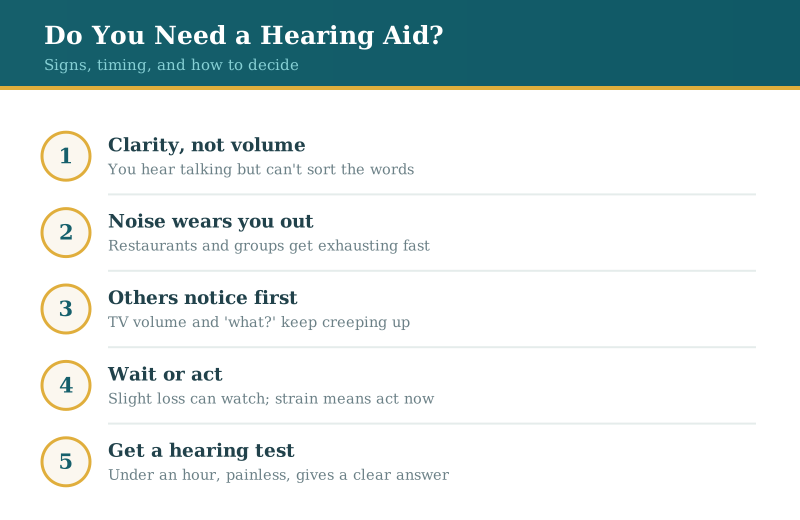
The clearest signal is not volume, it is clarity. People with early hearing loss usually hear that someone is talking; they just can't pull the words apart, especially against background noise. Restaurants, group dinners, and phone calls start to feel like work. You might catch yourself reading lips, nudging the TV past what everyone else wants, or leaning on 'what?' more than you used to. Family often notices before you do. None of this proves you need a device, but together it is a fair reason to get checked. For older adults these changes tend to arrive gradually, which is why hearing aids for seniors are so often a quality-of-life upgrade rather than a last resort.
Wait and see, or act now?
It is reasonable to ask whether you can hold off, and the honest answer depends on how much the loss touches your daily life and how likely it is to progress. If a test shows a slight change and you are managing comfortably, watchful waiting with a yearly recheck is a legitimate plan. If you are straining through conversations, backing out of things you used to enjoy, or missing details at work, waiting mostly means living with less than you have to. There is a physical side as well: the Lancet Commission on dementia prevention lists hearing loss among the modifiable risks associated with cognitive decline, which is an association rather than proof of cause, and the brain can find it harder to relearn sounds it hasn't processed in a long time. Acting earlier usually makes the adjustment smoother, not harder.
What a hearing aid changes day to day
Today's devices are small, and most sit discreetly behind or inside the ear. What they do is targeted: they lift the specific pitches you have lost, sharpen speech, and hold down the background clatter that used to swallow it. The change people describe is not 'louder' but 'clearer' — catching a grandchild across the room, hearing the punchline the first time, not bracing before the phone rings. They will not restore hearing to what it was at twenty, and they take a few weeks of steady wear to settle into. Options range widely across brands and styles, so there is usually a good match for your loss, your budget, and how visible you want it to be.
The fitting matters more than the model
Buying a hearing aid is nothing like grabbing reading glasses off a rack. Two people with the same audiogram can need very different settings, and a device tuned wrong feels tinny or harsh or simply useless, which is how so many end up in a drawer. A proper hearing aid fitting programs the device to your exact hearing profile, verifies it with real-ear measurement, and fine-tunes it over follow-up visits as your ears adapt. This is the step bargain online sales skip, and it is the step that decides whether you actually wear the thing.
A simple way to settle the question
If you are genuinely torn, the fastest way past it is a real evaluation instead of more self-diagnosis. A test takes under an hour, doesn't hurt, and gives you a clear picture of where your hearing stands and whether a device would earn its keep. If it wouldn't yet, you leave knowing that. If it would, you understand your choices before spending a dollar. You can reach our team at the San Mateo and San Carlos offices to set up a visit, and it is worth seeing how other patients describe the process in our reviews.
Frequently asked questions
What patients often want to know
How do I know if my hearing loss is bad enough for a hearing aid?
There is no strict line you have to cross. What matters is whether the loss is getting in the way — missed words, rising TV volume, a little dread before social plans. A hearing test puts a number on it and, more usefully, tells you whether a device would help your particular pattern of loss.
Is it okay to wait a while before getting one?
Sometimes, yes. If the change is slight and you are coping well, a yearly recheck is a sound plan. But when conversations are a strain or you are pulling back from people, waiting tends to cost more than it saves, because ears and brain both adjust to amplification more easily the sooner you start.
Will a hearing aid make me look old?
Most people worry about this far more than anyone around them ever notices. Current devices are genuinely small, and several styles sit down in the ear canal where they are hard to spot. Across the major brands there is a discreet option for nearly every level of loss.
Can't I just buy one online and skip the appointment?
You can buy one, but an unfitted device is a gamble. Hearing loss varies by pitch and by ear, and a gadget set to a generic curve often sounds wrong and ends up unused. Having our hearing aid fitting team match and tune the device to your test results is what turns a purchase into something you will keep wearing.