


Family & Communication
You do not need a medical lecture for this. What helps a child is a short, honest picture of what your ears do and do not catch, plus one or two small jobs they can do to help. Age-related hearing loss is one of the most common conditions among older adults, according to the National Institute on Deafness and Other Communication Disorders, so millions of grandparents are having some version of this exact talk.
If your own hearing has slipped enough that family visits feel like hard work, that is worth acting on too. A hearing evaluation at our San Mateo or San Carlos office gives you a clear starting point, and it often makes these conversations easier because you can tell the kids what you are doing about it.
At a glance
- Young children read a missed reply as being ignored, not as a hearing issue, so explaining helps.
- Use a plain, concrete picture instead of medical words.
- Give kids one small job, like facing you and speaking one at a time.
- Treating your own hearing makes family time easier and models a calm way to handle it.
Start with a picture they already know
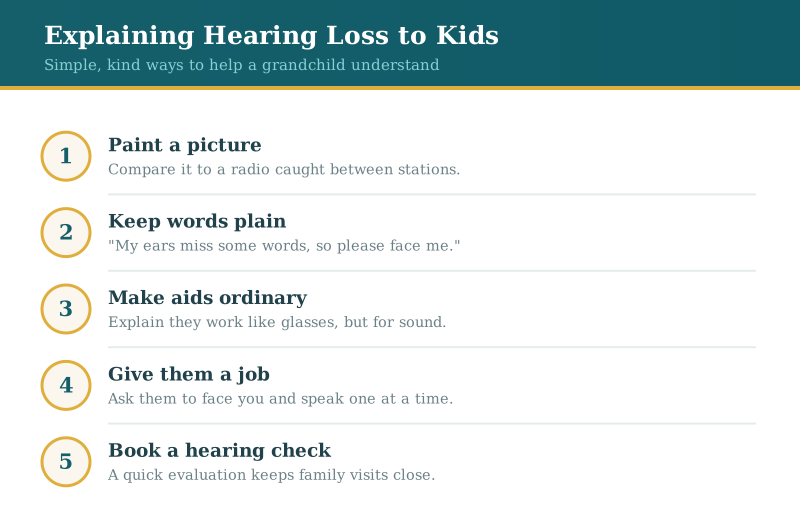
Children think in pictures, so hand them one. A radio caught between two stations, where the music comes through fuzzy, lands better than the phrase 'hearing loss.' So does the idea that your ears are good at catching some sounds and miss others, the way a net catches big fish and lets the small ones slip through. You are not trying to be precise. You are giving a curious mind something it can hold onto, so the next missed answer reads as 'Grandma's ears' rather than 'Grandma doesn't care.'
Keep the words plain and short
Skip decibels and diagnoses. A sentence a child can repeat works better: 'My ears don't catch every word, so please look at me when you talk.' If they ask why, 'they got a little worn out over the years, like an old pair of shoes' is honest and calm. The tone matters as much as the words. When you treat it as an ordinary fact rather than something sad or embarrassing, kids will take their cue from you and treat it the same way.
Make the hearing aids ordinary
If you wear hearing aids, let the kids see them and ask about them. Comparing them to glasses works well, because most children already know that glasses help someone see and nobody thinks twice about them. These simply help you hear. A little curiosity is fine, and answering it plainly takes away any sense of mystery or shame. For older grandchildren, the growing world of hearing technology built for seniors can even be genuinely interesting, since much of it now connects to phones and streams sound the way their earbuds do.
Give them a small job
Children love feeling useful, so turn helping into a job with clear rules. Face Grandpa when you talk. Come tap my arm instead of calling from the other room. One person at a time, because everybody at once turns into mush. Kids follow specific instructions far better than a vague plea to speak up, and having a role makes them feel like part of the solution rather than a source of frustration. Praise it when they get it right, and it sticks.
When the frustration shows on both sides
There will be moments when a child gets tired of repeating themselves and a grandparent gets tired of asking. Name it gently and move on: 'My ears are having a rough day, let's try that once more.' Modeling patience teaches it. It also helps to fix the easy things, like turning down the television or moving to a quieter room, so nobody has to fight the background noise. If catching your grandchildren has become a daily strain even in quiet rooms, that is a signal your hearing deserves a fresh look rather than more effort.
Where a hearing check fits in
The kindest thing you can do for these conversations is to keep your own hearing as sharp as it can be. Well-fit devices mean you miss fewer of those small voices, and that alone changes how visits feel. If you are not sure where things stand, book a hearing test and let us walk you through the results without any pressure. You can read what other families have said on our reviews page, and when you are ready, our audiologists will help you take the next step.
Frequently asked questions
Your questions, answered
My grandchild thinks I'm ignoring them. What do I say?
Tell them plainly that your ears miss some words, so it looks like you are not listening even when you are. Ask them to come face you and say it again. Once a child understands the reason, the hurt feeling usually fades and they start helping instead of pulling away.
At what age can a child understand hearing loss?
Even a three- or four-year-old can grasp 'my ears don't catch every word' with a simple picture to go with it. Older children can handle more, including how hearing aids work. Match the explanation to the age, and keep it short and matter-of-fact.
Should I let my grandchildren see and ask about my hearing aids?
Yes. Curiosity is healthy, and hiding the devices sends the message that they are something to be embarrassed about. Comparing them to eyeglasses usually settles the whole question. If a child wants to know more, a plain answer is all it takes.
My hearing makes family gatherings hard. What can help?
Small changes add up: quieter rooms, one conversation at a time, and treating any hearing loss you have. A hearing evaluation tells you where you stand, and the right hearing aids can make a crowded table far easier to follow. Our team can help you sort out the options.