


Hearing & Safety
For the large majority of people, driving with hearing loss stays both legal and safe, provided you adapt. The strategy is straightforward: let your eyes and your technology take over the work your ears used to do.
Adapting comes down to a few specific changes, including a well-tuned hearing aid fitting that makes directional sound useful again.
At a glance
- Hearing loss does not disqualify you from driving. Adapting your habits does the real work.
- Lean harder on mirrors, blind-spot checks, and a quieter cabin.
- Well-fit hearing aids help you locate sirens, horns, and turn signals.
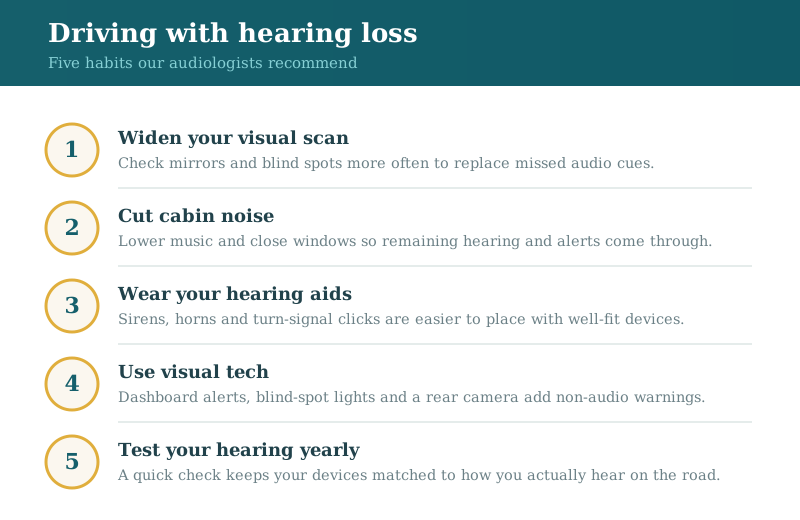
- An annual hearing check keeps your devices matched to how you hear on the road.
What your hearing actually does while you drive
Sound gives you early warning that your eyes have not caught up to yet: an ambulance two blocks away, a horn from a lane you cannot see, the scrape of a curb, or the click reminding you a signal is still on. Hearing loss rarely removes your ability to drive, but it can shrink this early-warning margin. The fix is to widen what your eyes are doing.
Widen and speed up your visual scan
With fewer audio cues to rely on, check mirrors and blind spots more often and more deliberately. Many drivers with hearing loss build the habit of a full mirror sweep every few seconds and a quick shoulder check before every lane change, a visual replacement for the old "I heard something beside me" instinct.
Quiet the cabin so your remaining hearing works
Wind, music, and conversation all mask the sounds that matter. Closing the windows, lowering the radio, and asking passengers to pause during merges gives whatever hearing you have, aided or not, a cleaner signal. If cars and restaurants feel equally hard, that overlap is a good reason to book a hearing evaluation.
Drive with well-fit hearing aids
Modern hearing aids restore the high-frequency detail that helps you locate a siren or place a horn left-versus-right. The key word is well-fit: devices that are correctly programmed and verified make directional sound genuinely useful, not just louder. If yours feel flat, whistle, or cut out, a fitting check or repair usually solves it.
Let visual technology fill the gap
Blind-spot warning lights, rear and 360° cameras, cross-traffic alerts, and dashboard chimes paired with icons all turn a missed sound into something you can see. If you are choosing a vehicle, these features matter even more for a driver with hearing loss than for the average buyer.
What about tinnitus behind the wheel?
Some drivers worry more about ringing in the ears than about hearing loss itself. Tinnitus rarely makes driving unsafe, but if it spikes your anxiety on long or night drives, sound-based strategies help. Our tinnitus resources explain approaches that reduce how much the ringing intrudes.
When to get your hearing checked
If family point out sirens you missed, if you get startled by cars you never heard, or if you have quietly started avoiding night driving, those signs are worth acting on. A quick hearing test tells you exactly where you stand and whether hearing aids would make the road feel easier.
Frequently asked questions
Common questions about Driving Safely When You Have Hearing Loss
Is it legal to drive with hearing loss?
Yes. In California and across the U.S., people with hearing loss, including profoundly deaf drivers, can legally hold a standard driver's license. Safe driving depends on adapting your habits, not on passing a hearing test.
Do hearing aids help while driving?
When they are well fit, yes. They restore the high-pitched detail that helps you notice and locate sirens, horns, and turn-signal clicks. If your aids sound flat or cut out, have them checked before your next long drive.
Should I wear my hearing aids in the car?
For most people, yes. A modern, properly programmed device improves awareness without turning wind and road noise into a distraction. If the cabin feels overwhelming, a small programming adjustment usually fixes it.
How do I know if my hearing is affecting my driving?
Common signs include missing sirens until they are close, being startled by nearby cars, or avoiding night driving. A brief hearing evaluation clarifies whether your hearing, your devices, or neither needs attention.