



Costco is the largest retail hearing aid provider in the United States, accounting for roughly 16% of all units sold — and for straightforward cases, it offers genuine value at significantly lower device prices than most private practices. The meaningful differences between the two models are not primarily about device quality: they are about the consistency of clinical best practices — particularly Real Ear Measurement, diagnostic depth, tinnitus and complex-loss management, and the continuity of care over the full life of the devices.
A case-series analysis by audiologist Dr. Cliff Olson (HearingUp) evaluated three patients fitted at Costco using Real Ear Measurement and the validated IOI-HA outcomes questionnaire. One fitting was clinically excellent (30/35 IOI-HA, good REM target match). One was poor (19/35, prescription not met). One showed almost no benefit (9/35, REM so far from target the prescription appeared to have been ignored). After reprogramming with correct REM at a private clinic, the “poor” patient improved from 19/35 to 32/35. The lesson is not that Costco is uniformly bad — it is that care quality is highly variable by location and provider, and without REM verification, there is no way for the patient to know which category they’re in.
Costco Hearing Center vs. Private Audiology Practice: Care Model Comparison
| Care Element | Costco Hearing Center | Private Audiology Practice (e.g., California Hearing Center) |
|---|---|---|
| Provider credentials | Varies by location. Most Costco hearing centers are staffed by state-licensed hearing instrument specialists (HIS), not audiologists. Some locations do employ audiologists. Credentials are not disclosed at the point of booking. | Doctoral-level audiologists (Au.D. or Ph.D.) with full diagnostic scope of practice. California requires licensure through the Speech-Language Pathology and Audiology Board. |
| Initial hearing evaluation | Basic in-store screening — typically pure-tone thresholds in a sound-controlled booth. Approximately 10 minutes. Does not typically include speech-in-noise testing, word recognition scoring, tympanometry, or acoustic reflex testing. | Comprehensive diagnostic evaluation: pure-tone audiometry, speech recognition threshold, word recognition score (WRS), QuickSIN speech-in-noise testing, tympanometry, acoustic reflex testing, case history, and medical referral if indicated. |
| Real Ear Measurement (REM) | Inconsistent across locations. Some Costco centers do perform REM; many do not. No published data on the percentage of Costco fittings verified with REM. This is the single most significant clinical quality variable — a fitting without REM is unverified. | Performed as a standard part of every fitting at California Hearing Center — not optional, not situational. Probe microphone results are documented and reviewed with the patient. |
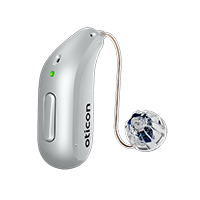
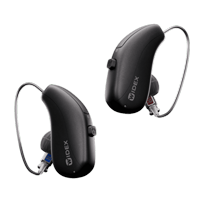
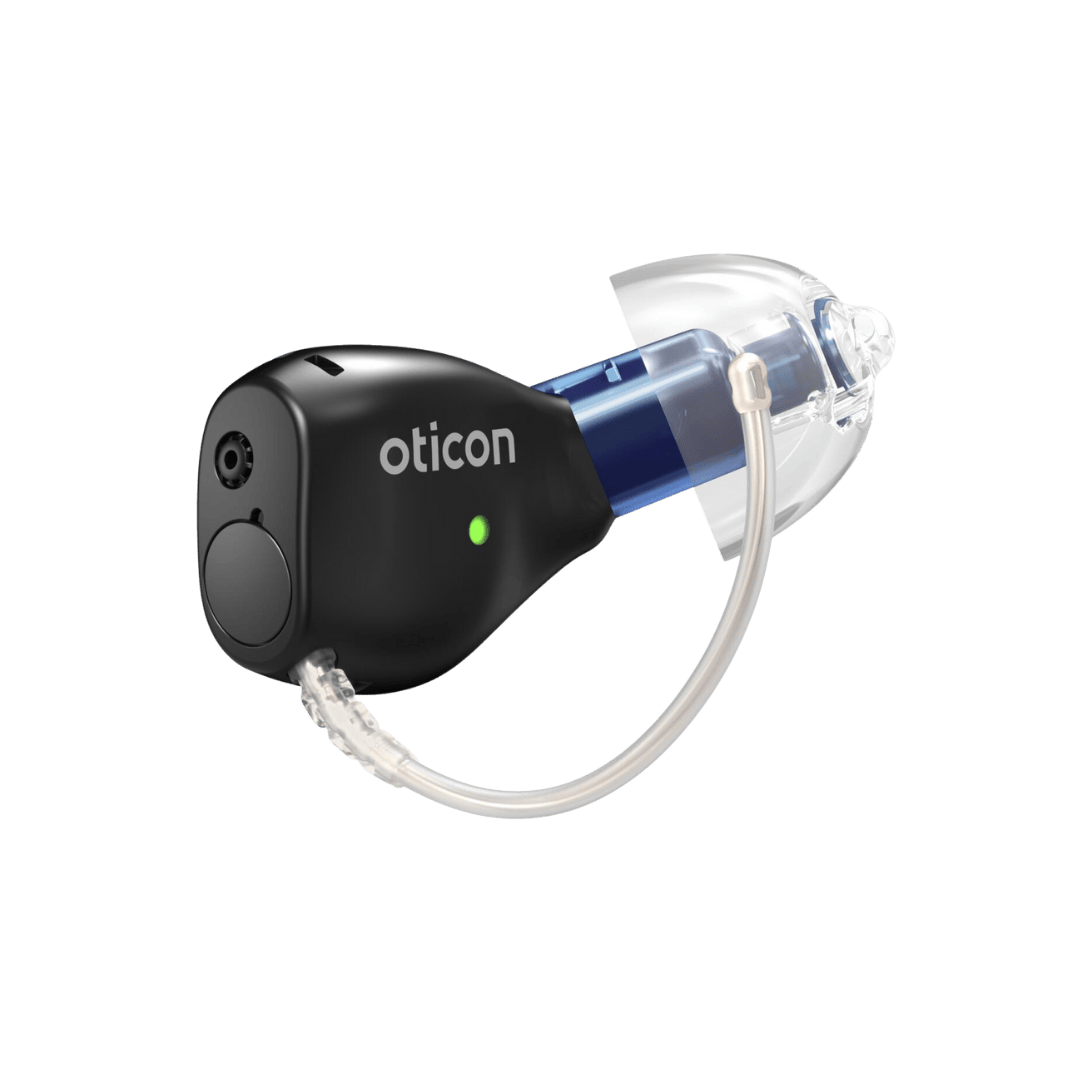
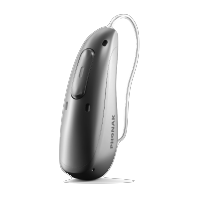
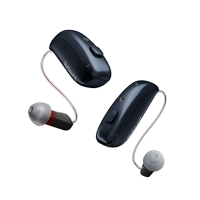
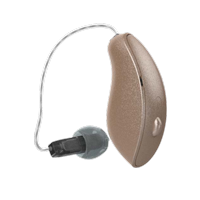
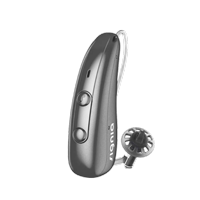
| Device selection | Four brands in 2025–2026: Jabra (Enhance Pro 30), Rexton (Reach), Philips (HearLink 9050), Sennheiser (Sonite R). Prices range from $980–$1,699/pair. Good technology; no custom earmolds available at most locations. | Full range across all major manufacturers: Oticon, Phonak, Widex, Starkey, ReSound, Signia, and others. Custom earmolds available. Full tech-level selection from entry to premium. Device matched to lifestyle, hearing profile, and connectivity needs. |
| Follow-up appointments | Walk-in adjustments available at no additional cost — a genuine convenience advantage. No scheduled follow-up cadence. Depth of adjustment is limited by provider time and clinical scope. | Structured follow-up schedule with documented programming changes, REM re-verification when needed, and proactive assessment at each visit. Direct access to the fitting audiologist by name. |
| Tinnitus management | Not available. No tinnitus therapy, sound therapy programming, or tinnitus-specific counseling at Costco hearing centers. | Tinnitus evaluation, sound therapy (including Widex Zen, Starkey Edge AI tinnitus features), progressive tinnitus management (PTM) counseling, and medical referral pathways as appropriate. |
| Diagnostic complexity | Appropriate for straightforward mild-to-moderate sensorineural hearing loss without complicating factors. Not equipped to identify asymmetrical loss, auditory neuropathy, retrocochlear pathology, or conditions requiring ENT referral. | Full diagnostic scope: can identify and manage asymmetric loss, conductive loss, mixed loss, auditory neuropathy spectrum disorder, and medical red flags requiring ENT or neurology referral. |
| Earwax management | Not available as a clinical service. | Professional earwax removal available — clinically important because wax impaction directly affects hearing aid performance and hearing test accuracy. |
| Speech-in-noise testing | Not consistently included in the standard evaluation. | QuickSIN or equivalent included in comprehensive evaluations — guides directional microphone programming and remote microphone recommendations. |
| Pricing (device cost) | $980–$1,699/pair. Significant cost advantage. All-inclusive: device, fitting, follow-up visits, and loss/damage coverage bundled. | $2,000–$7,000+/pair depending on technology level. Reflects bundled professional services including comprehensive diagnostics, REM, and structured follow-up care. Insurance coverage varies. |
| Continuity of care | Provider continuity not guaranteed — you may see different staff across visits. Costco membership required; if membership lapses, service access is affected. | Named audiologist relationship. Your fitter knows your history, your preferences, your hearing trajectory, and your lifestyle. Continuity across the full device lifespan. |
| Accessories & assistive tech | Limited to in-store accessories. Remote microphones and TV streamers available for some brands but selection is narrower than at full-service clinics. | Full accessory ecosystem: remote microphones, TV streamers, FM systems, Auracast-enabled accessories, custom hearing protection. Audiologist matches accessories to the specific listening challenge. |
The REM consistency question matters most: Some Costco locations do perform Real Ear Measurement consistently and well — and those fittings are genuinely good clinical care at a lower price point. The problem is there is currently no publicly available data on what percentage of Costco locations perform REM routinely, and credentials vary without disclosure. If you buy from Costco, the single most important question to ask before you leave the fitting appointment is: “Did you perform Real Ear Measurement, and can I see the results?”
What does Costco do well?
Intellectual honesty requires starting here — because Costco’s model has genuine strengths that explain why it accounts for roughly 16% of U.S. retail hearing aid sales, second only to the Department of Veterans Affairs in total units dispensed.
Device pricing is the most obvious advantage. At $980–$1,699 per pair, Costco hearing aids cost significantly less than comparable technology from private practices. The devices themselves are real — Jabra Enhance Pro 30 is essentially equivalent to ReSound Vivia at the top tech level; Rexton Reach shares core technology with Signia Pure IX; Philips HearLink 9050 is a Demant-family product with Bluetooth LE Audio and Auracast capability. These are not stripped-down products.
The walk-in adjustment model is a genuine convenience advantage for patients who need minor tweaks and can’t easily schedule a clinic appointment. Free loss-and-damage replacement coverage for two years is unusually generous and provides meaningful peace of mind. For patients with straightforward mild-to-moderate symmetric sensorineural hearing loss, uncomplicated ear anatomy, no tinnitus, and no complicating medical history, Costco can deliver a competent fitting at a substantially lower price — particularly at locations that do perform REM.
Where does the care model differ most significantly?
The gap between the two models is not primarily about device hardware — it is about the clinical rigor surrounding the device. Four differences stand out.
Real Ear Measurement consistency. Private audiology practices that follow best practices perform REM on every fitting, document the results, and use them to drive programming decisions. Costco’s REM practices are inconsistent across locations — some do it well, many don’t do it at all. A 2022 case series by Dr. Cliff Olson found that among three consecutive Costco-fitted patients evaluated with REM, results ranged from excellent to clinically negligent. Without REM, there is no objective verification that the hearing aid is meeting the patient’s prescription — and the patient has no way to know.
Diagnostic depth and medical screening. A comprehensive audiological evaluation includes tympanometry, acoustic reflex testing, word recognition scoring, speech-in-noise assessment, and systematic screening for red flags — asymmetric loss, sudden loss, conductive component, tinnitus with audiological correlates — that warrant ENT or neurology referral. Costco’s basic screening does not include most of these. For a significant subset of patients, this means conditions that should prompt medical evaluation go undetected at the point of hearing aid purchase.
Tinnitus and complex-loss management. Tinnitus is present in a substantial proportion of hearing aid candidates. Costco does not offer tinnitus therapy, sound therapy programming, or progressive tinnitus management counseling — these services simply aren’t part of the model. For patients with tinnitus alongside hearing loss, a private audiology practice is the appropriate setting.
Continuity and relationship. At a private practice, your audiologist knows your history across the entire lifespan of your devices — your hearing trajectory, your programming preferences, your lifestyle challenges. At Costco, provider continuity is not guaranteed, and the clinical record depth is limited by the scope of the initial evaluation.
Who is Costco most appropriate for?
✅ Costco may be a reasonable fit if you
- Have mild-to-moderate symmetric sensorineural hearing loss with no complicating factors
- Have had a recent comprehensive diagnostic evaluation elsewhere and already know your full audiological picture
- Are primarily price-constrained and a lower-cost entry point is the difference between getting help and getting nothing
- Live close to a Costco location staffed by an audiologist who performs REM consistently
- Have previously worn hearing aids successfully and are seeking a cost-effective replacement for a straightforward case
⚠️ Private audiology is the better choice if you
- Have tinnitus — Costco does not offer tinnitus therapy or sound therapy programming
- Have asymmetric, sudden, or rapidly progressive hearing loss — these are medical red flags requiring diagnostic workup
- Have previously been dissatisfied with hearing aids — the problem is almost always fitting quality, not the devices
- Have complex hearing needs: severe loss, conductive component, auditory processing concerns, or cochlear implant candidacy questions
- Value a named, ongoing clinical relationship and want your audiologist to know your full history
- Need accessories, custom ear protection, or assistive technology beyond the standard retail offering
What if I already bought hearing aids at Costco?
This is a more common question than most people expect — and the answer is straightforward. If you bought hearing aids at Costco and they’re not performing as well as you’d like, a private audiologist can evaluate your current fitting using Real Ear Measurement, identify whether the programming is meeting your prescription, and in many cases improve your outcomes substantially without you buying new devices.
Many Costco-fitted hearing aids are “unlocked” — meaning they can be reprogrammed by another qualified provider. Dr. Olson’s case series cited above provides a documented example: a patient with a near-zero benefit score from a Costco fitting (9/35 IOI-HA) was reprogrammed at a private clinic with correct REM verification and experienced transformative improvement — same devices, vastly different outcomes.
If your Costco aids are locked to Costco’s programming system, your options are more limited — but knowing that is itself valuable information. At California Hearing Center, we’re happy to evaluate Costco-fitted devices, run REM, and advise honestly on whether reprogramming is possible and likely to help.
What questions should you ask at any hearing aid fitting, regardless of where you go?
Whether you choose a private practice or a retail setting, these questions should be answered before you leave your fitting appointment:
“Did you perform Real Ear Measurement, and can I see the results?” If the answer is no, or if the provider doesn’t know what REM is, the fitting has not been verified. You are leaving with a device set to factory defaults, not to your prescription.
“Are you an audiologist or a hearing instrument specialist?” Both can fit hearing aids legally in California. The difference is the scope of the diagnostic evaluation and the depth of clinical decision-making. Neither answer is automatically disqualifying, but you should know which you’re getting.
“What is included in the price?” Understand whether follow-up visits, reprogramming, loss and damage, and repair are bundled or billed separately. A lower device price with à la carte service fees may cost more over five years than a higher bundled price that includes everything.
“What if I’m not satisfied?” Know the trial period and return policy before purchase. In California, you have a statutory 45-day right to return hearing aids regardless of where you buy them — but knowing that upfront matters.
Why Choose California Hearing Center?
At California Hearing Center, we think the most honest case we can make is this: every patient — regardless of where they bought their hearing aids — deserves a fitting that has been objectively verified with Real Ear Measurement, a diagnostic evaluation deep enough to identify what they’re actually dealing with, and a clinical relationship that lasts the full life of their devices. That is what we deliver, at every appointment, for every patient. If you’re trying to decide where to go, we’re happy to have that conversation without pressure and with full transparency about what we do and what it costs.
- HearingTracker. (2025). Costco Hearing Aids Lab Reviewed by Audiologists. — Current market share data (16% U.S. retail, 2024–2025), brand lineup, and pricing. hearingtracker.com
- Olson, C. (HearingUp). Costco Hearing Aids: The Good, The Bad, and The Ugly. — Case series of three Costco-fitted patients evaluated with Real Ear Measurement and IOI-HA outcomes questionnaire; documents the range from excellent to negligent fitting quality. hearingup.com
- HearAdvisor / HearingTracker. (2025). Rexton Reach Review: Initial Fit vs. Tuned Fit Lab Data. — Independent lab comparison showing the performance gap between manufacturer first-fit and audiologist-tuned fit using REM best practices. hearingtracker.com/hearing-aids/rexton-reach
- Gostomelsky, S., Au.D. (HearingTracker). Commentary: Is Costco a good place to buy hearing aids? — Published audiologist commentary emphasizing that care quality, not device brand, is the primary determinant of hearing aid success. hearingtracker.com
- American Academy of Audiology (AAA). Clinical Practice Guidelines: Hearing Aid Fitting for Adults. — Best practice standard establishing REM as a required component of hearing aid fitting verification. audiology.org
- Kochkin, S. (2010). MarkeTrak VIII: Consumer satisfaction with hearing aids is slowly increasing. The Hearing Journal, 63(1), 19–32. — Large-scale consumer satisfaction data showing that fitting quality (not device brand or price) is the primary predictor of long-term hearing aid satisfaction and continued use. thehearingjournal